Hippolyte Lecomte: A Visionary Painter of Historical Grandeur
Hippolyte Lecomte (1781 – 1857) stands as a significant figure in French Romantic and Neoclassical art, primarily recognized for his monumental historical paintings and captivating ballet designs. Born in Puisieux, France, Lecomte’s artistic journey was inextricably linked to the influential Vernet family—particularly his wife, Camille Vernet, sister of Émile Jean Horace Vernet, a celebrated landscape painter—and collaborated closely with Jean Ignace Isidore Gérard, “J.J. Grandville,” whose studio served as a crucible for artistic innovation. His legacy extends beyond individual canvases; Lecomte nurtured a family tradition of artistic excellence, with his son, Charles Emile Hippolyte Lecomte-Vernet, establishing himself as a respected painter in his own right.Early Life and Artistic Training
Lecomte’s formative years were steeped in the intellectual fervor of the Enlightenment, fostering an appreciation for classical ideals alongside burgeoning Romantic sensibilities. While biographical details remain somewhat sparse, evidence suggests he received instruction from Jean-Baptiste Camille Bouchardy, a prominent Parisian artist known for his portraits and genre scenes—a connection that undoubtedly shaped Lecomte’s artistic style. This exposure to established artistic conventions provided him with a foundation upon which to explore more ambitious themes and techniques.Historical Painting: Capturing Epic Narratives
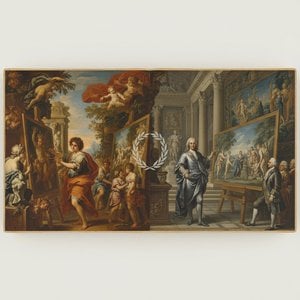
Lecomte's fame rests principally on his monumental historical paintings, commissioned by royal patrons and commemorating pivotal moments in French history. His canvases pulsate with dynamism and meticulous detail, reflecting the Romantic preoccupation with dramatic emotion and grandeur. Notable works include “The Kidnap,” a stirring depiction of a daring rescue attempt during Napoleonic Wars, showcasing masterful composition and vibrant color palettes. Similarly, "Officer Au Régiment De Béarn" exemplifies Lecomte’s skill in portraying military life with realism and psychological insight—a testament to his ability to convey both visual splendor and nuanced character development. Furthermore, “Paysanne Des Environs De Bayonne” offers a poignant glimpse into rural French society during the Napoleonic era, demonstrating Lecomte's dedication to capturing authentic cultural representations.Collaboration with Vernet and Grandville: Shaping Artistic Discourse
Lecomte’s artistic partnership with Émile Jean Horace Vernet—his wife’s brother—was instrumental in elevating French landscape painting to new heights. Together, they embarked on ambitious expeditions documenting the natural beauty of Europe, producing stunning watercolors and engravings that captivated audiences worldwide. This collaboration extended beyond mere technical proficiency; it fostered a shared aesthetic vision rooted in Romantic idealism and an unwavering commitment to artistic excellence. Moreover, Lecomte’s association with Jean Ignace Isidore Gérard (“J.J. Grandville”) enriched his studio environment, fostering intellectual exchange and propelling the development of satirical illustration—a genre that challenged societal norms and engaged viewers in critical reflection.Legacy and Historical Significance
Hippolyte Lecomte’s contribution to French art transcends stylistic trends; he embodies the spirit of a transformative era characterized by intellectual curiosity, artistic experimentation, and patriotic fervor. His paintings serve as invaluable records of historical events, offering insights into the social, political, and cultural landscape of his time. More importantly, Lecomte's influence reverberates through subsequent generations of artists—particularly Charles Emile Hippolyte Lecomte-Vernet—solidifying his place as a cornerstone of French artistic heritage. His enduring legacy continues to inspire admiration for his masterful technique and unwavering dedication to conveying the grandeur and drama of history.Pitanja i odgovori
Mogu li proučiti način na koji Hippolyte Lecomte koristi boju u svim svojim djelima?
Upotrebu boje u djelima umjetnika Hippolyte Lecomte koja su navedena na ovaj web-mjesto moguće je proučiti na umjetnikovoj stranici Genom palete.
U kojim je umjetničkim pravcima Hippolyte Lecomte stvarala/o?
Pokrete u kojima je Hippolyte Lecomte stvarao možete vidjeti na umjetnikovoj stranici Svi umjetnički pravci, koja grupirira umjetnička djela prema pokretu.
U kojem je gradu i državi rođen/a Hippolyte Lecomte?
Hippolyte Lecomte rođen/a je u gradu Puisieux, u državi France.
Kako mogu pronaći djela umjetnika Hippolyte Lecomte na određenu temu?
Stranica Prema ključnim riječima umjetnika Hippolyte Lecomte grupirana je prema ključnim riječima umjetnikovih djela.
Gdje je i kada je rođen/a Hippolyte Lecomte?
Hippolyte Lecomte je rođen/a u gradu Puisieux 1781. godine.
Odakle dolazi Hippolyte Lecomte?
Hippolyte Lecomte je rođen/a u France.
Mogu li pregledati djela umjetnika Hippolyte Lecomte prema mediju?
Kako biste pronašli sva djela autora Hippolyte Lecomte u određenom mediju, posjetite stranicu Svi mediji ovog umjetnika.