The Quiet Observer of Nijmegen
Born in Nijmegen, Netherlands, Cornelis Antonie Heuff lived a life deeply shaped by the shadows of the mid-twentieth century. His early years were defined by the turbulence of war, a period that would later inform both his literature and his visual language. He grew up amidst the complexities of occupied territory, an experience that eventually found its way onto the page and the canvas. In 1991, he distilled these memories into his book, Geen verloren jaren, a work that paired his personal history with his own pen drawings.
His formal training began in 1951 at the Academie voor Beeldende Kunsten en Kunstnijverheid in Arnhem. During his years of study, which lasted until 1956, he refined a technique that allowed him to move fluidly between different mediums. He was a painter, a watercolorist, and a draftsman, often working in an expressionist style that sought to capture the essence of his subjects rather than mere likeness.
A Versatile Hand
Heuff’s artistic output was varied, reflecting a keen interest in the world around him. He did not limit himself to a single subject, instead finding meaning in the structure of the landscape and the character of the human face. His work often touched upon the heavy themes of his youth, particularly the historical weight of the Second World War.
His technical repertoire included:
- Oil on canvas
- Watercolor
- Pen drawings
- Sketches and illustrations
Through these methods, he explored diverse themes, ranging from the quietude of cityscapes to the profound gravity of historical events. His ability to translate memory into form allowed him to document both the beauty of the Dutch landscape and the darker chapters of human history.
The Weight of Memory
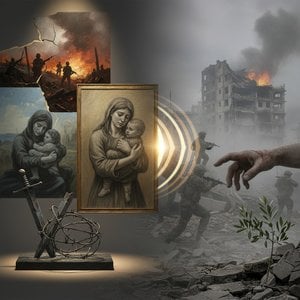
Much of Heuff's most significant work is tied to the historical trauma of the Netherlands during the war. He approached these subjects with a directness that avoided sentimentality, focusing instead on the stark reality of the era. His paintings often dealt with the movement and suffering of people during this period, capturing moments of profound human experience.
His legacy is preserved in collections such as the Flipje & Streekmuseum in Tiel, where works like Sobibor and Transport Oorlogsgevangenen reside. These pieces, along with his depictions of the removal of Jewish people from Tiel, serve as visual records of a difficult time. He died in 1993 in Kerk-Avezaath, leaving behind a body of work that remains a vital part of the regional artistic record.
Pitanja i odgovori
Postoji li cjelovit popis umjetničkih djela autora Cees Heuff?
Sva djela umjetnika Cees Heuff na stranici ovaj web-mjesto možete pregledati na njegovoj/njezinoj Sva umjetnička djela stranici.
Kako mogu pratiti radove umjetnika Cees Heuff kronološki?
Djela umjetnika Cees Heuff možete pregledati kronološkim redoslijedom na stranici Kronologija umjetnina umjetnika.
Postoji li kronološki prikaz karijere umjetnika Cees Heuff?
Kronika umjetnika Cees Heuff kronološka je vremenska linija koja se pokreće skrolanjem i prikazuje djela umjetnika kronološkim redom, grupirana u poglavlja prema razdobljima u karijeri.
Gdje mogu pronaći statistiku o djelima umjetnika Cees Heuff?
Postoji stranica Statistika posjeta za Cees Heuff koja prikazuje statistiku o umjetninama tog umjetnika na ovaj web-mjesto.