Ink On PaperContemporary Chinese Art
 Contemporary
 265.0 x 196.0 cm
 Today Art Museum
Ručno oslikano uljanim bojama na platnu u dimenzijama i okviru po vašem izboru, izrađeno po narudžbi od strane naših umjetnika. ( Kupi print Kupi digitalnu sliku)





























Odaberite jednu od naših unaprijed definiranih veličina koje odgovaraju izvornim proporcijama umjetničkog djela.

Možete unijeti vlastite dimenzije kako bi odgovarale određenom okviru ili prostoru. Ako odabrana veličina ne odgovara proporcijama izvorne slike, izrezat ćemo umjetničko djelo ili proširiti sliku dodatnim ručno oslikanim elementima. Digitalni nacrt bit će vam poslan na odobrenje prije početka proizvodnje.
Imajte na umu da pregled na ekranu ne prikazuje stvarno izrezivanje ili proširivanje. Samo će nacrt točno prikazati konačni sastav.
Iako su dostupne prilagođene veličine, preporučujemo odabir dimenzije s preddefiniranog popisa kako bismo očuvali izvorne proporcije.
Isporuka širom svijeta () u roku od 3-4 tjedna umjesto standardnih 5 tjedana. (7 Rujan). Bez kompromisa u kvaliteti.


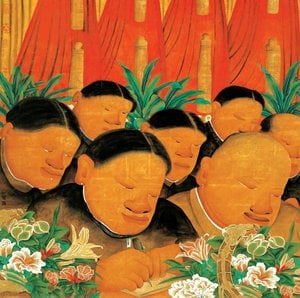
China Diary, No.52
Veličina reprodukcije
Zhu Wei’s China Diary, No.52 transports the viewer directly into the vibrant, bustling artery of daily life in modern China. This painting is far more than a mere depiction of a street scene; it is a richly textured tableau vivant, capturing the confluence of tradition and relentless modernity. The eye is immediately drawn to the foreground where two placid cows stand side-by-side on the dusty road, their gentle presence anchoring the composition amidst the surrounding human activity. They seem to move with an unhurried rhythm, embodying a quiet continuity against the backdrop of passing time.
While the subject matter is deeply rooted in everyday realism—the scattered figures, the occasional horseman, the delicate placement of birds—the execution speaks to Zhu Wei’s profound command over contemporary Chinese painting techniques. His style manages a remarkable duality: it possesses the immediate accessibility of reportage art while retaining the sophisticated depth and subtlety characteristic of ink wash traditions. The brushwork is masterful, allowing details to emerge from washes of tone rather than being sharply delineated. This technique lends an ethereal quality to the scene, suggesting memories or fleeting moments caught just as they are passing.
The composition itself is a meditation on community and passage. The scattering of people—some walking, some mounted—creates a dynamic flow that suggests the ceaseless energy of human endeavor. In art historical terms, such scenes often reflect a society in flux. The cows, perhaps symbolizing enduring pastoral life or simple sustenance, contrast beautifully with the movement of the crowd, inviting contemplation on what endures and what merely passes by. Zhu Wei invites us to observe not just the people, but the underlying rhythm that connects them all.
For collectors and designers alike, this piece offers an unparalleled emotional resonance. It is vibrant without being chaotic; it is narrative without being didactic. Reproducing China Diary, No.52 into a contemporary interior space introduces a layer of cultural depth and storytelling. The warm, earthy tones inherent in the painting ground a room, while the implied energy keeps the spirit lively. It serves as a magnificent focal point, whispering tales of Chinese life to anyone who pauses before its captivating surface.
Rođen u Pekingu 1966. godine, Zhu Wei je istaknuti suvremeni kineski umjetnik prepoznat po svom suptilno kritičkom angažmanu prema politici i društvu unutar ubrzano evoluirajućeg krajolika modernog Kina. On stoji kao jedan od najvidljivijih predstavnika umjetnosti post-Tiananmen ere, pokazujući iznimnu vjernost tradicionalnom kineskom slikarstvu dok istovremeno nudi nijansirani komentar njegovom povijesnom kontekstu.
Zhu Wei zauzima ključnu poziciju unutar suvremene kineske umjetnosti. Kao umjetnik koji se pojavio u posljedicama događaja na Trgu Tiananmen, njegovo djelo odražava složenu pregovaračku dinamiku između tradicije i modernosti, državne kontrole i individualnog izražavanja. Njegova suptilna kritika političkih i društvenih struktura, prikazana kroz prizmu klasičnog kineskog slikarstva, nudi jedinstvenu perspektivu na brzu transformaciju Kine. On dokazuje da se tradicionalni umjetnički oblici mogu moćno prilagoditi rješavanju suvremenih pitanja, učvršćujući svoje naslijeđe kao vitalnog glasa u globalnom umjetničkom diskursu.

1966 - , Kina
Explore the captivating journey of street art from urban walls to prestigious galleries. Discover how contemporary graffiti has evolved into a high-end collectible movement, redefining modern interior design and global art culture.

Embark on a profound journey through the soul of Chinese calligraphy. Explore the historical mastery of ink, brush, and script, from ancient Zhuanshu to elegant running script, and discover how this timeless art form reflects the enduring spirit of classical East Asian aesthetics.

Explore the profound mystery of Banksy, from his subversive stencils to his impact on global pop culture. Dive into an art-historical analysis of street art's greatest icon and the power of social commentary in modern urban landscapes.

 Pregledaj u stvarnoj veličini
 Pošalji
 Podijeli
 Detalji o umjetničkom djelu

 Preuzmi
 Slični predmeti
 Rentgenska snimka
 Automatska prezentacija
 Prikaži više







 Opcija stakla dostupna je samo za dimenzije manje od 110 cm