Giclée tisak muzejske kvalitete ili otisak na platnu uz brzu izradu i raznolike opcije završne obrade. ( Kupi ručno oslikano djelo Prebacite na digitalnu sliku)





























Odaberite jednu od naših unaprijed definiranih veličina koje odgovaraju izvornim proporcijama umjetničkog djela.

Unesite potrebnu širinu i visinu kako bi odgovarali vašem okviru ili zidu. Print se može samo izrezati, nikada ne može biti veći od slike, stoga format s drugačijim omjerom stranica uzrokuje gubitak dijela slike. Prije bilo kakve štampe šaljemo vam digitalni prikaz (mockup) na odobrenje. Slika prikazana na ovoj stranici ne prikazuje stvarni rez — to prikazuje isključivo digitalni prikaz.
Dostava širom svijeta () u roku od 2 tjedna umjesto standardnih 4/5 tjedana. (8 Studeni)
Solitude
Veličina reprodukcije
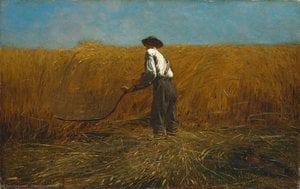
Winslow Homer's "Solitude," painted in 1889, isn’t merely a depiction of a deer; it’s a profound meditation on the human condition—a quiet exploration of isolation, observation, and the enduring spirit of America. The painting immediately draws the eye to its central subject: a magnificent white-tailed deer standing poised in the shallows of a river, its head raised with an almost contemplative gaze directed just beyond the frame. This subtle off-camera focus isn’t accidental; it invites the viewer into the deer's experience, prompting us to share in its silent scrutiny and fostering a sense of shared solitude.
Homer, born in Boston in 1836, forged an artistic identity distinct from the rigid traditions of European academies. His early career as a commercial illustrator for Harper’s Weekly instilled within him a remarkable ability to capture scenes with startling clarity and detail – skills honed through meticulous observation of everyday American life. This foundation profoundly shaped his approach to painting, initially in watercolor before he mastered oil on canvas. “Solitude” exemplifies this dedication to realism, rendered with a precision born from years spent documenting the nuances of the natural world and its inhabitants.
The backdrop of "Solitude" is quintessential New England—a landscape subtly imbued with both tranquility and a hint of melancholy. Trees, draped in autumnal hues, line the riverbanks, creating a sense of enclosure while simultaneously suggesting an expansive wilderness. Two small boats – one closer to the left, another further back on the right – punctuate the scene, hinting at human presence without disrupting the deer’s solitary state. This careful arrangement establishes a dialogue between the natural world and the occasional intrusion of humanity, reinforcing the painting's central theme of isolation.
Homer’s masterful use of light is particularly noteworthy. The dappled sunlight filtering through the trees casts an ethereal glow upon the water and the deer, imbuing the scene with a sense of quiet beauty. He employs broken brushstrokes to create a shimmering effect on the surface of the river, adding depth and realism to the composition. The color palette—earthy browns, greens, and blues—further enhances the painting’s evocative atmosphere, grounding the subject in its natural environment.
“Solitude” resonates deeply with themes of introspection and resilience – qualities often associated with the American experience. The deer itself has long been a potent symbol in American art and literature, representing wilderness, freedom, and the untamed spirit. Its solitary stance speaks to a yearning for independence and self-reliance, mirroring the pioneering ethos that shaped early America.
Furthermore, the painting can be interpreted as an allegory of the human condition. The deer’s gaze suggests a contemplative awareness of its place in the world—a recognition of both beauty and loneliness. It's a poignant reminder of our own capacity for introspection and the importance of finding solace in solitude. The boats in the background, while present, are secondary, emphasizing the primacy of the animal’s experience and suggesting that true connection often lies within oneself.
Winslow Homer's "Solitude" stands as a testament to his remarkable ability to capture not just the appearance of a scene, but also its underlying emotional resonance. It is a work that invites viewers to pause, reflect, and contemplate their own relationship with nature and the world around them. Reproductions of this iconic painting offer an exceptional opportunity to bring Homer’s profound insights into any interior space, fostering a sense of quiet contemplation and reminding us of the enduring power of observation and resilience – qualities deeply rooted in the American spirit.
Intenzitet boja djela "Solitude" je Monochromatic. Intenzitet opisuje koliko se boje čine snažnima.
Vodič za "Solitude" je stranica Vodič za učenike umjetničkog djela – isprintani informativni list koji prikazuje umjetničko djelo uz pripadajući opis, izvor i tablicu podataka (umjetnik, datumi, tehnika, izvorni dimenzije, kolekcija).
Preporučena uporaba printa djela "Solitude" je Statement.


1836 - 1910 , Sjedinjene Američke Države

Explore the enigmatic world of Magic Realism. From its German origins to Latin American mastery, discover how this sophisticated movement blends reality with the extraordinary—perfect for discerning collectors seeking depth and wonder in fine art.

Explore the profound beauty of American Realism. From Winslow Homer’s rural landscapes to the dignity of everyday life, discover how master artists captured the soul of a nation through evocative oil paintings and timeless fine art techniques.
 Pregledaj u realnoj veličini
 Pošalji
 Podijeli
 Detalji o umjetničkom djelu
 Vodič
Vodič

 Preuzmi umjetničko djelo
 Slični predmeti
 Rentgenska snimka
 Slide show
 Pitanja i odgovori
 Statistika

 Prikaži više









 Opcija stakla dostupna je samo za dimenzije manje od 110 cm