Pregledaj u stvarnoj veličini AR pregled Prebacite na print Kupi ručno naslikanu sliku Pošalji
Detalji o umjetničkom djelu Dodaj u omiljene Preuzmi Slični predmeti Rentgenska snimka Automatska prezentacija Statistika

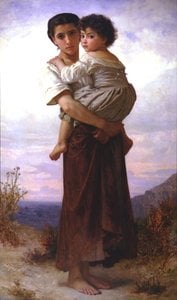
The Little Shepherdess

‘Shepherdess,’ created in 1889 by William-Adolphe Bouguereau, exemplifies Academicism style with Naturalism influences. This portrait depicts a serene woman holding a stick amidst a pastoral landscape featuring horses and birds—a testament to Bouguereau’s dedication to idealized realism.

William-Adolphe Bouguereau bio je francuski akademski slikar koji je poznat po svojim detaljnim prikazima mitologije i žanrovskim scenama. Njegova umjetnička djela uključuju slike Venuse rođenje, Zenobia pronađena od pastira na rijeci Araks i dijete na kupanju koje su izražavaju klasiku estetiku i umjetničku vrijednost.

Kupite digitalnu sliku visoke rezolucije i poboljšane kvalitete, koja je znatno superiornija od online prikaza.

Svaka datoteka pedantno je pripremljena od strane naših internih stručnjaka koristeći napredne alate i vještinsku ručnu retušu. Osiguravamo da svaka slika ima iznimnu jasnoću, preciznu točnost boja i visoku razinu detalja.

Konačna datoteka dostavlja se putem e-pošte u roku od 72 sata, optimizirana za neposrednu upotrebu u profesionalnim, uredničkim i tiskarskim okruženjima. To je ista kvaliteta kojoj vjeruju vrhunski studiji dizajna, izdavači i galerije.

Digitalna slika

Preuzmite datoteku visoke rezolucije za osobnu izložbu, tisak i kreativne projekte. ( Prebacite na print Kupi ručno naslikanu sliku)

Ukupna cijena

$ 24,90

Uključeno uz svaku narudžbu digitalne slike

Profesionalna digitalna dostava, zajamčena

Odabirom WahooArt.com ne dobivate samo sliku – dobivate profesionalno unapređeno digitalno umjetničko djelo, izrađeno s najvećom preciznošću uz jamstvo zadovoljstva. Evo svega što automatski dolazi uz vašu narudžbu:

shipping_icon
Brza dostava e-poštom

Vaša digitalna slika visoke rezolucije bit će vam poslana e-mailom u roku od 72 sata od narudžbe – spremna za neposrednu upotrebu.

canvas_icon
Digitalna datoteka poboljšana AI-om

Vaše umjetničko djelo profesionalno je optimizirano pomoću naprednih AI alata i ručnog uređivanja, čime se osigurava maksimalna razina detalja, oštrine i točnosti boja.

insurance_icon
Besplatna ponovna dostava doživotno

Slučajno ste obrisali ili izgubili svoju datoteku? Ne brinite – ponovno ćemo vam je poslati u bilo kojem trenutku, potpuno besplatno.

tax_icon
Bez uvoznih carina – ikada

Uživajte u svojim umjetničkim djelima trenutno, bez carina, pristojbi ili troškova dostave – digitalne datoteke uvijek su oslobođene poreza.

color_icon
Jamstvo točnosti boja

Uz pomoć profesionalnih alata i upravljanja bojama, osiguravamo da vaša digitalna slika što vjernije odražava izvorne boje.

return_icon
Jamstvo zadovoljstva u trajanju od 100 dana

Ako niste zadovoljni svojom digitalnom slikom, revidirat ćemo je ili vratiti 100% iznosa u roku od 100 dana – bez suvišnih pitanja.

guarantee_icon
100% Jamstvo povrata novca

Niste zadovoljni? Osigurajte puni povrat novca u roku od 100 dana od primitka digitalne datoteke – bez suvišnih pitanja.

discount_icon
Popusti na velike narudžbe

Kupite 3 slike, uštedite 10% - Kupite 5 slika, uštedite 15% - Kupite 10+ slika, uštedite 20%. Odlično za kreativne projekte, galerije i agencije.

Osnovne informacije

  • Medium: Oil on Canvas
  • Notable elements or techniques: Detailed realism; luminous color palette
  • Title: The Little Shepherdess
  • Artist: William-Adolphe Bouguereau
  • Influences:
    • Raphael
    • Titian
  • Subject or theme: Rural pastoral scene
  • Artistic style: Idealized beauty

Kviz o umjetnosti

Svako pitanje ima samo jedan točan odgovor.

Pitanje 1:
What artistic style is William-Adolphe Bouguereau’s ‘The Little Shepherdess’ primarily characterized by?
Pitanje 2:
According to the description, what prominent element contributes to the impression of serenity in the painting?
Pitanje 3:
The image depicts a woman holding a stick. What does this gesture suggest about her character?
Pitanje 4:
What artistic influences did Bouguereau draw upon during his training at the École des Beaux-Arts?
Pitanje 5:
What is one notable feature of Bouguereau’s technique that contributes to the painting's luminous quality?

A Vision of Pastoral Serenity

In the luminous realm of William-Adolphe Bouguereau’s "The Little Shepherdess," completed in 1889, viewers are transported into a meticulously crafted world where innocence and pastoral beauty converge. This quintessential masterpiece of Academic Impressionism serves as more than a mere depiction of rural life; it is an invitation to witness a moment of profound tranquility. The painting portrays a young woman, her presence radiating a sense of purity and grace, seated amidst a verdant meadow. Beside her, the subtle presence of a shepherd boy gazing with quiet adoration adds a layer of tender narrative, suggesting the romanticized societal ideals of the Belle Époque. As the eye wanders through the composition, the inclusion of horses and the soft rustle of trees in the background reinforce a theme of timeless tradition and the harmonious coexistence of humanity and nature.

The technical brilliance of Bouguereau is nowhere more evident than in his masterful use of the glazing technique. By layering thin, translucent washes of color over a precise underpainting, the artist achieved a breathtakingly luminous quality that seems to emanate from within the canvas itself. Every texture—from the soft, tactile wool of the shepherdess's attire to the delicate, sun-drenched blades of grass—is rendered with an unparalleled realism that borders on the divine. His brushstrokes are nearly invisible, serving only to create a soft, diffused glow that bathes the figures in warmth. This meticulous attention to detail ensures that the skin tones possess a lifelike vitality, making the subject feel present and breathing, a hallmark of his commitment to the classical ideals of beauty.

Historical Resonance and Symbolic Depth

To understand "The Little Shepherdess" is to understand the cultural heartbeat of late 19th-century France. Created during an era fascinated by mythological narratives and the idealized representation of womanhood, the work draws deep inspiration from the Old Masters. Bouguereau’s reverence for Raphael is palpable, particularly in how he translates the spiritual weight of Renaissance frescoes into a modern, pastoral setting. The painting embodies the Victorian obsession with moral virtue and domestic tranquility, presenting an idyllic version of the countryside that offered a soothing escape from the rapid industrialization of the age. It is a window into a lost era of perceived simplicity and grace.

Beyond its visual splendor, the artwork carries a profound emotional weight that continues to captivate collectors and decorators alike. The symbolism of the shepherdess—often representing innocence and the untainted soul—resonates deeply within the domestic space. For the interior designer, this piece offers a sense of calm and sophisticated nostalgia, making it an ideal focal point for rooms intended to evoke peace and reflection. Whether viewed as a study in classical technique or an emotional journey into a sunlit meadow, "The Little Shepherdess" remains a timeless testament to the enduring power of beauty, offering a soulful connection to the heights of academic artistry.


Biografija umjetnika

William-Adolphe Bouguereau (1825-1905): A Life Immersed in Beauty

Born in La Rochelle, France, on November 30th, 1825, William-Adolphe Bouguereau’s life unfolded as a profound engagement with classical ideals and an astonishing command of artistic realism. From his earliest years, he demonstrated an innate passion for art, nurtured by his family's involvement in the wine trade – a connection that instilled within him a meticulous attention to detail and observation. Recognizing his exceptional talent, Bouguereau pursued his education at the École des Beaux-Arts in Paris, where he was mentored by François-Edouard Picquenot, absorbing the wisdom of the Old Masters—Raphael and Titian—who served as guiding lights for his artistic journey. These formative influences weren’t merely stylistic imitations; they constituted the bedrock upon which Bouguereau constructed a singular vision, characterized by unparalleled anatomical precision, luminous color palettes, and an unwavering devotion to portraying beauty in its most idealized form. He wasn't simply replicating what he *saw*; rather, he sought to distill the essence of perfection—a pursuit that resonated deeply with the aesthetic sensibilities of his era.

The École des Beaux-Arts and Artistic Foundations

Bouguereau’s formal training at the École des Beaux-Arts proved instrumental in shaping his artistic style. He diligently studied anatomy, mastering the intricacies of human musculature and skeletal structure—a skill that would become central to his oeuvre. His instructors emphasized the importance of disegno (drawing), encouraging students to develop a foundational understanding of form and proportion before tackling more complex compositions. Bouguereau’s meticulous draftsmanship is evident throughout his paintings, where figures are rendered with breathtaking accuracy—the subtle curve of a shoulder, the delicate blush of skin, the expressive depth of an eye. This dedication to disegno wasn't merely about technical proficiency; it was about cultivating a deep appreciation for the human form and its capacity for conveying emotion. He meticulously dissected cadavers, painstakingly reconstructing anatomical structures to achieve unparalleled realism—a practice that reflected his belief in the primacy of observation and intellectual understanding.

Mythological Inspirations and Artistic Technique

Bouguereau’s artistic vision was profoundly influenced by mythology—particularly Greek mythology. He drew inspiration from tales of gods and goddesses, transforming ancient narratives into vibrant, emotionally resonant scenes. *The Birth of Venus*, arguably his most iconic work, exemplifies this approach. Bouguereau skillfully captured the ethereal beauty of Venus emerging from the sea foam—a depiction that transcends mere visual representation, conveying a sense of grace, serenity, and divine inspiration. He employed techniques honed by Titian and Raphael to achieve luminous color palettes and masterful chiaroscuro (light and shadow)—creating dramatic contrasts that heighten emotional impact. Bouguereau’s brushstrokes were deliberate and controlled, meticulously layering pigments to build up texture and depth—a testament to his unwavering commitment to artistic craftsmanship. He utilized glazing techniques—applying thin layers of translucent paint over underlying colors—to achieve subtle tonal variations and enhance the luminosity of his canvases.

Genre Scenes and Portraiture: Capturing Everyday Life

Beyond mythological subjects, Bouguereau excelled in genre paintings—scenes depicting ordinary life—often infused with a sense of moral contemplation. *Bergère 1886*, for example, portrays a shepherdess tending her flock with remarkable tenderness and sensitivity—a depiction that captures the beauty of rural simplicity and evokes feelings of warmth and compassion. Bouguereau’s portraits were equally distinguished by their realism and psychological insight. He skillfully captured the essence of his subjects—their personalities, emotions, and inner lives—creating images that transcend mere likeness, conveying a profound understanding of human experience. His portraits often employed pyramidal compositions—a technique popularized by Leonardo da Vinci—to create balanced and harmonious images that drew the viewer’s eye upward toward the face of the sitter. Bouguereau's meticulous attention to detail extended beyond anatomical accuracy; he meticulously rendered fabrics, textures, and surfaces—creating canvases that were imbued with palpable materiality.

Legacy and Enduring Influence

Despite facing criticism from avant-garde artists during his lifetime—particularly Picasso and Matisse—Bouguereau’s artistic legacy endured. His unwavering devotion to classical ideals—anatomical precision, luminous color palettes, and meticulous draftsmanship—continues to inspire contemporary figurative painters. Bouguereau's influence can be seen in the works of numerous artists who strive for beauty and skill—a testament to his enduring contribution to art history. He remains a pivotal figure in 19th-century French painting, representing the zenith of academic artistry and offering a timeless vision of beauty that continues to captivate audiences today. His paintings are housed in prestigious museums worldwide—including the Musée d’Orsay in Paris, The J. Paul Getty Museum, and Carnegie Museum—ensuring that his artistic achievements will be celebrated for generations to come. Song of the Angels (1881) stands as a beacon of ethereal beauty and serene composition—a masterpiece embodying Bouguereau's ability to evoke wonder and spiritual transcendence.

William-Adolphe Bouguereau

William-Adolphe Bouguereau

1825 - 1905 , Francuska

Kratke činjenice

  • Artistic Movement Or Style: Akademska Realizam
  • Artists Who Influenced This Artist:
    • Rafael
    • Titian
  • Date Of Birth: 1825.
  • Date Of Death: 1905.
  • Full Name: William-Adolphe Bouguereau
  • Nationality: Francuz
  • Notable Artworks:
    • Nymphaeum
    • Bergère 1886
    • Child at Bath
    • Song of the Angels
    • Birth of Venus
  • Place Of Birth: La Rochelle, Francuska