


Giclée tisak muzejske kvalitete ili otisak na platnu uz brzu izradu i raznolike opcije završne obrade. ( Kupi ručno oslikano djelo Prebacite na digitalnu sliku)





























Odaberite jednu od naših unaprijed definiranih veličina koje odgovaraju izvornim proporcijama umjetničkog djela.

Unesite potrebnu širinu i visinu kako bi odgovarali vašem okviru ili zidu. Print se može samo izrezati, nikada ne može biti veći od slike, stoga format s drugačijim omjerom stranica uzrokuje gubitak dijela slike. Prije bilo kakve štampe šaljemo vam digitalni prikaz (mockup) na odobrenje. Slika prikazana na ovoj stranici ne prikazuje stvarni rez — to prikazuje isključivo digitalni prikaz.
Dostava širom svijeta () u roku od 2 tjedna umjesto standardnih 4/5 tjedana. (8 Studeni)
The Slaughterhouse
Veličina reprodukcije
This evocative drawing, titled The Slaughterhouse, plunges the viewer directly into a scene of working life from an era long past. Executed in stark black and white, the medium itself lends the piece an immediate sense of documentary grit, as if one has stumbled upon a forgotten sketch tucked away in an antique drawer. Thomas Rowlandson, the master satirist whose wit defined Georgian England, captures not merely an activity, but a moment brimming with unvarnished reality. The composition centers on a man engaged in the visceral task of hanging dead animals within what appears to be a rustic barn setting. His presence anchors the scene, while the surrounding figures—one partially veiled by the very bounty being processed—add layers of narrative complexity.
Rowlandson’s hand is unmistakable; it possesses that characteristic energy, a lively brushstroke that never settles into mere depiction but always hints at underlying commentary. While the subject matter is grounded in the mundane—the hanging chickens, the simple wooden chair—the execution elevates it to art. The technique employed here suggests pen and ink drawing, allowing for rapid detail and dramatic tonal contrast. It is a masterful display of observational skill filtered through a satirical lens. For those who appreciate historical illustration or decorative arts that speak volumes without uttering a word, this piece offers an unparalleled window into the texture of daily existence.
To view The Slaughterhouse solely as a depiction of butchery is to miss the profound social commentary inherent in Rowlandson’s work. His art was never simply decorative; it was always pointed, often humorous, and deeply critical of human folly and societal structures. Here, the scene operates on multiple symbolic levels. The act of slaughter, while literal, can be read as a metaphor for the raw mechanics of life itself—the necessary cycle of consumption and continuation. The surrounding figures and the central worker become archetypes within this tableau, inviting the modern collector to contemplate the underlying systems that govern our own lives.
For the discerning collector or interior designer, a reproduction of this drawing offers far more than mere wall art; it is an artifact of wit and history. Its intimate scale (15 x 19 cm) makes it perfect for placement in a study, a library nook, or alongside other period pieces where conversation starters are desired. The monochromatic nature ensures that it complements virtually any existing decor scheme, whether the room leans toward rustic farmhouse chic or more formal Georgian revival styles. Owning this piece is acquiring a tangible connection to the vibrant, sometimes raucous, spirit of late 18th and early 19th-century London.
Pregled djela "The Slaughterhouse" autora Tom Rowlandson možete pogledati na stranici Pregled u prostoru za to umjetničko djelo.
Melancholic emocija djela "The Slaughterhouse" prati njegov Georgian Satire stil.
"The Slaughterhouse" autora Tom Rowlandson prenosi Melancholic osjećaj unutar općenito Dramatic raspoloženja.

Born amidst the bustling streets of Old Jewry, London, on July 13th, 1756 (baptized July 23rd, 1757), Thomas Rowlandson emerged as a defining voice – and pen – of Georgian England. His life, initially shadowed by his father’s financial struggles that necessitated a move to Richmond, North Yorkshire in 1759, would ultimately blossom into an artistic career marked by unparalleled wit and incisive social commentary. Rowlandson wasn't merely documenting his era; he was holding a mirror to its follies, exaggerating its vanities, and immortalizing its characters with a uniquely satirical eye. From humble beginnings, nurtured by an uncle’s support that allowed him access to education at Dr. Barwis’ school in Soho Square, Rowlandson embarked on a path that would see him become one of the most celebrated – and controversial – caricaturists of his time. Even as a schoolboy, his innate talent manifested itself in playful sketches adorning the margins of his books, foreshadowing a career dedicated to visual storytelling with a mischievous edge.
Rowlandson’s formal artistic training began at the Royal Academy in 1772, where he honed his skills for six years, including a period of study in Paris under Jean-Baptiste Pigalle. This exposure to continental techniques proved invaluable, laying the foundation for his distinctive style – a blend of delicate draughtsmanship and bold exaggeration. He absorbed influences from artists like Rubens and Gainsborough, whose masterful compositions instilled in him a profound understanding of visual harmony and expressive gesture. However, it was upon returning to England that Rowlandson truly found his voice. Initially attempting portraiture, he soon discovered his true calling lay not in flattering representation but in pointed satire.
The burgeoning popularity of caricature during the Georgian period provided Rowlandson with fertile ground for experimentation and innovation. Recognizing the potential for social critique through visual humor, he swiftly abandoned portraiture in favor of satirical prints—a decision that would propel him to artistic prominence. His partnership with publisher Rudolph Ackermann proved pivotal, yielding some of his most enduring works, including *The Schoolmaster's Tour* (1809), a series of plates accompanied by verses from Dr. William Combe, and the iconic *Tour of Dr. Syntax in Search of Consolation* (1820). These collaborations cemented Rowlandson’s reputation as a leading artist of his time.
Rowlandson's artistic output spanned an impressive range of subjects—from theatrical productions to topographical landscapes—demonstrating his versatility as an illustrator. Yet, it was his satirical prints that secured his place in art history. His unflinching depictions of political figures and social customs challenged prevailing norms and provoked lively debate. Works like *Glorious Defeat of the Dutch Navy* (1797) and *The Horse Dealer* captivated audiences with their dramatic flair and masterful execution. Rowlandson’s legacy extends far beyond his individual achievements; he established a tradition of satirical art that continues to inspire artists today—a testament to the enduring power of wit and observation.
Thomas Rowlandson remains one of Britain's most celebrated caricaturists, whose work continues to resonate with audiences across centuries. His distinctive style—characterized by meticulous draughtsmanship combined with audacious exaggeration—captured the spirit of Georgian England with unparalleled accuracy. Exploring his oeuvre offers a unique glimpse into the social and political landscape of an era defined by grandeur and hypocrisy—a reminder that laughter can illuminate uncomfortable truths and challenge established authority. Rowlandson’s influence can be seen in subsequent generations of cartoonists who embraced satire as a means of critique, ensuring that his voice – and vision – will endure for years to come.

1756 - 1827 , Ujedinjeno Kraljevstvo
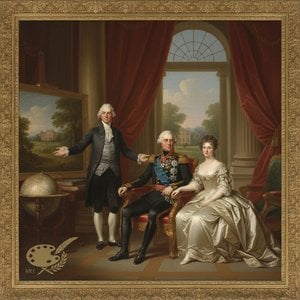
Explore the life & work of John Hoppner, a leading Georgian portraitist. Discover his vibrant style, influential patrons, and lasting impact on British art history. Expert insights for collectors.
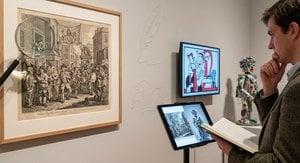
Explore the history of satire in art! From Hogarth's London to contemporary critique, discover how artists use wit & visual power to reflect and challenge society. Expert insights at WahooArt.

Explore the witty world of Thomas Rowlandson, master Georgian caricaturist! Discover his satirical prints & insightful social commentary on 18th-century England. Learn about his life, techniques, and enduring influence.

Explore the history of satire in art! From ancient masters like Aristophanes to Goya & Grosz, discover how artists use wit and critique to reflect—and challenge—society. Expert insights at WahooArt.

Explore the satirical world of William Hogarth, pioneering British painter & engraver. Discover his iconic works like *A Rake's Progress* and insightful social commentary on 18th-century London life.
 Pregledaj u realnoj veličini
 Pošalji
 Podijeli
 Detalji o umjetničkom djelu
 Vodič
Vodič

 Preuzmi umjetničko djelo
 Slični predmeti
 Rentgenska snimka
 Slide show
 Pitanja i odgovori
 Statistika


 Prikaži više









 Opcija stakla dostupna je samo za dimenzije manje od 110 cm


