Pregledaj u stvarnoj veličini Isprobaj u AR-u Prebacite na prodaju printova Prebacite na digitalnu prodaju slika Podijeli
Detalji Vodič Dodaj u omiljene Preuzmi datoteku Slični predmeti Rentgenska snimka Slide show Statistika

William Dampier

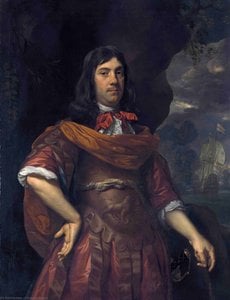
1698 portrait of William Dampier by Thomas Murray. A classical Dutch Golden Age bust in rich browns & creams, showcasing realistic detail & dramatic lighting. Explore this 75x63cm oil on canvas.

Explore the portraits of Thomas Murray (1663-1734), a prominent Scottish painter known for his face-painting style & works featuring royalty & nobility.

Ručno rađena uljana reprodukcija

Ručno oslikano uljanim bojama na platnu u dimenzijama i okviru po vašem izboru, izrađeno po narudžbi od strane naših umjetnika. ( Prebacite na prodaju printova Prebacite na digitalnu prodaju slika)

Corner sample of the P118B picture frame: ližani polistiren, 5 cm wide and 3 cm thick
P118B €10
Corner sample of the P118H picture frame: ližani polistiren, 5 cm wide and 3 cm thick
P118H €10
Corner sample of the P118W picture frame: ližani polistiren, 5 cm wide and 3 cm thick
P118W €10
Corner sample of the P438Z picture frame: ližani polistiren, 5.5 cm wide and 3.5 cm thick
P438Z €10
Corner sample of the P508JH picture frame: ližani polistiren, 7 cm wide and 3.5 cm thick
P508JH €12
Corner sample of the P508YH picture frame: ližani polistiren, 7 cm wide and 3.5 cm thick
P508YH €12
Corner sample of the P805H picture frame: ližani polistiren, 5 cm wide and 3.5 cm thick
P805H €10
Corner sample of the P805Z picture frame: ližani polistiren, 5 cm wide and 3.5 cm thick
P805Z €10
Corner sample of the P919BZ picture frame: ližani polistiren, 7 cm wide and 3.5 cm thick
P919BZ €10
Corner sample of the P919G picture frame: ližani polistiren, 7 cm wide and 3.5 cm thick
P919G €10
Corner sample of the P919XJ picture frame: ližani polistiren, 7 cm wide and 3.5 cm thick
P919XJ €10
Corner sample of the P959ZH picture frame: ližani polistiren, 5 cm wide and 3 cm thick
P959ZH €10
Corner sample of the P968JZ picture frame: ližani polistiren, 6 cm wide and 4 cm thick
P968JZ €12
Corner sample of the W106C picture frame: masivno drvo, 5 cm wide and 3 cm thick
W106C €8
Corner sample of the W218G picture frame: masivno drvo, 5 cm wide and 3 cm thick
W218G €10
Corner sample of the W218JH picture frame: masivno drvo, 5 cm wide and 3 cm thick
W218JH €8
Corner sample of the W218Y picture frame: masivno drvo, 5 cm wide and 3 cm thick
W218Y €10
Corner sample of the W307PJ picture frame: masivno drvo, 6 cm wide and 3 cm thick
W307PJ €10
Corner sample of the W316G picture frame: masivno drvo, 6 cm wide and 3 cm thick
W316G €10
Corner sample of the W316PJ picture frame: masivno drvo, 6 cm wide and 3 cm thick
W316PJ €8
Corner sample of the W316Y picture frame: masivno drvo, 6 cm wide and 3 cm thick
W316Y €10
Corner sample of the W398PJ picture frame: masivno drvo, 5 cm wide and 3 cm thick
W398PJ €8
Corner sample of the W4111J picture frame: masivno drvo, 6.5 cm wide and 3.5 cm thick
W4111J €10
Corner sample of the W500HY picture frame: masivno drvo, 7 cm wide and 5 cm thick
W500HY €15
Corner sample of the W500JH picture frame: masivno drvo, 7 cm wide and 5 cm thick
W500JH €15
Corner sample of the W692G picture frame: masivno drvo, 8 cm wide and 4 cm thick
W692G €12
Corner sample of the W849H picture frame: masivno drvo, 5 cm wide and 3 cm thick
W849H €8
Corner sample of the W940BG picture frame: masivno drvo, 7.5 cm wide and 4.5 cm thick
W940BG €15
Corner sample of the W953PJ picture frame: masivno drvo, 6 cm wide and 3.5 cm thick
W953PJ €8

Standardne dimenzije
prilagođeno po mjeri
CM
INCH

Odaberite jednu od naših unaprijed definiranih veličina koje odgovaraju izvornim proporcijama umjetničkog djela.

širina
visina

Unesite širinu i visinu koja vam je potrebna, kako bi odgovarali vašem okviru ili zidu. Budući da je ovo ručno oslikano djelo, umjetnik može malo proširiti rubove slike ili ih skratiti kako bi postigao željeni oblik — izbor je vaš. Prije početka slikanja poslat ćemo vam digitalni prikaz (mockup) radi potvrde. Slika prikazana na ovoj stranici ne predstavlja stvarni rezultat — samo digitalni prikaz to čini.

Primjeri onoga što se može promijeniti: Zamijenite lice fotografijom klijenta; Dodajte ljubimca (npr. zamijenite mačku psom); Uključite skrivenu poruku u pozadinu; Promijenite pejzaž ili elemente pozadine.
Nakon narudžbe, tim WahooArt.com kontaktirat će klijenta putem e-pošte radi dobivanja uputa te dostaviti probni prikaz (mockup)

Isporuka širom svijeta () u roku od 3-4 tjedna umjesto standardnih 5 tjedana. (26 Listopad). Bez kompromisa u kvaliteti.

Besplatna ekspresna dostava širom svijeta
Visokokvalitetno laneno platno
Potpuno osiguranje transporta
Jamstvo povrata carine i uvoznih poreza
Jamstvo vjernosti boja
Politika povrata u roku od 100 dana (samo u slučaju nedostataka)
Jamstvo povrata 100% novca
Popust na više proizvoda

Ukupna cijena

€ 239

William Dampier

Tehnika izrade

Veličina reprodukcije

-

Ukupna cijena

€ 239

Brzi pregled

  • medium: oil on canvas
  • dimensions: 75 x 63 cm
  • artist: Thomas Murray
  • influences: Dutch Golden Age painting

Kviz o umjetnosti

Svako pitanje ima samo jedan točan odgovor.

Pitanje 1:
In what year was the portrait of William Dampier painted?
Pitanje 2:
Which artistic style heavily influenced Thomas Murray's portrait of William Dampier?
Pitanje 3:
What is the approximate size of the painting 'William Dampier'?
Pitanje 4:
Based on the portrait, what can be inferred about William Dampier's status?
Pitanje 5:
What technique is evident in the rendering of colors and brushwork within the painting?

A Window into 17th-Century Exploration: Thomas Murray’s Portrait of William Dampier

This striking half-length portrait by Scottish artist Thomas Murray captures the essence of *William Dampier*, a figure who embodied the spirit of adventure and scientific inquiry during the late 17th century. Painted in 1698, the artwork offers not just a likeness but a glimpse into an era defined by exploration, piracy, and burgeoning natural history. The composition, reminiscent of Dutch Golden Age portraiture, centers Dampier against a dark, richly textured background that dramatically highlights his features and attire. Measuring 75 x 63 cm, this oil on canvas work showcases Murray’s skill in rendering realistic detail and dramatic lighting – hallmarks of the period.

Decoding the Image: Style & Technique

Murray masterfully employs a chiaroscuro technique—the strong contrast between light and dark—to sculpt Dampier's form, emphasizing his face and upper torso while allowing the lower portion to recede into shadow. This creates a sense of depth and volume, drawing the viewer’s eye directly to the subject’s gaze. The brushwork is visible yet refined, lending texture and a subtle roughness that enhances the painting’s three-dimensionality. The color palette, dominated by warm browns, reds, and creams, evokes a sense of seriousness and introspection. Note the careful use of white highlights to accentuate details in Dampier's clothing – a testament to Murray’s attention to realism. The shallow perspective focuses intently on the subject’s face, fostering an immediate connection with the viewer.

Beyond the Likeness: Historical Context & Symbolism

The portrait is far more than just a representation of a man; it's a portrayal of a pivotal historical figure. William Dampier was a complex character – explorer, pirate, privateer, navigator, and naturalist. He was the first Englishman to explore parts of Australia and circumnavigated the globe three times. His voyages were instrumental in expanding European knowledge of the world, and he is considered by some as Australia’s first natural historian. Dampier's attire – though not overtly ostentatious – suggests a man of status and wealth, likely reflecting his success (and perhaps notoriety) as a privateer. The portrait was commissioned during a period when depictions of explorers were gaining prominence, fueled by public fascination with newly discovered lands and cultures.

Emotional Resonance & Lasting Appeal

The painting conveys an air of quiet authority and thoughtful contemplation. Dampier’s direct gaze engages the viewer, inviting us to consider his remarkable life and adventures. There's a sense of resilience and perhaps even melancholy in his expression – hinting at the hardships and uncertainties inherent in a life spent navigating uncharted waters. This portrait is not merely a historical artifact; it’s a compelling character study that continues to resonate with audiences today. Its classic style, rich colors, and masterful technique make it an ideal addition to any collection or interior space seeking a touch of timeless elegance and adventurous spirit.

Pitanja i odgovori

Je li dostupna digitalna datoteka visoke rezolucije za "William Dampier"?

Kako biste dobili digitalnu datoteku djela "William Dampier" autora Thomas Murray, naručite preuzimanje digitalne slike visoke rezolucije na njegovoj stranici Digitalna slika.

Kako se kontrast i harmonija kombiniraju u djelu "William Dampier"?

U djelu "William Dampier", Gentle kontrast uparuje se s Strong Color Unity harmonijom.

Tko je autor i koja je godina nastanka djela "William Dampier"?

Autor djela "William Dampier" je Thomas Murray, a rad je datiran u 1698.


Biografija umjetnika

Early Life and Apprenticeship

Thomas Murray, born in Scotland in 1663, emerged during a period of significant artistic transition. While details surrounding his early upbringing remain somewhat elusive, it is known that he initially received instruction from a member of the esteemed De Critz family—a lineage renowned for their limner work and heraldic painting. This foundational training likely instilled in Murray a meticulous attention to detail and an appreciation for refined technique. However, recognizing the burgeoning demand for portraiture, his artistic path soon led him to London and the studio of John Riley, arguably the most successful portraitist of the late 17th century England. Riley’s workshop was a hub of activity, catering to the aristocracy and gentry, and Murray quickly absorbed the prevailing style—a focus on capturing likeness with an emphasis on facial features, often leaving the broader composition and background details to assistants. This division of labor was common at the time, but it shaped Murray's early career trajectory.

A Flourishing Portrait Practice

Following Riley’s death in 1691, Murray inherited not only his studio space but also a substantial clientele. He rapidly established himself as a prominent portrait painter, becoming highly sought after by noble patrons and individuals of standing. The early years of the 18th century saw him consistently engaged in commissions, painting members of Parliament, military figures, and other influential personalities. His style, while initially derivative of Riley’s, gradually developed its own distinct character—a refined elegance coupled with a remarkable ability to convey personality through subtle nuances of expression. Murray's success wasn’t solely attributable to his artistic skill; he cultivated a reputation for being courteous, diligent, and attentive to the needs of his sitters, fostering strong relationships that secured repeat business and valuable referrals.

Royal Commissions and Artistic Recognition

A pivotal moment in Murray’s career arrived in 1703 when he received the prestigious commission to paint Queen Anne for the Society of the Middle Temple. This portrait, a testament to his growing reputation, solidified his position among the leading artists of the day. The work exemplifies his mastery of capturing regal bearing and dignified composure. Beyond this significant royal commission, Murray continued to receive commissions from prominent figures, including William Dampier, the renowned explorer, whose portrait showcases his ability to depict character and experience. He was a prolific artist, producing numerous portraits that now grace both public institutions and private collections.

The Uffizi Self-Portrait and Later Life

In 1708, Murray embarked on a journey to Italy, a common practice for aspiring artists seeking inspiration from the Old Masters. During his visit to Florence, he contributed a self-portrait to the esteemed Uffizi Gallery—a gesture that underscored his ambition and desire for recognition within the broader European art world. This portrait, like many of his others, was subsequently engraved, further disseminating his image and style. Despite achieving considerable financial success – it is reported he left £40,000 upon his death in 1734—Murray’s later life was marked by a degree of irony. He had reportedly complained of poverty throughout his career, yet amassed a substantial fortune through shrewd investments alongside his painting practice. His will stipulated the erection of a monument with a bust in Westminster Abbey, but only if it did not prove too costly. Ultimately, his nephew deemed the cost prohibitive and instead buried him in St. Paul’s, Covent Garden, leaving the grand memorial unrealized.

Legacy and Historical Significance

Thomas Murray occupies a fascinating position within the history of British portraiture. He was not an innovator in the same vein as Van Dyck or Reynolds, but he was a highly skilled craftsman who successfully catered to the tastes of his era. His portraits offer valuable insights into the social and political landscape of early 18th-century England, capturing the likenesses of individuals who shaped the nation’s destiny. While often described as a “face painter,” relying on assistants for broader compositional elements, Murray's ability to imbue his sitters with personality and dignity remains undeniable. His work serves as a compelling reminder of the importance of portraiture in documenting history and preserving the memory of those who came before. His contribution lies not in revolutionizing artistic technique but in consistently delivering high-quality portraits that met the demands of a discerning clientele, securing his place as one of Scotland’s most successful portrait painters.

Thomas Murray

Thomas Murray

1663 - 1734

Brzi pregled

  • Full Name: Thomas Murray
  • Nationality: Scottish
  • Date Of Birth: 1663
  • Date Of Death: 1734
  • Place Of Birth: Scotland
  • Notable Artworks:
    • Captain William Dampier
    • Sir John Pratt
    • Christopher, duke of Albemarle
  • Artistic Movement Or Style: Portrait Painting
  • Artists Who Influenced This Artist: ['John Riley']
  • Artists Or Movements Influenced By This Artist: ['Dutch Golden Age']