The Scholar and the Brush: The Dual Legacy of Thomas Augustine Martin
To contemplate the life of Thomas Augustine Martin is to witness a rare harmony between the analytical mind of a scholar and the sensitive soul of an artist. Born in the quiet beauty of Ballinamore, County Leitrim, on November 13, 1935, Martin’s journey was one defined by a profound connection to the Irish landscape and its cultural heartbeat. While history primarily remembers him as a titan of Anglo-Irish literary criticism—a man whose intellect shaped the halls of University College Dublin and the Senate of Ireland—there existed within him a deeply resonant visual sensibility. He was not merely an observer of the written word, but a creator of light and color, capable of translating the ephemeral textures of life onto paper.
His formative years at Cistercian College, Roslam, laid the groundwork for a life of disciplined excellence. A natural leader who captained the rugby team and served as House Captain, Martin possessed a vigor that would later manifest in his passionate advocacy for Irish arts. It was during this period that his linguistic talents first shone, earning him a top mark in English that signaled a lifelong devotion to the nuances of expression. This early academic rigor provided the scaffolding upon which he built an expansive career, moving from the local classrooms of Roscrea to the prestigious Chair of Anglo-Irish Literature at UCD, where he became a pivotal interpreter of the nation's literary traditions.
A Vision Beyond the Written Word
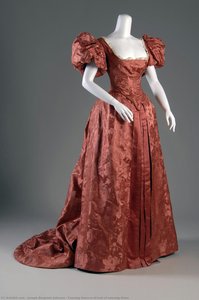
Beyond the lecture halls and the political debates of Seanad Éireann, Martin found a sanctuary in the visual arts. His foray into painting, most notably seen in his celebrated watercolour ‘Day Dress’, reveals an artist deeply attuned to the subtle shifts of atmosphere and light. In this work, one finds a departure from the structured arguments of his literary critiques; instead, there is a fluid, emotive exploration of color and form. The piece captures a moment of quiet contemplation, mirroring the very essence of the Irish landscape he so loved. Through the medium of watercolour, Martin was able to evoke the vibrant yet soft hues of his homeland, demonstrating an ability to capture the transient beauty of a single moment.
This artistic dimension of his life served as a vital counterpoint to his public roles. While his work at the Abbey Theatre board and his political service required a focus on institutional strength and national identity, his painting allowed for a more intimate, personal dialogue with the world. There is a poetic symmetry in his ability to navigate both the macrocosm of national culture and the microcosm of a single brushstroke. His art was not a separate hobby but an extension of his literary soul—a way to visualize the rhythms and textures that he spent his professional life analyzing through text.
A Lasting Impression on Irish Culture
The historical significance of Thomas Augustine Martin lies in his ability to bridge disparate worlds. He was a man who could command a Senate chamber, lead a university department, and direct a national theatre, yet he remained anchored by the delicate precision of an artist’s eye. His contributions to Irish life were multifaceted:
- Literary Stewardship: As a professor and scholar, he provided essential clarity to the study of Anglo-Irish literature, ensuring that the voices of writers like James Stephens were understood within their proper historical context.
- Cultural Leadership: Through his chairmanship at the Abbey Theatre, he championed the vital intersection of literature and performance, fostering an environment where theatrical innovation could flourish.
- Civic Advocacy: His tenure as a Senator for the National University constituency allowed him to act as a powerful voice for the arts, defending cultural institutions during periods of significant national change.
- Visual Expression: Through works like ‘Day Dress’, he contributed to the visual vocabulary of Irish watercolour, offering a glimpse into the contemplative spirit that resided beneath his academic exterior.
When he passed away in Dublin on October 16, 1995, Ireland lost more than an academic; it lost a polymath who embodied the very essence of the Irish intellectual tradition. His legacy remains etched in the archives of UCD and the annals of the Abbey Theatre, but it also lives on in the soft, luminous traces of his paintings, which continue to invite viewers into a world of quiet, enduring beauty.



 Pregledaj u stvarnoj veličini
 Kupi ručno naslikanu sliku
 Pošalji
 Podijeli
 Detalji o umjetničkom djelu

 Preuzmi
 Slični predmeti
 Rentgenska snimka
 Automatska prezentacija
 Statistika

 Prikaži više






































 Opcija stakla dostupna je samo za dimenzije manje od 110 cm