Pregledaj u stvarnoj veličini Isprobaj u AR-u Prebacite na prodaju printova Prebacite na digitalnu prodaju slika Podijeli
Detalji Vodič Dodaj u omiljene Preuzmi datoteku Slični predmeti Rentgenska snimka Slide show Statistika

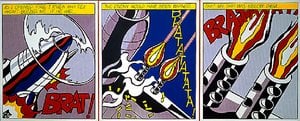
Brattata

Explore Roy Lichtenstein's iconic 'Brattata,' a vibrant Pop Art masterpiece inspired by comic book panels and featuring bold Ben-Day dots, capturing the tension of aerial combat and reflecting WWII pilot training.

Roy Lichtenstein je bio američki pop umjetnik poznat po korištenju Ben-Day noktica, inspiraciji iz stripova i kritičkom mišljenju o potrošačkoj kulturi. Pogledajte 'Whaam!' i druge djela!

Djelo prikazano na ovoj stranici zaštićeno je autorskim pravima, što znači da zakonski ne možemo izraditi niti prodati identičnu reprodukciju. Ova se zaštita provodi u skladu s međunarodnim sporazumima kao što su Bernska konvencija i nacionalnim zakonima, uključujući i one koji su utvrđeni u Američki zakon o autorskom pravu – Title 17.

Kao poštovana i legalna alternativa, nudimo prilagođena, ručno oslikana umjetnička djela inspirirana originalom. Naši vješti i profesionalni umjetnici pažljivo proučavaju stil, raspoloženje i umjetničku bit originala kako bi stvorili novo, jedinstveno djelo koje izaziva isti osjećaj – ostajući pritom vlastito, originalno stvaralaštvo.

Ova metoda u potpunosti je usklađena s autorskim pravima jer ne uključuje kopiranje ili dupliciranje zaštićenih umjetničkih djela. Umjesto toga, riječ je o kreativnoj reinterpretaciji – novoj slici koja je dobila utjecaj na izvornik, ali nije identična njemu.

Ručno rađena uljana reprodukcija

Ručno oslikano uljanim bojama na platnu u dimenzijama i okviru po vašem izboru, izrađeno po narudžbi od strane naših umjetnika. ( Prebacite na prodaju printova Prebacite na digitalnu prodaju slika)

Corner sample of the P118B picture frame: ližani polistiren, 5 cm wide and 3 cm thick
P118B 10
Corner sample of the P118H picture frame: ližani polistiren, 5 cm wide and 3 cm thick
P118H 10
Corner sample of the P118W picture frame: ližani polistiren, 5 cm wide and 3 cm thick
P118W 10
Corner sample of the P438Z picture frame: ližani polistiren, 5.5 cm wide and 3.5 cm thick
P438Z 10
Corner sample of the P508JH picture frame: ližani polistiren, 7 cm wide and 3.5 cm thick
P508JH 12
Corner sample of the P508YH picture frame: ližani polistiren, 7 cm wide and 3.5 cm thick
P508YH 12
Corner sample of the P805H picture frame: ližani polistiren, 5 cm wide and 3.5 cm thick
P805H 10
Corner sample of the P805Z picture frame: ližani polistiren, 5 cm wide and 3.5 cm thick
P805Z 10
Corner sample of the P919BZ picture frame: ližani polistiren, 7 cm wide and 3.5 cm thick
P919BZ 10
Corner sample of the P919G picture frame: ližani polistiren, 7 cm wide and 3.5 cm thick
P919G 10
Corner sample of the P919XJ picture frame: ližani polistiren, 7 cm wide and 3.5 cm thick
P919XJ 10
Corner sample of the P959ZH picture frame: ližani polistiren, 5 cm wide and 3 cm thick
P959ZH 10
Corner sample of the P968JZ picture frame: ližani polistiren, 6 cm wide and 4 cm thick
P968JZ 12
Corner sample of the W106C picture frame: masivno drvo, 5 cm wide and 3 cm thick
W106C 8
Corner sample of the W218G picture frame: masivno drvo, 5 cm wide and 3 cm thick
W218G 10
Corner sample of the W218JH picture frame: masivno drvo, 5 cm wide and 3 cm thick
W218JH 8
Corner sample of the W218Y picture frame: masivno drvo, 5 cm wide and 3 cm thick
W218Y 10
Corner sample of the W307PJ picture frame: masivno drvo, 6 cm wide and 3 cm thick
W307PJ 10
Corner sample of the W316G picture frame: masivno drvo, 6 cm wide and 3 cm thick
W316G 10
Corner sample of the W316PJ picture frame: masivno drvo, 6 cm wide and 3 cm thick
W316PJ 8
Corner sample of the W316Y picture frame: masivno drvo, 6 cm wide and 3 cm thick
W316Y 10
Corner sample of the W398PJ picture frame: masivno drvo, 5 cm wide and 3 cm thick
W398PJ 8
Corner sample of the W4111J picture frame: masivno drvo, 6.5 cm wide and 3.5 cm thick
W4111J 10
Corner sample of the W500HY picture frame: masivno drvo, 7 cm wide and 5 cm thick
W500HY 15
Corner sample of the W500JH picture frame: masivno drvo, 7 cm wide and 5 cm thick
W500JH 15
Corner sample of the W692G picture frame: masivno drvo, 8 cm wide and 4 cm thick
W692G 12
Corner sample of the W849H picture frame: masivno drvo, 5 cm wide and 3 cm thick
W849H 8
Corner sample of the W940BG picture frame: masivno drvo, 7.5 cm wide and 4.5 cm thick
W940BG 15
Corner sample of the W953PJ picture frame: masivno drvo, 6 cm wide and 3.5 cm thick
W953PJ 8

Standardne dimenzije
prilagođeno po mjeri
CM
INCH

Odaberite jednu od naših unaprijed definiranih veličina koje odgovaraju izvornim proporcijama umjetničkog djela.

širina
visina

Možete unijeti vlastite dimenzije kako bi odgovarale određenom okviru ili prostoru. Ako odabrana veličina ne odgovara proporcijama izvorne slike, izrezat ćemo umjetničko djelo ili proširiti sliku dodatnim ručno oslikanim elementima. Digitalni nacrt bit će vam poslan na odobrenje prije početka proizvodnje.
Imajte na umu da pregled na ekranu ne prikazuje stvarno izrezivanje ili proširivanje. Samo će nacrt točno prikazati konačni sastav.
Iako su dostupne prilagođene veličine, preporučujemo odabir dimenzije s preddefiniranog popisa kako bismo očuvali izvorne proporcije.

Primjeri onoga što se može promijeniti: Zamijenite lice fotografijom klijenta; Dodajte ljubimca (npr. zamijenite mačku psom); Uključite skrivenu poruku u pozadinu; Promijenite pejzaž ili elemente pozadine.
Nakon narudžbe, tim WahooArt.com kontaktirat će klijenta putem e-pošte radi dobivanja uputa te dostaviti probni prikaz (mockup)

Isporuka širom svijeta () u roku od 3-4 tjedna umjesto standardnih 5 tjedana. (13 Listopad). Bez kompromisa u kvaliteti.

Besplatna ekspresna dostava širom svijeta
Visokokvalitetno laneno platno
Potpuno osiguranje transporta
Jamstvo povrata carine i uvoznih poreza
Jamstvo vjernosti boja
Politika povrata u roku od 100 dana (samo u slučaju nedostataka)
Jamstvo povrata 100% novca
Popust na više proizvoda

Ukupna cijena

€ 235

Brattata

Tehnika izrade

Veličina reprodukcije

-

Ukupna cijena

€ 235

Brzi pregled

  • Artistic style: Comic strip
  • Year: 1962
  • Notable elements or techniques: Ben-Day dots, Text balloon
  • Medium: Oil on canvas
  • Title: Brattata
  • Subject or theme: Aerial combat

Kviz o umjetnosti

Svako pitanje ima samo jedan točan odgovor.

Pitanje 1:
Which comic book inspired the creation of 'Brattata'?
Pitanje 2:
What technical method did Lichtenstein use to replicate the look of cheap newsprint?
Pitanje 3:
Which primary colors dominate the color palette of this painting?
Pitanje 4:
In what year was 'Brattata' completed?
Pitanje 5:
What is the central subject depicted in the composition?

The Electric Pulse of Pop Art: Reimagining Brattata

Brattata, a 1962 masterpiece by the visionary Roy Lichtenstein, serves as a thunderous declaration of the power inherent in popular culture. At first glance, the painting presents itself as a single, high-octle panel plucked from the pages of a mid-century comic book, specifically inspired by DC Comics’ All-American Men of War #89. Yet, to view it merely as a reproduction of pulp fiction is to miss its profound artistic rebellion. Lichtenstein takes the ephemeral, disposable imagery of mass media and elevates it to the status of high art, freezing a moment of intense aerial combat within the dignified confines of an oil on canvas. The composition centers on a pilot, his face etched with a grim, focused determination, surrounded by the mechanical chaos of a cockpit. Through this lens, Lichtenstein invites us to find beauty in the manufactured and significance in the mundane, making it an irresistible centerpiece for any collection that celebrates the intersection of fine art and modern iconography.

A Symphony of Dots and Primary Colors

The technical brilliance of Brattata lies in Lichtenstein’s meticulous mimicry of commercial printing processes. He famously employed the Ben-Day dot technique—a method of using small, closely spaced colored dots to create shading and secondary colors—to replicate the halftone look of cheap newsprint. This deliberate choice creates a fascinating tension between the hand-painted nature of the work and its machine-made appearance. The color palette is strikingly bold, dominated by the primary triad of red, yellow, and blue. These vibrant blocks of color are delineated by thick, authoritative black outlines that lend the piece a graphic, almost architectural strength. For the interior designer, this high-contrast aesthetic offers a dynamic energy; the way the bright yellows and reds pop against the structured lines makes the artwork a commanding focal point in contemporary or minimalist spaces, injecting a sense of rhythmic movement and visual excitement into a room.

Narrative Tension and the Modern Icon

Beyond its striking surface, Brattata pulsates with an underlying narrative intensity. The inclusion of a text balloon—bearing the words, "That was their mistake - because it gave me more targets than I could have shot at"—anchors the visual action in a specific moment of strategic calculation and wartime drama. This dialogue does more than just tell a story; it integrates language directly into the visual texture of the painting, blurring the line between reading and viewing. The subject matter reflects the cultural anxieties of the Cold War era, capturing the tension of military preparedness through a stylized, almost detached lens. There is an emotional duality at play: the visceral excitement of combat paired with the cool, calculated detachment of the Pop Art movement. For collectors, owning a piece like Brattata means possessing a fragment of history that continues to challenge our perceptions of heroism, technology, and the very definition of artistic originality.

Pitanja i odgovori

O čemu je "Brattata"?

Teme prisutne u djelu "Brattata" autora Roy Fox Lichtenstein uključuju comic book, aerial combat, pilot helmet, ben-day dots, dialogue balloon, neon colors, military imagery. Zajedno one sažimaju temu umjetničkog djela.

Kako se stil djela "Brattata" odnosi na doba u kojem je njegov autor stvarao?

"Brattata" autora Roy Fox Lichtenstein pripada pokretu Pop Art, unutar ere Modernizam svog tvorca.

Kakvu atmosferu unosi "Brattata" autora Roy Fox Lichtenstein u interijer?

Uz svoj Dramatic ugođaj, djelo "Brattata" preporučuje se za Living Room.

Iz kojeg je razdoblja "Brattata" autora Roy Fox Lichtenstein?

"Brattata" autora Roy Fox Lichtenstein potječe iz razdoblja Modern. To razdoblje daje povijesni kontekst djela.

Od čega je izrađeno "Brattata"?

Tehnika djela "Brattata" autora Roy Fox Lichtenstein je Oil On Canvas. Reprodukcije imaju za cilj dočarati izgled ove tehnike.

Koji je datum nastanka djela "Brattata" autora Roy Fox Lichtenstein?

Izrada djela "Brattata" autora Roy Fox Lichtenstein datira iz 1962. godine.

Kolika je luminancija djela "Brattata" autora Roy Fox Lichtenstein?

Zabilježena luminancija za "Brattata" autora Roy Fox Lichtenstein iznosi Bright Balance.

Je li "Brattata" slobodan od autorskih prava?

Što se tiče autorskih prava, "Brattata" je još uvijek pod autorskim pravima.


Biografija umjetnika

The Genesis of a Pop Visionary

Roy Fox Lichtenstein, born in the vibrant metropolis of New York City on October 27, 1923, indelibly altered the landscape of twentieth-century art. Emerging as a pivotal figure within the Pop Art movement, Lichtenstein didn’t simply reflect his era; he actively interrogated it, transforming commonplace imagery into compelling artistic statements. His upbringing in an upper-middle-class Jewish family fostered both a cultural awareness and an early artistic inclination. Childhood exposure to museums and concerts, coupled with a deep appreciation for jazz music, laid the groundwork for a creative spirit that would challenge conventional notions of fine art. Though initially drawn to realistic drawing and painting during his formative years, Lichtenstein’s formal training commenced at the Art Students League in 1939 under Reginald Marsh, followed by studies at Ohio State University – interrupted briefly by wartime service in the Army. These experiences provided a robust technical foundation that would later be brilliantly re-contextualized through the lens of mass culture and commercial aesthetics. The seeds of his signature style weren’t sown within the hallowed halls of artistic tradition but rather in the often-overlooked world of everyday imagery, particularly comic books and advertising.

Early Influences and Artistic Exploration

Lichtenstein's formative years were marked by a fascination with European art history—particularly Rembrandt and Picasso—whose mastery of chiaroscuro and expressive brushwork profoundly impacted his artistic sensibilities. He absorbed the lessons of Reginald Marsh at OSU, embracing abstraction as a means of conveying emotion and exploring innovative compositional techniques. His early drawings demonstrated an acute sensitivity to line and form, reflecting a meticulous attention to detail that would characterize his later work. Lichtenstein’s intellectual curiosity extended beyond art; he pursued scientific studies alongside his artistic endeavors, demonstrating a holistic approach to learning and creative expression. He was deeply influenced by Allan Kaprow's proto-pop aesthetic—specifically, the concept of "chance operations"—which encouraged him to experiment with unconventional materials and processes. The American Museum of Natural History served as an enduring source of inspiration, fostering his appreciation for natural forms and stimulating his imaginative vision.

The Birth of Pop Art: Comic Books and Commercial Reproduction

The pivotal moment in Lichtenstein’s artistic trajectory arrived during his tenure at Rutgers University where he encountered Allan Kaprow, whose influence reignited Lichtenstein’s interest in the burgeoning movement of Pop Art. Recognizing the potential for artistic innovation within popular culture—particularly comic books and advertising—he embarked on a radical stylistic transformation that would redefine the boundaries between “high” and “low” art. He began meticulously recreating comic strip images using techniques mimicking commercial printing processes, most notably employing Ben-Day dots – tiny colored squares that created halftone patterns—to simulate the texture of newspaper reproduction. This wasn’t merely imitation; it was a deliberate critique of mass culture and its impact on artistic expression. Lichtenstein's first major Pop painting, *Look Mickey* (1961), immediately established him as a pioneer of this new aesthetic direction. He skillfully manipulated color palettes and compositional arrangements to convey both humor and pathos—challenging traditional notions of artistic seriousness while simultaneously engaging with the visual language of popular media.

Major Achievements and Artistic Legacy

Lichtenstein’s prolific output spanned decades, encompassing paintings, prints, sculptures, murals, and commissions that cemented his position as one of the most influential artists of the second half of the twentieth century. His masterful command of technique—characterized by bold outlines, vibrant colors, and meticulous attention to detail—became synonymous with Pop Art style. He achieved international recognition through groundbreaking exhibitions at galleries and museums across Europe and North America, establishing himself as a leading voice in contemporary art discourse. Lichtenstein’s work continues to inspire graphic designers, illustrators, and visual artists worldwide—a testament to the enduring power of his artistic vision. His exploration of themes such as war, romance, and societal expectations—filtered through the lens of comic book imagery—challenged conventional artistic conventions and provoked critical reflection on cultural values.
  • Iconic Paintings: *Whaam!*, *Drowning Girl*, *Oh, Jeff…I Love You, Too…But…*, *Masterpiece*.
  • Influence on Graphic Design: His techniques profoundly impacted the visual language of advertising and illustration.
Lichtenstein passed away on September 29, 1997, leaving behind a body of work that remains as relevant and provocative today as it was during his artistic prime—a legacy defined by innovation, intellectual rigor, and an unwavering commitment to challenging established artistic paradigms. His art serves as a powerful reminder of the transformative potential of appropriation and the enduring fascination with popular culture—a testament to the genius of Roy Fox Lichtenstein.
Roy Fox Lichtenstein

Roy Fox Lichtenstein

1923 - 1997 , Sjedinjene Američke Države

Brzi pregled

  • Artistic Movement Or Style: Pop Art
  • Artists Who Influenced This Artist:
    • Reginald Marsh
    • Allan Kaprow
  • Date Of Birth: 27. listopada 1923.
  • Date Of Death: 29. rujna 1997.
  • Full Name: Roy Fox Lichtenstein
  • Nationality: Američan
  • Notable Artworks:
    • Whaam!
    • Drowning Girl
    • Oh, Jeff…I Love You, Too…But…
  • Place Of Birth: New York City, SAD.
Istražite umjetnička djela organizirana prema temama, stilovima i karakteristikama.