Pregledaj u stvarnoj veličiniPregledaj u stvarnoj veličini AR pregledAR pregled Kupi ručno naslikanu sliku Kupi ručno naslikanu slikuPrebacite na digitalnu sliku Prebacite na digitalnu sliku PošaljiPošalji
Detalji o umjetničkom djeluDetalji o umjetničkom djelu Dodaj u omiljene Dodaj u omiljene PreuzmiPreuzmi Slični predmetiSlični predmeti Rentgenska snimkaRentgenska snimka Automatska prezentacijaAutomatska prezentacija StatistikaStatistika

La main de gloire

René Magritte (1898-1967): Belgijski nadrealista poznat po ikoničnim djelima poput "Ljudi ljubavi", izazivanju stvarnosti i percepcije.

Giclée / Umjetnički otisak

Giclée tisak muzejske kvalitete ili otisak na platnu uz brzu proizvodnju i fleksibilne opcije završne obrade. (Kupi ručno naslikanu sliku Kupi ručno naslikanu slikuPrebacite na digitalnu sliku Prebacite na digitalnu sliku)

P118B $10
P118H $10
P118W $10
P438Z $10
P508JH $12
P508YH $12
P805H $10
P805Z $10
P919BZ $10
P919G $10
P919XJ $10
P959ZH $10
P968JZ $12
W106C $8
W218G $10
W218JH $8
W218Y $10
W307PJ $10
W316G $10
W316PJ $8
W316Y $10
W398PJ $8
W4111J $10
W500HY $15
W500JH $15
W692G $12
W849H $8
W940BG $15
W953PJ $8

Standardne dimenzije
po mjeri
CM
INCH

Odaberite jednu od naših unaprijed definiranih veličina koje odgovaraju izvornim proporcijama umjetničkog djela.

širina
visina

Možete unijeti vlastite dimenzije kako biste umjetničko djelo prilagodili specifičnom okviru ili prostoru. Ako odabrana veličina ne odgovara proporcijama izvornog rada, izrezat ćemo dio slike ili je proširiti pomoću ogledalnog efekta ili jednobojne rubne površine. Digitalni prikaz (mockup) bit će vam poslan na odobrenje prije početka proizvodnje.
Imajte na umu da pregled na zaslonu ne odražava stvarno izrezivanje ili proširivanje. Samo će mockup točno prikazati konačnu kompoziciju.
Iako su dostupne prilagođene veličine, preporučujemo odabir dimenzije iz unaprijed definirane liste kako biste očuvali izvorne proporcije.

Dostava širom svijeta () u roku od 2 tjedna umjesto standardnih 4/5 tjedana. (10 Rujan)

why_choose_icon
Besplatna ekspresna dostava širom svijeta
why_choose_icon
Visokokvalitetno laneno platno
why_choose_icon
Potpuno osiguranje dostave
why_choose_icon
Jamstvo povrata carine i uvoznih poreza
why_choose_icon
Garancija vjernog podudaranja boja
why_choose_icon
Politika povrata u roku od 100 dana (samo u slučaju nedostataka)
why_choose_icon
Jamstvo povrata 100% novca
why_choose_icon
Popust na više proizvoda

Ukupna cijena

$ 68

reproduction

La main de gloire

Giclée / Umjetnički otisak

Veličina reprodukcije

-

Ukupna cijena

$ 68

Osnovne informacije

  • Artist: René Magritte
  • Subject or theme: Hand; Glory; Representation
  • Movement: Surrealism
  • Medium: Oil on canvas
  • Artistic style: Dreamlike; Precise realism
  • Year: 1964
  • Location: Private Collection

La Main de Gloire: A Surrealist Meditation on Perception

René Magritte’s “La Main de Gloire,” or “The Hand of Glory,” is a deceptively simple yet profoundly unsettling painting that encapsulates the core tenets of Surrealism. Executed in 1963, this pastel on paper depicts two blushing pink roses nestled within a vase—a commonplace visual motif—against a muted beige background punctuated by architectural elements and distant trees. However, what elevates this artwork beyond mere botanical representation is Magritte’s masterful manipulation of perspective and his deliberate obfuscation of reality. The composition itself feels deliberately off-kilter. The vase stands on the ground, seemingly grounded in tangible space, yet its placement draws the eye upwards towards a figure standing at a considerable distance—a man gazing intently at the roses. Beside him is another person, positioned slightly closer to the vase and looking directly at it as well. These figures are rendered in grayscale, emphasizing their anonymity and highlighting the viewer’s role as participant in Magritte's visual puzzle. The subtle inclusion of a house in the background reinforces this sense of contained space and contributes to the painting’s overall atmosphere of quiet contemplation. Magritte’s technique is characterized by meticulous detail—particularly evident in the rendering of the roses themselves—combined with an unsettling disregard for conventional spatial conventions. He employs pastel crayons, layering colors delicately to achieve a velvety texture that contrasts sharply with the starkness of the grayscale figures. This textural juxtaposition serves to heighten the painting's emotional impact, prompting viewers to question what they see and how it relates to their own understanding of experience. Historically, “La Main de Gloire” emerged during Magritte’s prolific period following his breakthrough success with “The Lovers,” cementing his reputation as one of the foremost figures in Surrealist art. Surrealism sought to liberate the subconscious mind from rational constraints, exploring dreamlike imagery and illogical juxtapositions to expose hidden anxieties and desires. Magritte's work aligns perfectly with this artistic impulse, mirroring the broader preoccupation with illusion and deception that permeated the movement. The hand itself—a symbol of power and gesture—appears to grasp at the roses, suggesting an attempt to control or possess beauty—perhaps reflecting a deeper yearning for permanence in a world constantly shifting beneath our gaze. Ultimately, “La Main de Gloire” transcends its visual elements to deliver a powerful statement about perception and representation. Magritte compels us to confront the limitations of our senses and to recognize that what we perceive is rarely an accurate reflection of reality. Like many Surrealist masterpieces, it lingers in the mind long after viewing, prompting ongoing contemplation and inviting viewers to engage with its enigmatic symbolism on a personal level. It’s a painting that reminds us that beauty—and truth—may reside just beyond our immediate grasp.

Biografija umjetnika

Early Life and the Seeds of Surrealism

René Magritte, born René François Ghislain Magritte on November 21, 1898, in Lessines, Belgium, emerged into a world that would profoundly shape his enigmatic artistic vision. His early years were marked by an unsettling event – the suicide of his mother when he was just thirteen. The image of her body being recovered from the River Sambre, with her dress obscuring her face, became a haunting motif that would subtly permeate his later work, manifesting in veiled figures and a persistent exploration of hidden realities. This early trauma instilled within him a fascination with mystery, loss, and the unsettling power of what remains unseen. While details of his childhood remain somewhat elusive, it’s clear this formative experience laid the groundwork for his lifelong questioning of perception and representation. He began drawing lessons at age ten, revealing an innate inclination towards visual expression, but initially explored Impressionism before embarking on a path that would lead him to become one of the most significant figures in Surrealist art.

Artistic Development and Influences

Magritte’s artistic journey was not immediate or straightforward. He studied at the Académie Royale des Beaux-Arts in Brussels, yet found its traditional methods stifling. His early work experimented with Futurism and Cubism, absorbing elements of these avant-garde movements but ultimately rejecting their purely formal concerns. It wasn't until encountering Giorgio de Chirico’s painting *The Song of Love* in 1922 that Magritte discovered a resonance that would irrevocably alter his artistic course. De Chirico’s dreamlike landscapes and unsettling juxtapositions unlocked within Magritte a new way of seeing – a world where the familiar could be rendered strange, and the ordinary imbued with profound mystery. This encounter sparked his commitment to Surrealism, though he often maintained a unique distance from its more overtly psychological or automatic approaches. He preferred a meticulous, almost clinical precision in his painting, using realistic techniques to depict illogical scenarios.

The Heart of Surrealism: Challenging Reality

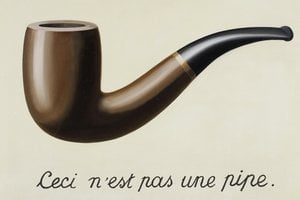
By 1926, Magritte had fully embraced the tenets of Surrealism, producing *Le Jockey Perdu (The Lost Jockey)*, widely considered his first truly surrealist work. However, his brand of Surrealism was distinct. He wasn’t interested in exploring the subconscious through free association or dream imagery in the manner of some of his contemporaries. Instead, Magritte sought to challenge viewers' perceptions of reality by presenting ordinary objects in unexpected contexts, forcing them to question their assumptions about the world around them. Iconic works like *The Treachery of Images (This is not a pipe)* (1929) brilliantly deconstructs the relationship between image and object, reminding us that a representation is never the thing itself. *Les Amants (The Lovers)* (1927-1928), with its shrouded figures, echoes the trauma of his mother’s death while simultaneously exploring themes of concealment and intimacy. *Time Transfixed* (1938) presents a locomotive bursting through a brick wall, disrupting our sense of space and time. And *The Human Condition* (1933), a canvas within a canvas, blurs the boundaries between representation and reality, prompting us to consider how we perceive and interpret the world.

Later Life, Recognition, and Enduring Legacy

Despite initial struggles for recognition, Magritte’s work gradually gained prominence, particularly in the United States with exhibitions in 1936 and later retrospective shows at the Museum of Modern Art (1965) and the Metropolitan Museum of Art (1992). He continued to refine his signature style, exploring themes of repetition, illusion, and the power of language in paintings that are both intellectually stimulating and visually arresting. Magritte died on August 15, 1967, leaving behind a body of work that continues to captivate and challenge audiences worldwide. His influence extends far beyond the realm of painting, impacting pop art, minimalist art, conceptual art, and even advertising and film. Today, his paintings are held in major museum collections around the globe, including the Musées royaux des beaux-arts de Belgique in Brussels, which houses the Magritte Museum – dedicated entirely to his work and boasting the world’s largest collection of his creations.

René Magritte

René Magritte

1898 - 1967 , Belgija

Osnovne informacije

  • Artistic Movement Or Style: Surealizam
  • Artists Who Influenced This Artist: ['Giorgio de Chirico']
  • Date Of Birth: 21. studenog 1898.
  • Date Of Death: 15. kolovoza 1967.
  • Full Name: René François Ghislain Magritte
  • Nationality: Belgijanin
  • Notable Artworks:
    • Les Amants
    • The Treachery of Images
    • Time Transfixed
    • The Human Condition
  • Place Of Birth: Lessines, Belgiji
Istražite umjetnička djela organizirana prema temama, stilovima i karakteristikama.