x
Pregledaj u stvarnoj veličiniPregledaj u stvarnoj veličini AR pregledAR pregled Kupi print Kupi printKupi digitalnu sliku Kupi digitalnu sliku PošaljiPošalji
Detalji o umjetničkom djeluDetalji o umjetničkom djelu Dodaj u omiljene Dodaj u omiljene PreuzmiPreuzmi Slični predmetiSlični predmeti Rentgenska snimkaRentgenska snimka Automatska prezentacijaAutomatska prezentacija

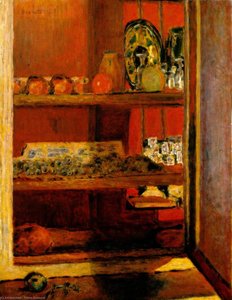
Le placard rouge (The Red Cupboard),

Vibrant domestic intimacy in Bonnard's Le placard rouge (1939), featuring a richly colored kitchen scene; bring this warm French impressionism home.

Pierre Bonnard (1867-1947) je francuski impresionistički slikar poznat po svojim intimnim scenama, živahnim bojama i stilu 'Intimist'. Nakon studija prava, Bonnard se posvetio umetnosti kao mladolik savestovan o umetničkim trendovima svog vremena. Njegova kreativna putanja vodila ga kroz grupu umetnika poznatih kao Les Nabis, gde je pronašao inspiraciju u japanskim grafikama i simbolističkom pokre

Ručno rađena uljana reprodukcija

Ručno oslikano uljanim bojama na platnu u dimenzijama i okviru po vašem izboru, izrađeno po narudžbi od strane naših umjetnika. (Kupi print Kupi printKupi digitalnu sliku Kupi digitalnu sliku)

P118B $10
P118H $10
P118W $10
P438Z $10
P508JH $12
P508YH $12
P805H $10
P805Z $10
P919BZ $10
P919G $10
P919XJ $10
P959ZH $10
P968JZ $12
W106C $8
W218G $10
W218JH $8
W218Y $10
W307PJ $10
W316G $10
W316PJ $8
W316Y $10
W398PJ $8
W4111J $10
W500HY $15
W500JH $15
W692G $12
W849H $8
W940BG $15
W953PJ $8

Standardne dimenzije
po mjeri
CM
INCH

Odaberite jednu od naših unaprijed definiranih veličina koje odgovaraju izvornim proporcijama umjetničkog djela.

širina
visina

Možete unijeti vlastite dimenzije kako bi odgovarale određenom okviru ili prostoru. Ako odabrana veličina ne odgovara proporcijama izvorne slike, izrezat ćemo umjetničko djelo ili proširiti sliku dodatnim ručno oslikanim elementima. Digitalni nacrt bit će vam poslan na odobrenje prije početka proizvodnje.
Imajte na umu da pregled na ekranu ne prikazuje stvarno izrezivanje ili proširivanje. Samo će nacrt točno prikazati konačni sastav.
Iako su dostupne prilagođene veličine, preporučujemo odabir dimenzije s preddefiniranog popisa kako bismo očuvali izvorne proporcije.

Primjeri mogućnosti prilagodbe: Zamijenite lice fotografijom klijenta; Dodajte ljubimca (npr. zamijenite mačku psom); Uključite skrivenu poruku u pozadinu; Promijenite pejzaž ili elemente pozadine.
Nakon narudžbe, tim WahooArt.com kontaktirat će klijenta putem e-pošte radi dobivanja uputa te dostaviti probni prikaz (mockup).

Isporuka širom svijeta () u roku od 3-4 tjedna umjesto standardnih 5 tjedana. (5 Rujan). Bez kompromisa u kvaliteti.

why_choose_icon
Besplatna ekspresna dostava širom svijeta
why_choose_icon
Visokokvalitetno laneno platno
why_choose_icon
Potpuno osiguranje dostave
why_choose_icon
Jamstvo povrata carine i uvoznih poreza
why_choose_icon
Garancija vjernog podudaranja boja
why_choose_icon
Politika povrata u roku od 60 dana (samo u slučaju nedostataka)
why_choose_icon
Jamstvo povrata 100% novca
why_choose_icon
Popust na više proizvoda

Ukupna cijena

$ 272

reproduction

Le placard rouge (The Red Cupboard),

Tehnika reprodukcije

Veličina reprodukcije

-

Ukupna cijena

$ 272

Osnovne informacije

  • Year: 1939
  • Artist: Pierre Bonnard
  • Title: Le placard rouge
  • Subject or theme: Kitchen interior scene
  • Dimensions: 80 x 60 cm

Kviz o umjetnosti

Svako pitanje ima samo jedan točan odgovor.

Pitanje 1:
What is the primary color dominating the walls of the kitchen scene depicted in 'Le placard rouge'?
Pitanje 2:
Which artist is credited with painting 'Le placard rouge' (The Red Cupboard)?
Pitanje 3:
What type of objects are prominently displayed on the shelf in this painting?
Pitanje 4:
In what year was 'Le placard rouge' painted?
Pitanje 5:
Pierre Bonnard was influenced by which artistic group, as mentioned in his biography?

A Domestic Symphony in Red Hues

To gaze upon Pierre Bonnard's Le placard rouge (The Red Cupboard) is to step directly into a moment suspended in time—a warm, intimate glimpse into the heart of a French kitchen from the early decades of the twentieth century. This painting transcends a mere depiction of household objects; it is an immersion into color, light, and the quiet poetry of domestic life. The overwhelming presence of the red walls and wooden cabinetry does more than simply set the scene; it bathes every bottle, bowl, and apple in a passionate, enveloping glow. Bonnard masterfully transforms the mundane—the everyday clutter of a working kitchen shelf—into a vibrant tableau worthy of contemplation.

The Luminous Technique of Impressionism's Later Years

Bonnard’s technique here exemplifies his lifelong fascination with capturing the ephemeral quality of light. While rooted in the traditions of Post-Impressionism, his handling of paint is intensely personal and subjective. Notice how the edges are often softened, how colors bleed into one another, suggesting not a harsh reality, but a memory of that reality—a feeling rather than a photograph. The interplay between the deep reds, the warm browns of the wood, and the occasional cool highlight on a piece of porcelain speaks to his unparalleled ability to use color as an emotional conduit. It is a technique that invites the viewer to look closely, yet simultaneously encourages them to let their gaze wander, allowing the light itself to guide the eye across the surface.

Symbolism of the Everyday Objects

The arrangement on the shelf—the clustered apples, the varied collection of cups, the bottles standing sentinel—is rich with subtle symbolism. These objects are not merely decorative; they carry the weight of daily ritual and human connection. The kitchen itself has historically been a nexus of family life, a place where sustenance is prepared and stories are shared. By focusing on these familiar items, Bonnard elevates them to symbols of comfort, continuity, and domestic bliss. The abundance suggests plenty, while the careful placement hints at an ordered, yet lived-in, harmony.

Creating Atmosphere for Modern Living

For those who find inspiration in art that speaks directly to the soul of a room, Le placard rouge offers profound resonance. It is more than just wall decor; it is an atmospheric anchor. Imagine this piece gracing a dining nook or a sunlit breakfast area. Its warmth acts as a counterpoint to stark modernism, injecting a necessary dose of human touch and vibrant color theory into any space. Owning a reproduction allows one to bring Bonnard’s captured light—that golden, enveloping glow—into the contemporary home, transforming a simple wall into a portal to an era of rich, sensory beauty.


Biografija umjetnika

Pierre Bonnard (1867-1947): A Life Bathed in Light

Pierre Bonnard, born October 3, 1867, in Fontenay-aux-Roses, France – a suburb of Paris – wasn’t initially destined for artistic pursuits. His father, Henri Bonnard, was a distinguished civil servant within the French Ministry of War, prioritizing a legal education for his son. Young Pierre dutifully embraced this path, securing his law degree in 1888, yet his soul yearned for something more vibrant – the captivating realm of color and form. This inherent duality—the clash between expectation and passion—would subtly permeate his artistic journey, imbuing his canvases with a profound intimacy rarely found elsewhere. He began his artistic explorations as a caricaturist, honing an observational skill that would later transform into exquisitely rendered depictions of domestic life.

Early Influences & The Nabi Movement

His formative years coincided with the burgeoning Impressionist movement and its revolutionary challenge to academic conventions. However, Bonnard’s true artistic awakening occurred at the Académie Julian, where he encountered kindred spirits who shared his rejection of rigid formalism and embraced the avant-garde spirit dominating Parisian art circles. This pivotal encounter propelled him into the orbit of Les Nabis – Maurice Denis, Paul Sérusier, Édouard Vuillard – a collective dedicated to elevating art beyond mere representation, delving instead into explorations of inner experience and spiritual symbolism. The Nabi’s fascination with Japanese prints—their understated elegance and harmonious compositions—served as an undeniable catalyst for Bonnard's stylistic evolution. He wasn’t seeking grand narratives; he sought to capture the essence of human emotion within tranquil landscapes and intimate interiors.

The Intimist Style: Color as Emotion

Bonnard’s artistic signature – “Intimism” – emerged from this core conviction: that beauty resided not in theatrical grandeur but in quiet observation. He eschewed meticulous detail, prioritizing instead a luminous palette informed by memory and emotion. Unlike Impressionists who aimed to capture fleeting moments of light, Bonnard meticulously revisited completed canvases, subtly adjusting hues across multiple works to achieve perfect chromatic balance – an act reflecting his unwavering dedication to achieving visual harmony. His landscapes weren’t merely scenic vistas; they were expressions of feeling—filtered through the prism of personal perception. He approached painting with a meditative stillness, allowing color and light to guide him toward conveying profound psychological resonance.

Notable Works & Artistic Legacy

Bonnard's oeuvre boasts iconic pieces that exemplify his distinctive style: “Woman in Checkered Dress” (1890), showcasing flattened forms and bold color harmonies; "The Dining Room" (1913), encapsulating the warmth of domesticity with remarkable sensitivity; “Bowl of Fruit” (c. 1933), demonstrating mastery of still life through luminous depth; and “The Almond Tree in Blossom” (1947), completed shortly before his passing, reaffirming his unwavering commitment to color and light’s expressive potential. His works are housed in prestigious museums globally – Musée Marmottan Monet, Paris; Art Institute of Chicago; Museum of Modern Art, New York City; Tate Modern, London – securing his place as a cornerstone of modern art history. Bonnard's influence extends far beyond his immediate contemporaries, inspiring subsequent generations of artists to prioritize emotional depth and chromatic nuance over literal accuracy. He demonstrated that profound artistic achievement could be realized through embracing simplicity and capturing the subtle beauty inherent in everyday life—a legacy eternally bathed in light.

Later Life & Parisian Residence

Bonnard’s final years were spent primarily in Vernet, France – a picturesque village nestled near Giverny, where Claude Monet cultivated his Impressionist vision. He maintained close friendships with Monet and fellow artists, continually refining his technique and deepening his engagement with color theory. His relationship with Marthe de Meligny—his lifelong companion and muse—provided him with an enduring source of inspiration, portraying her frequently in serene domestic scenes that radiated grace and intimacy. Bonnard’s artistic journey culminated in 1947, leaving behind a body of work that continues to captivate audiences worldwide and solidify his position as one of the most celebrated colorists of the twentieth century.
Pierre Bonnard

Pierre Bonnard

1867 - 1947 , Francuska

Osnovne informacije

  • Artistic Movement Or Style: Postimpresionizam
  • Artists Or Movements Influenced By This Artist: ['Les Nabis']
  • Artists Who Influenced This Artist:
    • Paul Gauguin
    • Hokusai
  • Date Of Birth: 1867.
  • Date Of Death: 1947.
  • Full Name: Pierre Bonnard
  • Nationality: Francuz
  • Notable Artworks:
    • Žena u kockastom haljotu
    • Orašar u cvjetu
  • Place Of Birth: Fontenay-aux-Roses, Francija
Istražite umjetnička djela organizirana prema temama, stilovima i karakteristikama.