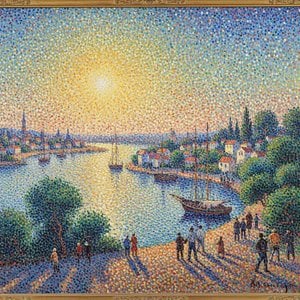
Harmonijski vizion Paula Signaca
Paul Victor Jules Signac, rođen u Parizu 1863. godine, izrastao je u ključnu figuru evolucije moderne umjetnosti, neraskidivo povezan s rađanjem i razvojem neoimpresionizma. U početku privučen arhitekturom, susret s izložbom Claudea Moneta potaknuo je trajno strast prema slikarstvu, postavljajući ga na put koji će redefinirati teoriju boja i umjetnički izraz. Signac nije bio samo slikar; bio je posvećen istraživač svjetlosti, boje i same znanosti koja leži u osnovi vizualne percepcije. Njegova rani radovi, iako pokazuju impresionističke tendencije, brzo su se razvili pod dubokim utjecajem Georgesa Seurata, stvarajući partnerstvo koje je rodilo pointilizam – tehniku karakteriziranu preciznom primjenom sitnih, odvojenih točaka čiste boje namijenjenih optičkom miješanju u oku promatrača. To nije bilo samo pitanje estetike; bio je to pokušaj sistematizacije slikarstva, utemeljenja na znanstvenim principima i osporavanja konvencionalnih umjetničkih normi.
Dijalog sa Seuratom i rađanje neoimpresionizma
Susret Signaca i Seurata 1884. godine bio je transformativan za obojicu umjetnika. Dijelili su fascinaciju spisima Eugènea Delacroixa o teoriji boja, posebno njegovom istraživanju komplementarnih kontrasta i emocionalnog utjecaja nijansi. Zajedno su se upustili u rigorozno istraživanje tih principa, prevodeći ih u revolucionarnu tehniku slikanja. Signac je srdačno prihvatio Seuratovu viziju, napuštajući prolazne poteze kistom impresionizma za preciznu, izračunatu primjenu točaka boje.
Boulevard de Clichy (1886.) stoji kao rani svjedok ovog novog pristupa, pokazujući Signacov pedantan stil i njegovu predanost hvatanju živahnosti urbanog života kroz znanstveni objektiv. Međutim, njihova suradnja nije bila samo tehnička; bila je intelektualna, potaknuta zajedničkom željom da se slikarstvo podigne na razinu rigorozne znanosti. Signac je postao posvećen zagovornik Seuratovih ideja, neumorno promovirajući neoimpresionizam i braneći njegove principe od kritika. Tragična prerana smrt Seurata 1891. godine ostavila je Signaca kao glavnog prvaka njihove zajedničke umjetničke vizije, ulogu koju je prihvatio s nepokolebljivom predanošću.
Obalne fantazije i umjetnička neovisnost
Nakon Seuratove smrti, Signacovo se umjetničko putovanje promijenilo, duboko utjecano njegovom dubokom ljubavlju prema jedrenju i privlačnosti mediteranske obale. Otkrio je Saint-Tropez 1892. godine, uspostavljajući tamo dom koji je postao utočište za umjetnike i izvor beskrajnog nadahnuća. Sjajne vode, suncem okupane luke i slikovita primorska mjesta pružili su idealno okruženje za istraživanje interakcije svjetlosti i boje.
Crvena bova, Saint-Tropez (1895.) primjer je ovog razdoblja, pokazujući njegovu majstoriju pointilizma u hvatanju živahnih nijansi i dinamične energije mora. Njegova se tehnika razvijala, postajući tekućija i izražajnija zadržavajući znanstveni temelj. Počeo je eksperimentirati s većim potezima kistom i širem paletom boja, odmaknuvši se od strogog pridržavanja Seuratove precizne točkaste metode. Signacova su putovanja protezala se izvan Francuske, obuhvaćajući Italiju, Nizozemsku, pa čak i Konstantinopol, svako putovanje obogaćujući njegov umjetnički vokabular i proširujući njegovu perspektivu.
Pokrovitelj avangarde i trajno nasljeđe
Osim vlastitih umjetničkih nastojanja, Signac je igrao ključnu ulogu u poticanju razvoja moderne umjetnosti kroz svoje vodstvo unutar Société des Artistes Indépendants. Kao predsjednik od 1908. do smrti 1935. godine, zagovarao je umjetničku slobodu i pružio platformu za nadolazeće talente, uključujući Henrija Matissea, Andréa Deraina i druge pionire Fauvizma i Kubizma. Bio je među prvima koji su prepoznali i podržali njihov revolucionarni rad, izlažući kontroverzna djela koja su izazivala konvencionalne estetske norme. Signacova predanost inkluzivnosti i njegova spremnost da prihvati inovacije pomogla je oblikovati put 20. stoljeća. Njegovi teoretski spisi, posebno
Od Eugènea Delacroixa do neoimpresionizma (1899.), dodatno su učvrstili njegov položaj kao vodeće intelektualne figure u umjetničkom svijetu. Nasljeđe Paula Signaca proteže se daleko izvan njegovih očaravajućih slika; bio je vizionar, posvećen teoretičar i velikodušni pokrovitelj koji je duboko utjecao na tijek moderne umjetnosti, ostavljajući neizbrisiv trag na generacije umjetnika.
Ključni datumi i postignuća
- 1863.: Rođen u Parizu, Francuska.
- 1884.: Suosnovao Société des Artistes Indépendants s Georgesom Seuratom.
- 1886.: Naslikao *Boulevard de Clichy*, ključni primjer ranog pointilizma.
- 1895.: Stvorio *Crvenu bovu, Saint-Tropez*, pokazujući njegovu majstoriju obalnih prizora.
- 1899.: Objavio *Od Eugènea Delacroixa do neoimpresionizma*, ključno djelo o teoriji boja.
- 1908. – 1935.: Bio predsjednik Société des Artistes Indépendants, zagovarajući umjetnike avangarde.
- 1935.: Preminuo u Parizu u dobi od 72 godine, ostavljajući bogato umjetničko nasljeđe.



 Pregledaj u stvarnoj veličini
 Prebacite na prodaju printova
 Podijeli
 Podijeli
 Detalji
 Vodič
Vodič

 Preuzmi datoteku
 Slični predmeti
 Rentgenska snimka
 Slide show
 Statistika


 Pročitajte više






































 Opcija stakla dostupna je samo za dimenzije manje od 110 cm