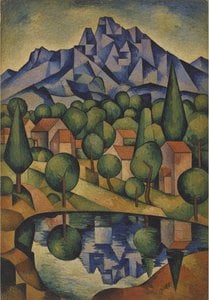
The Obstpfluckerin: A Glimpse into Cezanne’s Revolutionary Vision
Paul Cézanne's The Obstpfluckerin (1877) isn’t merely a depiction of rural life; it’s a pivotal moment in art history, a carefully constructed tableau that presaged the radical shifts of modernism. This intimate oil on canvas, measuring just 15 x 22 centimeters, offers a profound meditation on form, space, and the very essence of observation – qualities that would profoundly influence generations of artists to come. Cezanne, already wrestling with the limitations of Impressionism’s fleeting effects, sought to capture not just what he *saw*, but how he *felt* about what he saw, a deeply personal engagement with the world translated onto canvas.
The scene unfolds in a sun-drenched meadow, dominated by the warm hues of grass and foliage. Two figures, rendered with an almost sculptural quality, are engaged in the simple act of harvesting fruit – a commonplace activity elevated to a subject of intense artistic scrutiny. One man, holding a ball, gestures towards another who wears a hat, creating a subtle dynamic tension within the composition. A third figure, riding a horse in the background, adds depth and spatial complexity, hinting at a larger world beyond the immediate foreground. Notice how Cézanne deliberately avoids sharp outlines or photographic realism; instead, he employs broken brushstrokes and overlapping planes of color to create an illusion of three-dimensionality – a technique that would become central to Cubism.
Post-Impressionism: A Reaction and a Revolution
The Obstpfluckerin firmly establishes Cézanne as a key figure in the Post-Impressionist movement. Emerging roughly between 1886 and 1905, this artistic current represented a deliberate departure from the Impressionists’ focus on capturing transient light and color. While Impressionists sought to represent the *impression* of a scene, Cézanne and his contemporaries – including Van Gogh and Gauguin – were driven by a desire to explore underlying structures, emotional resonance, and subjective experience. They utilized bold colors, distorted forms, and simplified compositions to convey their individual perspectives on reality. Cézanne’s work, in particular, moved beyond mere observation towards an active engagement with the subject matter, transforming it into a vehicle for expressing his own artistic vision.
Consider Cézanne's approach to perspective – he deliberately flattened space and manipulated viewpoints, creating a sense of visual ambiguity. This wasn’t simply a stylistic choice; it reflected his belief that art should represent not just what is seen, but how the eye *perceives* it. The painting’s composition feels simultaneously grounded in reality and imbued with Cézanne's unique sensibility – a testament to his revolutionary approach to artistic representation.
Symbolism and Emotional Resonance
Beyond its formal innovations, The Obstpfluckerin resonates with a quiet sense of human connection. The figures, though anonymous, seem engaged in a shared activity, suggesting a community bound by labor and tradition. The bright colors evoke the warmth of summer and the bounty of nature, while the muted tones of the background create a sense of distance and contemplation. Cézanne’s deliberate use of color isn't merely decorative; it serves to heighten the emotional impact of the scene, inviting viewers to contemplate the beauty and simplicity of everyday life.
The painting can be interpreted as an exploration of the relationship between humanity and nature – a theme that was central to Cézanne’s artistic concerns. He sought to capture not just the outward appearance of the natural world, but also its underlying essence, its inherent dignity and power. The Obstpfluckerin is therefore more than just a depiction of fruit pickers; it's a profound meditation on the human condition and our place within the larger tapestry of existence.
A Legacy in Modern Art
Cézanne’s influence extends far beyond his own time. His groundbreaking approach to form, color, and perspective paved the way for Cubism, Fauvism, and countless other modern art movements. Artists like Picasso and Matisse were deeply indebted to Cézanne's innovations, recognizing in his work a radical departure from traditional artistic conventions. The Obstpfluckerin stands as a powerful reminder of Cézanne’s pivotal role in shaping the course of art history – a testament to the enduring power of observation, emotion, and artistic vision.



 Pregledaj u stvarnoj veličini
 Prebacite na print
 Pošalji
 Podijeli
 Detalji o umjetničkom djelu

 Preuzmi
 Slični predmeti
 Rentgenska snimka
 Automatska prezentacija
 Statistika


 Prikaži više






































 Opcija stakla dostupna je samo za dimenzije manje od 110 cm