Oil On CanvasWallArtRomanticism
 186719th Century
 57.0 x 36.0 cm
Giclée tisak muzejske kvalitete ili otisak na platnu uz brzu proizvodnju i fleksibilne opcije završne obrade. ( Kupi ručno naslikanu sliku Kupi digitalnu sliku)





























Odaberite jednu od naših unaprijed definiranih veličina koje odgovaraju izvornim proporcijama umjetničkog djela.

Možete unijeti vlastite dimenzije kako biste umjetničko djelo prilagodili specifičnom okviru ili prostoru. Ako odabrana veličina ne odgovara proporcijama izvornog rada, izrezat ćemo dio slike ili je proširiti pomoću ogledalnog efekta ili jednobojne rubne površine. Digitalni prikaz (mockup) bit će vam poslan na odobrenje prije početka proizvodnje.
Imajte na umu da pregled na zaslonu ne odražava stvarno izrezivanje ili proširivanje. Samo će mockup točno prikazati konačnu kompoziciju.
Iako su dostupne prilagođene veličine, preporučujemo odabir dimenzije iz unaprijed definirane liste kako biste očuvali izvorne proporcije.
Dostava širom svijeta () u roku od 2 tjedna umjesto standardnih 4/5 tjedana. (6 Rujan)


Amour in Plaster
Veličina reprodukcije
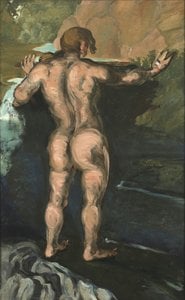
Paul Cézanne’s "Amour in Plaster," painted in 1867, offers a fascinating window into the artist's early development and his exploration of Romantic themes. This oil-on-canvas work (57 x 36 cm) depicts a plaster statue of a nude woman with her back to the viewer, leaning against what appears to be a tree or wall within a garden setting. The painting is characterized by its delicate handling of light and shadow, creating an atmosphere of quiet contemplation and subtle sensuality.
The central focus of "Amour in Plaster" is the statue itself, rendered with remarkable detail despite its seemingly fragile material. Cézanne’s attention to the woman's hair, which appears windblown, adds a sense of movement and life to the otherwise static form. The surrounding environment—the leaves visible on the tree or wall—introduces an element of natural beauty that contrasts with the artificiality of the plaster statue. The choice of a plaster figure is significant; it suggests a fleeting beauty, a temporary representation of ideal feminine form, hinting at themes of fragility and impermanence often explored in Romantic art.
"Amour in Plaster" exemplifies Cézanne's transitional style, blending elements of Romanticism with emerging realist tendencies. While the subject matter—a nude female figure in a natural setting—is rooted in Romantic tradition, Cézanne’s approach to depicting form and light demonstrates a move towards greater objectivity. Unlike the dramatic narratives often found in Romantic paintings, "Amour in Plaster" presents a more introspective scene, inviting viewers to contemplate the beauty of the statue and its relationship to the surrounding environment. Early influences on Cézanne included artists like Gustave Courbet, whose realist approach emphasized depicting subjects as they appeared in everyday life, and the Barbizon school painters who focused on capturing the effects of light and atmosphere in landscapes.
Created during a period when Cézanne was still finding his artistic voice, "Amour in Plaster" represents an important step in his development towards the groundbreaking innovations that would later define his mature style. This work predates his full embrace of Impressionism and his eventual pioneering role in Cubism. It’s considered part of his “dark period,” a time when he experimented with darker palettes and more introspective themes. Understanding this painting within Cézanne's broader artistic trajectory reveals its significance as a bridge between the Romantic past and the modernist future.
"Amour in Plaster" evokes a sense of quiet melancholy and understated beauty. The statue’s turned back invites viewers to project their own emotions and interpretations onto the scene, creating a deeply personal experience. The painting's subtle use of light and shadow enhances its emotional depth, drawing the viewer into a world of contemplation and introspection. This work, though less celebrated than some of Cézanne’s later masterpieces, remains a testament to his early talent and foreshadows the revolutionary artistic vision that would profoundly influence generations of artists to come.


1839 - 1906 , Francuska

Master the intricate art of plaster bas-relief with our expert guide for art students. Learn professional techniques in material selection, texture carving, and pigment integration to create soulful, dimensionally rich sculptural masterpieces.

Explore the structural genius of Paul Cézanne. Discover how his mastery of geometric form and color bridged Impressionism and Cubism in this definitive guide for art enthusiasts and collectors.

Master the nuances of three-dimensional art with our expert guide. Explore sculptural history, from Phidias to Neoclassicism, and learn to evaluate materiality, form, and technique like a true connoisseur. Elevate your collection with profound insights into the world of sculpture.

 Pregledaj u stvarnoj veličini
 Pošalji
 Podijeli
 Detalji o umjetničkom djelu

 Preuzmi
 Slični predmeti
 Rentgenska snimka
 Automatska prezentacija
 Prikaži više







 Opcija stakla dostupna je samo za dimenzije manje od 110 cm