


Ručno oslikano uljanim bojama na platnu u dimenzijama i okviru po vašem izboru, izrađeno po narudžbi od strane naših umjetnika. ( Kupi print Kupi digitalnu sliku)
Odaberite jednu od naših unaprijed definiranih veličina koje odgovaraju izvornim proporcijama umjetničkog djela.

Možete unijeti vlastite dimenzije kako bi odgovarale određenom okviru ili prostoru. Ako odabrana veličina ne odgovara proporcijama izvorne slike, izrezat ćemo umjetničko djelo ili proširiti sliku dodatnim ručno oslikanim elementima. Digitalni nacrt bit će vam poslan na odobrenje prije početka proizvodnje.
Imajte na umu da pregled na ekranu ne prikazuje stvarno izrezivanje ili proširivanje. Samo će nacrt točno prikazati konačni sastav.
Iako su dostupne prilagođene veličine, preporučujemo odabir dimenzije s preddefiniranog popisa kako bismo očuvali izvorne proporcije.
Isporuka širom svijeta () u roku od 3-4 tjedna umjesto standardnih 5 tjedana. (7 Rujan). Bez kompromisa u kvaliteti.


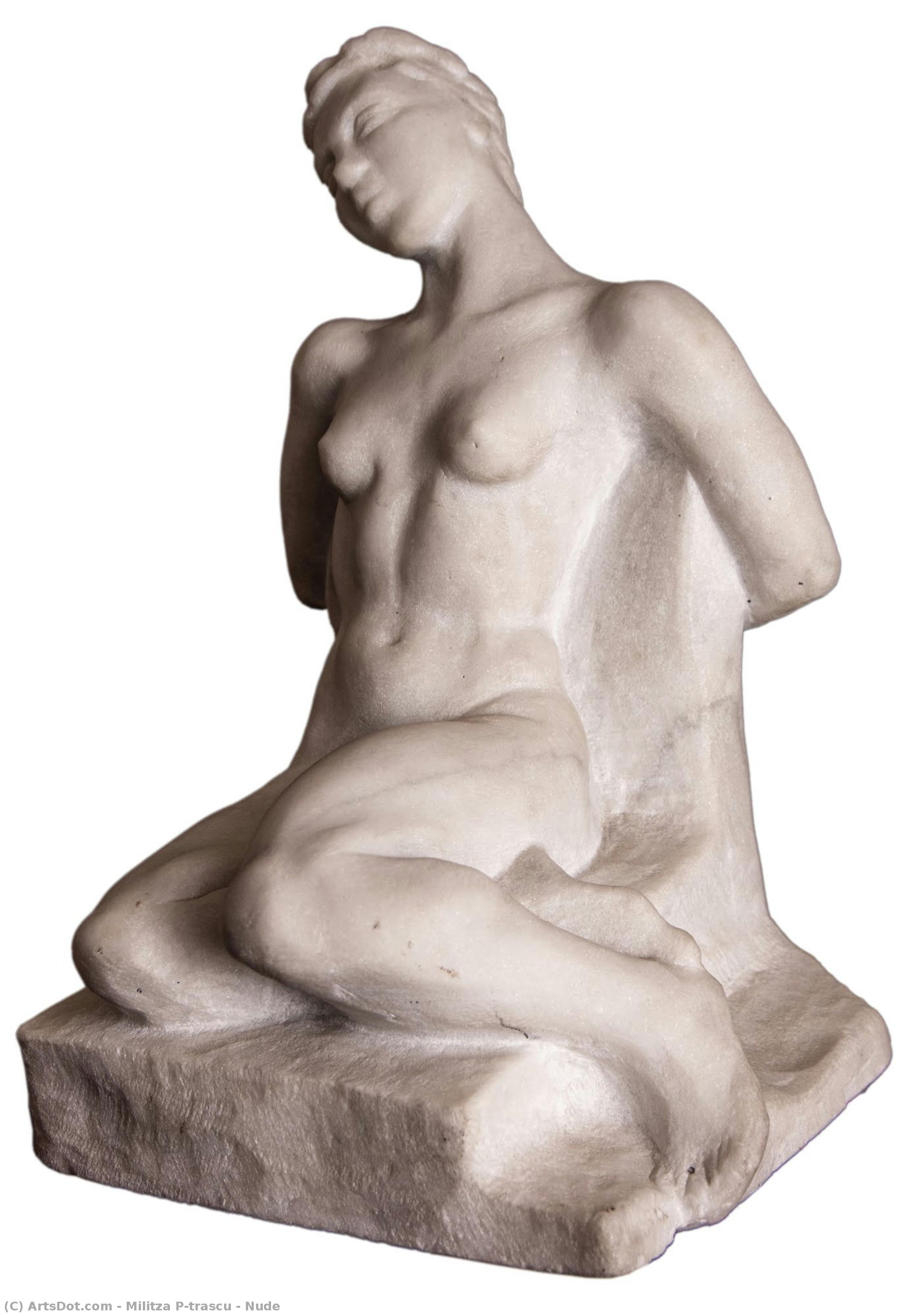
Nude
Veličina reprodukcije

In the grand tapestry of twentieth-century European art, few threads possess the delicate strength and refined grace of Militza Petrașcu. Born in Chisinau, Moldova, in 1892, Petrașcu emerged as a monumental figure in Romanian art history, widely revered as the nation's preeminent female sculptor. Her life was a profound journey of intellectual and aesthetic exploration, moving through the cultural epicenters of St. Petersburg, Moscow, Munich, and Bucharest. This cosmopolitan upbringing allowed her to weave together a unique artistic language—one that harmonized the rigorous discipline of classical tradition with the daring, experimental spirit of the modern avant-garde.
Petrașcu’s early years were marked by an uncommon breadth of scholarly interest. While pursuing her artistic vocation, she also engaged in deep philosophical inquiry at St. Petersburg’s Bestuzhev Institute. This academic foundation provided a vital intellectual scaffolding for her creative endeavors, ensuring that her work was never merely decorative but always deeply rooted in thought and meaning. As she moved through the prestigious academies of Europe—studying at the Moscow State Academy of Industrial and Applied Arts and later at Munich’s Akademie der Bildenden Künste—she mastered the technical complexities of form, texture, and volume that would become the hallmarks of her mature style.
The interwar period in Romania was a time of vibrant artistic ferment, characterized by the rise of the contimporanul movement. It was within this electric atmosphere that Petrașcu found herself at the heart of a revolutionary circle. She existed in a creative dialogue with some of the most significant luminaries of the age, including Constantin Brancusi, Wassily Kandinsky, and Henri Matisse. These encounters were not merely social but deeply transformative, as she absorbed the burgeoning modernist aesthetics that sought to strip away the superfluous in favor of essential truth.
Her work reflects this profound influence through a meticulous attention to detail and an ability to convey deep emotion via subtly sculpted forms. Whether working in marble or bronze, Petrașcu possessed a rare sensitivity to the interplay of light and shadow across a surface. Her sculptures often explore the nuances of femininity, capturing a sense of timeless beauty that feels both classical and strikingly contemporary. In her neoclassical busts, such as her evocative depictions of women, one finds a serene elegance that echoes the streamlined purity of Brancusi while maintaining a distinct, soulful intimacy.
The breadth of Petrașcu’s talent extended beyond the sculptural medium into the realm of portraiture and illustration, yet it was her ability to breathe life into static materials that secured her place in history. Her repertoire includes works of immense technical difficulty and emotional depth:
As we reflect on the career of Militza Petrașcu, we see more than just a collection of beautiful objects; we see the record of an artist who navigated the turbulent shifts of the twentieth century with unwavering dedication to her craft. Her legacy remains a vital part of the Romanian cultural identity, serving as a bridge between the classical past and the modernist future. Through her hands, stone and clay were transformed into enduring symbols of elegance, strength, and the eternal beauty of the human spirit.

1892 - 1976 , Moldova

 Pregledaj u stvarnoj veličini
 Pošalji
 Podijeli
 Detalji o umjetničkom djelu

 Preuzmi
 Slični predmeti
 Rentgenska snimka
 Automatska prezentacija

 Prikaži više




































 Opcija stakla dostupna je samo za dimenzije manje od 110 cm


