


Preuzmite datoteku spremnu za tisak koja kvalitom daleko nadilazi web prikaz. Svaka digitalna slika koju prodajemo prosljeđuje se iz visokorezolucijske master datoteke iz naše baze — obično širine od 5.000 do 15.000 piksela — što vam omogućuje tisak velikih dimenzija, precizno izrezivanje ili sigurnu reprodukciju najfinijih detalja.
Nijedna datoteka ne napušta naš studio netaknuta. Digitalni stručnjak uspoređuje boje s izvornim slikama i po potrebi ih ispravlja, a zatim poboljšava jasnoću i detalje pomoću profesionalnih alata za retuširanje — uvijek ostajući vjerni umjetnikovim potezima četkice i stilu. Rezultat je prikaz koji izgleda kao prava slika, a ne kao sken s filtrima.
Odobravanje prije završetka: naš stručnjak šalje sliku e-poštom u roku od 72 sata na vaš pregled. Niste zadovoljni? Zatražite poboljšanja ili ispravke, ili tražite povrat novca ako kvaliteta ne ispunjava vaša očekivanja.
To je kvaliteta na koju se oslanjaju izdavači, dizajn studiji, galerije i tiskare.
Preuzmite datoteku visoke rezolucije za osobnu izložbu, tisak i kreativne projekte. ( Prebacite na printove Kupi ručno oslikano djelo)
Odabirom WahooArt.com ne dobivate samo sliku – dobivate profesionalno unapređeno digitalno umjetničko djelo, izrađeno s najvećom preciznošću uz jamstvo zadovoljstva. Evo svega što automatski dolazi uz vašu narudžbu:
Vaša digitalna slika visoke rezolucije bit će vam poslana e-mailom u roku od 72 sata od trenutka narudžbe – spremna za neposrednu upotrebu.
Vaše umjetničko djelo profesionalno je optimizirano pomoću naprednih AI alata i ručnog uređivanja, čime se osigurava maksimalna razina detalja, oštrine i točnosti boja.
Slučajno ste obrisali ili izgubili svoju datoteku? Ne brinite – ponovno ćemo vam je poslati u bilo kojem trenutku, potpuno besplatno.
Uživajte u svojim umjetničkim djelima trenutno, bez carina, pristojbi ili troškova dostave – digitalni downloadi uvijek su oslobođeni poreza.
Uz pomoć profesionalnih alata i upravljanja bojama, osiguravamo da vaša digitalna slika što vjernije odražava izvorne boje.
Ako niste zadovoljni svojom digitalnom slikom, revidirat ćemo je ili vratiti 100% iznosa u roku od 100 dana – bez suvišnih pitanja.
Niste zadovoljni? Osigurajte puni povrat novca u roku od 100 dana od primitka digitalne datoteke – bez suvišnih pitanja.
Kupite 3 slike, uštedite 10% - Kupite 5 slika, uštedite 15% - Kupite 10+ slika, uštedite 20%. Odlično za kreativne projekte, galerije i agencije.
To gaze upon Massimo Stanzione's "Cleopatra" is to be transported across the currents of time, into an era steeped in myth, power, and breathtaking beauty. This magnificent painting, executed in 1630, captures not merely a portrait, but an embodiment of legendary allure. The subject, Cleopatra herself, reclines with an undeniable regal grace upon a chair, her posture suggesting both languid contemplation and inherent command. Draped in sumptuous red fabric, she commands the viewer's attention, drawing the eye to the delicate curve of her crossed legs and the object—be it a book or fruit—held gently in her hand. The work resonates with the enduring fascination humanity has held for figures who blended earthly splendor with divine mystique.
Stanzione, an Italian Baroque master whose career flourished in Naples, stands as a fascinating bridge between artistic giants. While his undeniable debt to Caravaggio's dramatic use of light and shadow—that stark, almost theatrical illumination that sculpts form from darkness—is evident, the painting possesses a distinct lyrical quality. This is where Stanzione distinguishes himself; he marries the raw realism of the early Baroque with the more classical, graceful mannerism associated with Bolognese painters. The resulting effect in "Cleopatra" is one of heightened reality—the figures feel palpably present, yet their bearing suggests an almost idealized narrative moment. It is a masterful tension between brutal verisimilitude and sublime elegance.
The choice of color plays a pivotal role in the painting's emotional resonance. The deep, passionate red of Cleopatra’s gown speaks volumes of passion, wealth, and perhaps even danger—a visual shorthand for imperial power. Her pose itself is highly symbolic; the crossed legs are not merely decorative but suggest a studied confidence, an ease that comes from absolute authority. Furthermore, the object she holds invites scholarly speculation. Is it knowledge, represented by the book, suggesting her intellect matched her beauty? Or is it sustenance, hinting at earthly pleasures? Regardless of its precise meaning, this small detail anchors the grand narrative, giving the viewer a focal point for their own interpretation.
Housed originally in the esteemed collection of the Hermitage Museum, "Cleopatra" offers collectors and designers an unparalleled opportunity to connect with high Baroque drama. Reproducing this piece allows one to bring the sophisticated narrative tension of 17th-century Italian painting into a contemporary space. The dramatic chiaroscuro, the rich texture suggested by the drapery, and the subject's timeless magnetism make it a centerpiece worthy of any discerning interior design scheme or private gallery. Owning a reproduction is not just acquiring art; it is curating an atmosphere steeped in historical grandeur and enduring romance.
"Cleopatra" autora Massimo Stanzione pripada pokretu Baroque, unutar ere Early Modern svog tvorca.
Koloristička kompozicija djela "Cleopatra" autora Massimo Stanzione spaja Bold kontrast s Strong Color Unity harmonijom.
Preporučena uporaba (Accent) i prostor (Living Room) su dvije opcije navedene za "Cleopatra" autora Massimo Stanzione.

In the vibrant, sun-drenched streets of seventeenth-century Naples, a period when the city stood as one of the most significant urban centers in Europe, a painter emerged who would redefine the visual language of the Italian Baroque. Massimo Stanzione, born in Frattamaggiore in 1585, was not merely a participant in the artistic ferment of his time; he was a transformative force. While many of his contemporaries were content to follow a single stylistic path, Stanzione possessed a rare, dualistic vision. He achieved what many thought impossible: the seamless marriage of the raw, visceral shadows of Caravaggio with the refined, lyrical grace of the Bolognese school. This unique synthesis earned him the prestigious moniker, the Neapolitan Guido Reni, marking him as an artist of unparalleled elegance and dramatic power.
The foundations of Stanzione’s artistry were laid in the fertile soil of Naples, likely under the tutelage of masters such as Fabrizio Santafede and Battistello Caracciolo. However, the true catalyst for his stylistic evolution was the profound impact of Caravaggio’s tenebrism. From this revolutionary approach, Stanzione adopted a mastery of light and shadow that lent his figures a startling, tactile presence. Yet, it was during his formative journeys to Rome—most notably between 1617 and 1630—that his palette began to bloom with a new, classical sophistication. Immersed in the Eternal City, he absorbed the balanced compositions of Annibale Carracci and the luminous, revamped Caravaggism of Simon Vouet. This period of Roman exposure allowed him to temper the brutal realism of his youth with an idealized naturalism, creating works that were as much about poetic beauty as they were about dramatic tension.
Stanzione’s ascent within the social and artistic hierarchies of Europe was nothing short of meteoric. His talent was recognized not only by the clergy but by the highest echelons of nobility and the Papacy itself. The year 1621 marked a significant milestone when Pope Gregory XV bestowed upon him the prestigious title of Knight of the Golden Spur. His honors continued to accumulate, and under the reign of Urban VIII, he was invested with the Order of Christ, an achievement that granted him the esteemed title of Caballero Massimo in Spain. Such accolades reflect a career that transcended the boundaries of local craftsmanship, positioning him as a figure of international importance.
His body of work is characterized by a remarkable versatility, ranging from intimate, psychologically penetrating portraits to monumental altarpieces and sweeping frescoes. Some of his most enduring contributions to the art world include:
As the mid-seventeenth century approached, Stanzione stood alongside Jusepe de Ribera as the titan of the Neapolitan painting scene. Together, they dominated the artistic landscape, creating a period of intense competition and creative flowering. While Ribera leaned into the gritty, earthy realism of the Spanish tradition, Stanzione offered a more polished, colorful alternative that appealed to the aesthetic sensibilities of the era's elite. His influence was profound and far-reaching; his method of blending dramatic chiaroscuro with classical grace became a blueprint for subsequent generations of local artists, most notably the great Francesco Solimena.
Tragically, the very era of prosperity that allowed his art to flourish also brought the devastation of the plague. In 1656, a catastrophic outbreak swept through Naples, claiming many lives and bringing much of the city's vibrant culture to a standstill. It is believed that Stanzione himself fell victim to this epidemic, passing away at the height of his influence. Though his life was cut short, his legacy remained etched in the stone and canvas of Naples. Through his ability to harmonize the rugged with the refined, Massimo Stanzione ensured that the Neapolitan Baroque would forever be remembered as a period of profound emotional depth and exquisite classical beauty.
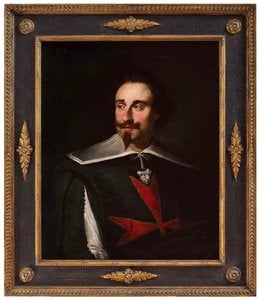
1585 - 1656 , Italy
 Pregledaj u realnoj veličini
 Pošalji
 Podijeli
 Detalji o umjetničkom djelu
 Vodič
Vodič

 Preuzmi umjetničko djelo
 Slični predmeti
 Rentgenska snimka
 Slide show
 Q&A
Q&A Statistika


 Prikaži više


