Rane godine i začeci umjetničke vizije
Mark Rothko, rođen kao Markus Jakovljevič Rotkovič u Daugavpilsu, Latvija, 1903. godine, nosio je u sebi od samog početka osjećaj otuđenja koji je duboko oblikovao njegovu umjetničku putanju. Njegove rane godine bile su obilježene anksioznošću židovske obitelji koja je živjela unutar Pale naselja, zasjenjene progonima i političkim nemirima. Ova atmosfera ugradila mu je duboku osjetljivost na ljudsko patnju, temu koja će odjekivati kroz sve njegovo djelo. Emigracija 1913. godine u Portland, Oregon, predstavljala je ne samo geografsku promjenu, već i kulturni šok za mladog Rothka. Iako je briljirao u akademskom smislu na Sveučilištu Yale, Rothko se sve više osjećao privučen živahnom energijom New Yorka, napustivši formalno obrazovanje kako bi slijedio svoju strast prema umjetnosti na Školi za likovne umjetnosti. Te su formative godine postavile temelj za umjetničku viziju koja će u konačnici izazvati konvencionalna shvaćanja slikarstva i redefinirati emocionalnu moć boje.
Od figurativnih početaka do apstraktnog ekspresionizma
Rothkove prve umjetničke istrage bile su čvrsto ukorijenjene u realizmu, prikazujući urbane scene i portrete s oštrom pozornošću na detalje. Međutim, čak i ta rana djela nagovještavala su psihološku dubinu koja će postati njegovim zaštitnim znakom. Tijekom 1940-ih, dok se svijet suočavao užasima Drugog svjetskog rata, Rothkova umjetnost doživjela je dramatičnu transformaciju. Pod utjecajem nadrealizma i mitologije, počeo je odlaziti od reprezentativne slike, tražeći umjesto toga izraziti univerzalne ljudske emocije kroz simbolične oblike. Ta je razdoblja obilježila pojavu višeslojnih slika – platna naseljena dvosmislenim, biomorfnim oblicima koji su se činili kao da lebde između figuracije i apstrakcije. Ta djela nisu bila samo eksperimenti u obliku; bili su duboko osjećajna reagiranja na anksioznost i nesigurnost svijeta u ratu. Do kraja 1940-ih Rothko je stigao do svog prepoznatljivog stila: platna velikih formata s rektangularnim blokovima boja koji su se činili kao da plutaju i odjekuju jedni s drugima. Odustao je od svih tragova prepoznatljive slike, fokusirajući se umjesto toga na čisti emocionalni utjecaj boje i oblika. To je označilo ključni trenutak u razvoju apstraktnog ekspresionizma i uspostavilo Rothka kao vodeću figuru u ovom revolucionarnom pokretu.
Polje boja i potraga za transcendencijom
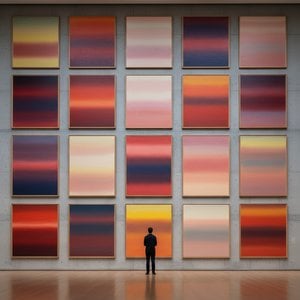
Rothkovo zrelo djelo definirano je onim što se kasnije nazvalo "poljem boja" – prostrane površine svjetlucave boje koje obuhvaćaju gledatelja u imersivno iskustvo. Te slike nisu o *čemu* prikazuju, već o *kako* vas osjećaju. Rothko je vjerovao da bi umjetnost trebala angažirati gledatelja visceralno, zaobilazeći intelektualnu analizu i izravno se obraćajući emocijama. Pažljivo je nanosio tanke premaze boje, stvarajući suptilne varijacije u tonu i teksturi koje su se činile kao da odišu iz platna. Rubovi njegovih rektangularnih oblika često su zamućeni, omogućujući im da se pomiješaju i međudjeluju jedni s drugima, stvarajući osjećaj dubine i pokreta. Rothko je namjerno izbjegavao naslove osim brojeva – "Br. 1", "Br. 6" – potičući gledatelje da se suoče sa slikama bez predrasuda i dopuste svojim vlastitim emocionalnim odgovorima da ih vode. Težio je stvoriti prostor za kontemplaciju, utočište u kojem bi gledatelji mogli uspostaviti vezu s nečim većim od sebe.
Njegova ambicija nije bila ništa manje nego evocirati duboke duhovne iskustva jezikom boje.
Značajna postignuća i trajni nasljeđ
Među Rothkovim najznačajnijim ostvarenjima su "Br. 10 (1950)", ključno djelo koje utjeljuje njegov evoluirajući stil, i Seagram Murali (1958.). Naručeni za restoran Four Seasons u New Yorku, ti su murali na kraju odbijen od Rothka, koji je smatrao da će biti ugroženi svojim namijenjenim okruženjem. Umjesto toga, donirao ih je Tate Galleryju u Londonu, gdje i dalje inspiriraju strahopoštovanje i kontemplaciju. Možda je njegov najambiciozniji projekt bila Rothko Kapela (1971.) u Houstonu, Texas – nekonfesionalna svetište koja sadrži četrnaest njegovih slika. Dizajnirana kao prostor za tiho razmišljanje, kapelica se smatra svetim mjestom mnogima, utjelovljujući Rothkovo uvjerenje u duhovnu moć umjetnosti.
Rothkov je utjecaj na sljedeće generacije umjetnika bio ogroman. Pripremio je teren za minimalističku umjetnost i nastavlja inspirirati suvremene slikare koji istražuju emocionalne mogućnosti apstrakcije. Unatoč borbi s depresijom tijekom cijelog života, koja je kulminirala njegovim tragičnim samoubojstvom 1970., Mark Rothko ostaje jedan od najvažnijih i utjecajnijih umjetnika 20. stoljeća – majstor boje čije djelo nastavlja rezonirati s publikom širom svijeta.
Trajna moć emocionalne resonancije
- Rothkove slike slave se svojom sposobnošću prenošenja univerzalnih ljudskih emocija - tragedije, ekstaze, očaja i nade.
- Njegovo istraživanje boje kao sredstva za izražavanje emocija revolucioniralo je apstraktno slikarstvo.
- Rothko Kapela stoji kao svjedočanstvo njegovog uvjerenja u duhovnu moć umjetnosti.
- Ostaje ključna figura u apstraktnom ekspresionizmu i veliki utjecaj na suvremene umjetnike.
Rothkovo nasljeđe proteže se izvan područja povijesti umjetnosti. Njegovo djelo potiče nas da suočimo svoju smrtnost, da se nosimo s kompleksnostima ljudskog postojanja i tražimo značenje u svijetu koji je često lišen njega. Podsjeća nas da umjetnost nije samo o estetici; radi se o vezi - vezi sa sobom, s drugima i nečim većim od nas. Trajna moć njegovih slika leži u njihovoj sposobnosti da evocira te duboke emocije, nudeći utjehu, inspiraciju i pogled u dubine ljudske duše.



 Pregledaj u realnoj veličini
 Kupi ručno oslikano djelo
 Pošalji
 Podijeli
 Detalji o umjetničkom djelu
 Vodič
Vodič

 Preuzmi umjetničko djelo
 Slični predmeti
 Rentgenska snimka
 Slide show
 Statistika


 Prikaži više






































 Opcija stakla dostupna je samo za dimenzije manje od 110 cm