A Symphony of Brown: The Soul of Mark Rothko’s No. 17
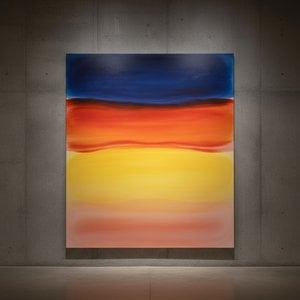
To stand before Mark Rothko’s No. 17 is to enter a sanctuary of quiet intensity. Painted in 1958, this monumental work serves as a cornerstone of the Color Field movement, offering much more than a mere arrangement of pigment on canvas. It is a deliberate orchestration of tonal variations designed to pull the viewer into a state of deep contemplation. The composition, a square expanse measuring 170 x 158 cm, immediately captivates with its dominant palette of earth tones—ranging from warm, reddish-browns to deep, onyx shades, all punctuated by unexpected, ethereal flashes of magenta. There are no figures here, no landscapes to recognize, and no lines to guide the eye; instead, there is only the profound weight of color itself.
The power of this piece lies in its ability to evoke an intangible sense of melancholy and spiritual resonance. Rothko’s approach eschews traditional representational techniques, opting instead for large, amorphous blocks of color that appear to bleed into one another at their edges. This lack of discernible contour creates a feeling of stillness, inviting the observer to immerse themselves in the visual experience without the distraction of external reality. For the collector or interior designer, this painting offers a unique atmospheric quality; it does not merely occupy a room but transforms its very energy, providing a focal point that encourages inner reflection and emotional depth.
Mastery of Light and Layered Texture
The technical brilliance of No. 17 is found in the subtle, almost imperceptible layers of oil paint that compose its surface. Rothko was a master of manipulating pigment density to create an illusion of recession and depth within a seemingly flat plane. Through meticulous layering, he achieved a luminous quality where light seems to emanate from within the canvas rather than simply reflecting off it. The brushstrokes are softened by this process, contributing to a smooth yet textured appearance that hints at the artist's painstaking labor.
This technique is essential to the painting's emotional impact. As the eye moves across the vertical stack of rectangular blocks, the transitions between the lighter reddish-browns and the darker, more somber tones create a rhythmic pulse. This movement mimics the ebb and flow of human emotion—the way sadness can feel heavy and opaque, or how hope can appear as a sudden, vibrant flicker of magenta against a dark background. It is this interplay of light and shadow, achieved through sheer technical discipline, that allows the work to transcend its abstract form and touch upon universal human experiences.
A Legacy of Abstract Expressionism
Historically, No. 17 emerged during a pivotal era for American art, a time when the New York School was redefining the boundaries of creativity. As part of the Abstract Expressionist movement, Rothko sought to communicate profound psychological states directly through color and form. His personal history—marked by the displacement of his Latvian roots and the complexities of the immigrant experience—infused his work with a deep sensitivity to themes of mortality, trauma, and the search for meaning. This painting is a testament to that lifelong quest.
For those seeking to bring a piece of art history into a contemporary space, a high-quality reproduction of No. 17 offers an unparalleled opportunity. It serves as a sophisticated element of decor, blending seamlessly with modern minimalist aesthetics while providing a rich, historical narrative. Whether placed in a quiet study, a grand gallery, or a thoughtfully curated living area, this work remains a timeless portal to the inner landscape, reminding us that even in the absence of form, color can speak volumes about the human condition.
Pitanja i odgovori
Koje se teme pojavljuju u djelu "No. 17" autora Mark Rothko?
"No. 17" autora Mark Rothko prikazuje: abstract, color field, rothko, brown tones, layered paint, contemplative, emotional art, geometric forms.
Koji je datum nastanka djela "No. 17" autora Mark Rothko?
Djelo "No. 17" datira iz 1958. Taj datum smješta rad unutar karijere Mark Rothko i pripadajućeg mu doba.
Koji umjetnik se pripisuje djelu "No. 17"?
Autor djela "No. 17" je Mark Rothko. Rad je katalogiziran pod imenom Mark Rothko.
Kako je izgrađena koloristička kompozicija djela "No. 17" autora Mark Rothko?
U djelu "No. 17", Serene kontrast uparuje se s Unified Palette harmonijom.
U koji dio doma najbolje pristaje reprodukcija djela "No. 17"?
"No. 17" autora Mark Rothko preporučuje se za Lounge. Ovaj prijedlog temelji se na temi, bojama i atmosferi djela.
Koliko je godina Mark Rothko imao/la kada je stvorio/la "No. 17"?
Kada je "No. 17" nastalo 1958. godine, Mark Rothko – rođen/a 1903. – imao/la je 55 godina.
Pripada li "No. 17" kojoj periodi karijere umjetnika Mark Rothko?
Unutar karijere umjetnika Mark Rothko, djelo "No. 17" pripada razdoblju Mature Period. Ova faza omogućuje usporedbu s ostalim djelima tog umjetnika.



 Pregledaj u stvarnoj veličini
 Naručite ručno oslikano reprodukciju
 Podijeli
 Podijeli
 Detalji
 Vodič
Vodič

 Preuzmi datoteku
 Slični predmeti
 Rentgenska snimka
 Slide show
 Statistika


 Pročitajte više






































 Opcija stakla dostupna je samo za dimenzije manje od 110 cm