


Giclée tisak muzejske kvalitete ili otisak na platnu uz brzu proizvodnju i fleksibilne opcije završne obrade. ( Kupi ručno naslikanu sliku Kupi digitalnu sliku)
Odaberite jednu od naših unaprijed definiranih veličina koje odgovaraju izvornim proporcijama umjetničkog djela.

Možete unijeti vlastite dimenzije kako biste umjetničko djelo prilagodili specifičnom okviru ili prostoru. Ako odabrana veličina ne odgovara proporcijama izvornog rada, izrezat ćemo dio slike ili je proširiti pomoću ogledalnog efekta ili jednobojne rubne površine. Digitalni prikaz (mockup) bit će vam poslan na odobrenje prije početka proizvodnje.
Imajte na umu da pregled na zaslonu ne odražava stvarno izrezivanje ili proširivanje. Samo će mockup točno prikazati konačnu kompoziciju.
Iako su dostupne prilagođene veličine, preporučujemo odabir dimenzije iz unaprijed definirane liste kako biste očuvali izvorne proporcije.
Dostava širom svijeta () u roku od 2 tjedna umjesto standardnih 4/5 tjedana. (6 Rujan)


By The Canal, Venice -
Veličina reprodukcije
“By The Canal, Venice,” painted by Marcus C. Stone, offers a captivating window into the serene rhythms of daily life in 19th-century Venice. This evocative scene, likely created between the late 1800s and early 1900s, showcases Stone’s mastery of genre painting – a popular style during that era focused on depicting scenes from everyday life.
The artwork's composition is thoughtfully arranged to draw the viewer into the tranquil Venetian setting. A woman, elegantly dressed with a striking red hat, sits gracefully on stone steps leading down to the canal. She is accompanied by a small child and a loyal dog, creating an intimate tableau of companionship and domesticity. A partially open doorway, adorned with ornate architectural details, provides a charming backdrop, hinting at the hidden stories within Venetian homes. Two seagulls soar overhead, their flight paths adding dynamism and a touch of freedom to the otherwise peaceful scene.
Stone’s style aligns with the traditions of 19th-century academic painting, emphasizing realism, meticulous detail, and narrative storytelling. His work reflects a Victorian sensibility – a fascination with domestic scenes and a desire to capture moments of quiet beauty. The technique employed is oil painting on canvas, utilizing layering and blending techniques to achieve soft transitions and realistic textures. Brushstrokes are generally subtle, contributing to the overall atmospheric quality.
Marcus Stone (1840-1921) was a celebrated English painter known for his genre scenes, literary illustrations for authors like Charles Dickens and Anthony Trollope, and sentimental historical works. He was elected an Associate of the Royal Academy in 1877 and an Academician in 1887, demonstrating his recognition within the art world.
"By The Canal, Venice" evokes a sense of tranquility, nostalgia, and perhaps a touch of melancholy. The presence of the child and dog symbolizes innocence and companionship, while the open doorway could represent opportunity or transition – a glimpse into another world beyond the canal’s edge. The diffused lighting and soft color palette contribute to an overall feeling of faded elegance and timeless beauty.
This artwork is more than just a depiction of a Venetian scene; it's a poignant reflection on everyday life, capturing a fleeting moment in time with remarkable sensitivity and skill. It invites viewers to step back into the past and experience the charm and serenity of 19th-century Venice.

In the heart of the Victorian era, a period defined by its intricate social codes and deep-seated emotional narratives, Marcus Clayton Stone emerged as a master of the human spirit. Born in London in 1840, Stone was destined for a life immersed in the aesthetics of his time. As the son of the accomplished painter Frank Stone ARA, his artistic education began within the very walls of his childhood home. Under his father’s meticulous tutelage, he developed a foundational command of technique that allowed him to debut at the Royal Academy before he had even reached eighteen years of age. This early precocity set the stage for a career marked by both technical brilliance and an uncanny ability to capture the fleeting nuances of Victorian sentiment.
Stone’s artistic evolution is a fascinating study in the transition from historical grandeur to intimate, delicate storytelling. In his formative years, he sought to document significant historical incidents with a rigorous attention to detail, reflecting the era's fascination with monumental events and classical narratives. However, as his mastery grew, so too did his interest in the quiet, often overlooked moments of daily life. He moved away from the sweeping drama of history toward what critics often described as a dainty sentiment—a style characterized by charm, refinement, and an exquisite execution of light and color. This shift allowed him to explore themes of romantic longing, familial affection, and peaceful contemplation, making his work deeply resonant with the sensibilities of the late 19th-century public.
One cannot discuss the significance of Marcus Stone without acknowledging his profound connection to the literary giants of his age. His talent for visual storytelling found a perfect partner in the prose of Charles Dickens and Anthony Trollope. Through his celebrated illustrations, Stone did more than merely decorate pages; he breathed visual life into the characters and atmospheres of these iconic narratives. His ability to translate complex literary themes into evocative imagery helped cement his reputation as one of the premier illustrators of his generation. This symbiotic relationship between word and image allowed him to reach a vast audience, bridging the gap between fine art galleries and the widely circulated periodicals of the day.
Beyond his illustrations, Stone’s oil paintings stand as enduring monuments to Victorian romanticism. His works often feature:
The trajectory of Stone’s career was marked by consistent institutional recognition. His election as an Associate of the Royal Academy in 1877, followed by his ascent to full Academician in 1887, solidified his status within the highest echelons of the British art establishment. His influence extended far beyond the borders of England; his works were frequently engraved, allowing his imagery to circulate globally, and he was honored with medals from exhibitions across the world. Living in the prestigious Melbury Road alongside fellow painter Luke Fildes, Stone was part of a vibrant artistic community that shaped the visual identity of late Victorian London.
Today, the works of Marcus Stone serve as a poignant window into a vanished era. Whether through the profound symbolism found in his monochrome engravings or the luminous detail of his oil canvases, his art continues to invite viewers into a world of refined emotion and technical perfection. His legacy remains etched in the annals of art history, not merely as a chronicler of his time, but as an artist who possessed the rare gift of making the ephemeral moments of human connection feel eternal.

1840 - 1921 , United Kingdom
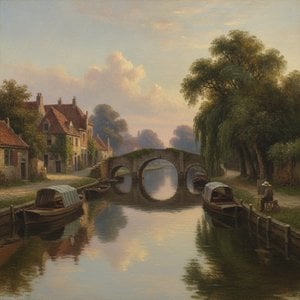
Embark on a visual journey through the tranquil beauty of canal scenes in fine art. Discover how master painters capture light, reflection, and serenity through impressionistic landscapes and timeless maritime masterpieces.
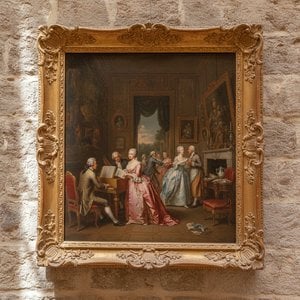
Explore the profound beauty of genre painting. From Dutch Golden Age masters to global traditions, discover how artists capture the essence of everyday life through masterful realism and timeless storytelling.

Explore the profound beauty of peasant masterpieces through exquisite genre paintings. Our premium, hand-painted oil reproductions capture the timeless elegance of the Dutch Golden Age and beyond, offering discerning collectors museum-quality art to elevate any sophisticated interior.

 Pregledaj u stvarnoj veličini
 Pošalji
 Podijeli
 Detalji o umjetničkom djelu

 Preuzmi
 Slični predmeti
 Rentgenska snimka
 Automatska prezentacija
 Prikaži više




































 Opcija stakla dostupna je samo za dimenzije manje od 110 cm


