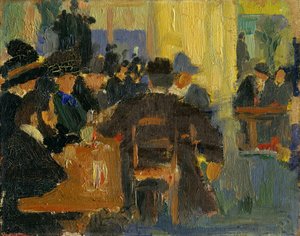
1888
1888 73.0 x 92.0 cm
Kupite digitalnu sliku visoke rezolucije i poboljšane kvalitete, koja je znatno superiornija od online prikaza.
Svaka datoteka pedantno je pripremljena od strane naših internih stručnjaka koristeći napredne alate i vještinsku ručnu retušu. Osiguravamo da svaka slika ima iznimnu jasnoću, preciznu točnost boja i visoku razinu detalja.
Konačna datoteka dostavlja se putem e-pošte u roku od 72 sata, optimizirana za neposrednu upotrebu u profesionalnim, uredničkim i tiskarskim okruženjima. To je ista kvaliteta kojoj vjeruju vrhunski studiji dizajna, izdavači i galerije.
Preuzmite datoteku visoke rezolucije za osobnu izložbu, tisak i kreativne projekte. ( Kupi print Kupi ručno naslikanu sliku)
Odabirom WahooArt.com ne dobivate samo sliku – dobivate profesionalno unapređeno digitalno umjetničko djelo, izrađeno s najvećom preciznošću uz jamstvo zadovoljstva. Evo svega što automatski dolazi uz vašu narudžbu:

Vaša digitalna slika visoke rezolucije bit će vam poslana e-mailom u roku od 72 sata od narudžbe – spremna za neposrednu upotrebu.

Vaše umjetničko djelo profesionalno je optimizirano pomoću naprednih AI alata i ručnog uređivanja, čime se osigurava maksimalna razina detalja, oštrine i točnosti boja.

Slučajno ste obrisali ili izgubili svoju datoteku? Ne brinite – ponovno ćemo vam je poslati u bilo kojem trenutku, potpuno besplatno.

Uživajte u svojim umjetničkim djelima trenutno, bez carina, pristojbi ili troškova dostave – digitalne datoteke uvijek su oslobođene poreza.

Uz pomoć profesionalnih alata i upravljanja bojama, osiguravamo da vaša digitalna slika što vjernije odražava izvorne boje.

Ako niste zadovoljni svojom digitalnom slikom, revidirat ćemo je ili vratiti 100% novca u roku od 100 dana – bez ikakvih pitanja.

Niste zadovoljni? Osigurajte puni povrat novca u roku od 100 dana od primitka vaše digitalne datoteke – bez suvišnih pitanja.

Kupite 3 slike, uštedite 10% - Kupite 5 slika, uštedite 15% - Kupite 10+ slika, uštedite 20%. Odlično za kreativne projekte, galerije i agencije.

Born in Pontoise, a suburb just northwest of Paris, in 1864, Louis Hayet’s artistic journey was one shaped by both humble beginnings and an evolving engagement with the vibrant currents of late 19th-century art. His early life, marked by financial hardship and a quiet disposition, provided little indication of the distinctive visual language he would eventually develop. Yet, from his youth—as early as 1876—Hayet demonstrated a remarkable talent for drawing, a seed that blossomed through self-directed study and, crucially, a connection with the landscape painter Camille Pissarro and his son Lucien.
Initially apprenticed to his father, who worked as a travelling salesman, Hayet’s artistic pursuits were often relegated to stolen moments spent painting in the surrounding countryside. These early works—primarily watercolors—established a foundation of observation and an appreciation for the subtle shifts of light and color that would become hallmarks of his mature style. Crucially, he was introduced to the burgeoning world of Impressionism through Pissarro’s circle, absorbing influences from artists like Signac and Seurat, though ultimately forging his own unique path within this evolving artistic landscape.
Around 1887, Hayet transitioned to the techniques of Neo-Impressionism, embracing the scientific approach championed by Paul Signac and Georges Seurat. This involved meticulously applying tiny dots or strokes of pure color – a process known as pointillism – to create an image through optical mixing in the viewer’s eye. His early pointillist works, such as “Market in Pontoise,” demonstrate this technique with remarkable precision and a delicate handling of light. These paintings capture the bustling atmosphere of everyday Parisian life—market scenes, café interiors, and glimpses into the city's vibrant entertainment venues – offering a unique perspective on urban modernity.
However, Hayet’s engagement with pointillism was not purely academic. He quickly moved beyond its rigid constraints, incorporating elements of his earlier training and developing a more expressive style. He experimented with color theory, influenced by Eugène Chevreul's research into the psychology of color, creating elaborate color wheels to predict how hues would interact. This scientific approach informed his palette and technique, resulting in paintings that shimmered with subtle luminosity and an almost ethereal quality.
A significant aspect of Hayet’s career involved his work as a decorative painter, particularly for the renowned stage designer Lugné-Poe. His skills were highly sought after, and he spent decades creating elaborate sets for theatrical productions, demonstrating an understanding of color and composition that extended beyond the canvas. This experience undoubtedly influenced his approach to painting, sharpening his eye for detail and his ability to capture fleeting moments of light and atmosphere.
Furthermore, Hayet’s association with Pissarro introduced him to Paul Cézanne, a pivotal figure in modern art. While direct influence is difficult to pinpoint, the emphasis on observation, structure, and the exploration of form evident in Cézanne's work likely resonated with Hayet’s evolving artistic sensibilities.
Despite exhibiting at prominent salons like the Salon des Indépendants and Le Barc de Boutteville, Hayet largely remained a relatively obscure figure during his lifetime. His output was often sporadic, dictated by commercial demands and periods of relative inactivity. He was notably overlooked by Bénézit’s comprehensive dictionary of artists, published in 1923, reflecting the lack of recognition he received for his contributions to Neo-Impressionism.
It wasn't until the mid-20th century that Hayet’s work began to attract serious attention. Today, his paintings are recognized as a significant contribution to both Neo-Impressionism and the broader landscape of French art at the turn of the 20th century. His delicate color palettes, meticulous brushwork, and evocative depictions of Parisian life continue to captivate viewers, offering a unique window into a world of subtle beauty and quiet observation. Works like “Market in Pontoise” are now held in prestigious collections, including the Cleveland Museum of Art, ensuring that this once-forgotten painter’s legacy endures.

1864 - 1940

 Pregledaj u stvarnoj veličini
 Pošalji
 Podijeli
 Detalji o umjetničkom djelu

 Preuzmi
 Slični predmeti
 Rentgenska snimka
 Automatska prezentacija
 Prikaži više