The Architect of Orvieto’s Glory
Lorenzo Maitani stands as a pivotal figure in the transition of Italian art, a master whose hands and vision helped bridge the gap between the medieval spirit and the burgeoning dawn of the Renaissance. Born in Siena around 1275, Maitani emerged from the rich, burgeoning Gothic traditions of Tuscany, a landscape where stone and light were beginning to dance in new, complex rhythms. His early years were steeped in the craftsmanship of a period defined by structural ambition, yet he possessed an extraordinary ability to absorb the stylistic innovations flowing from the artistic hubs of Florence and Rome. This adaptability allowed him to transcend the role of a mere builder, evolving into a visionary who could harmonize engineering necessity with profound theological narrative.
While his reputation initially flourished within the sacred confines of Siena through various ecclesiastical commissions, it was his appointment as capomaestro—the chief architect—of Orvieto Cathedral in 1308 that would forever etch his name into the annals of architectural history. The task before him was nothing short of monumental. He inherited a project of staggering scale, facing the daunting structural complexities of soaring vaults and arches that spanned remarkable distances. To navigate such unprecedented challenges, Maitani relied upon a deep, intuitive understanding of engineering principles, yet he never allowed the technical demands to overshadow the spiritual purpose of the cathedral. His leadership during this era was characterized by an ability to inspire both the artisans under his command and the patrons who funded this divine undertaking.
A Masterpiece in Stone and Bronze
The façade of Orvieto Cathedral remains Maitani’s magnum opus, a breathtaking synthesis of Gothic grandeur and emerging Renaissance ideals. It is a work that does not merely serve as a wall for a sanctuary, but as a celestial gateway designed to elevate the soul. While the precise attribution of every sculptural element remains a subject of scholarly debate due to the fragmentary nature of historical records, there is an undeniable consensus that Maitani’s sensitive hand guided the overall design. He transformed the cathedral's exterior into a complex tapestry of light and shadow, where every relief and column contributes to a larger, cohesive theological drama.
Beyond the structural majesty of the architecture, Maitani’s legacy is preserved in the delicate beauty of his sculptural contributions. His work often utilized bronze and stone to tell the stories of the faithful, most notably through his celebrated panels depicting biblical narratives. These works include:
- Scenes from Genesis: Intricate reliefs that capture the primordial beginnings of humanity with a sense of movement and grace.
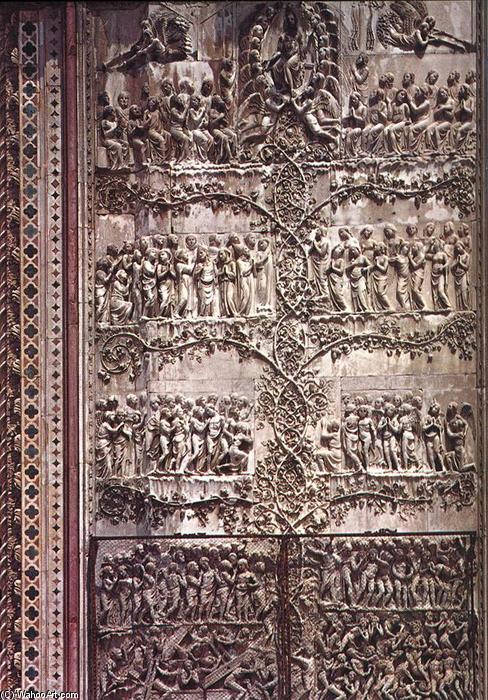
- The Last Judgment: A powerful, emotive depiction of divine justice, executed with a level of detail that reflects his mastery over medium and message.
Through these works, Maitani demonstrated an ability to translate complex theological concepts into tangible, visual experiences. His use of bas-relief allowed for a subtle play of light that brought the figures to life, making the stone appear almost fluid.
Legacy and Historical Significance
The historical significance of Lorenzo Maitani lies in his role as a transformative force in the Italian landscape. He was not simply an architect of buildings, but an architect of an era. By blending the verticality and ornamentation of the Gothic style with a new, more human-centric focus on narrative clarity and structural harmony, he helped pave the way for the Renaissance masters who would follow. His work at Orvieto serves as a permanent testament to a period of intense creative evolution, where the boundaries between art, science, and faith were beautifully blurred.
Even today, the silhouette of Orvieto Cathedral stands as a monument to his enduring spirit. Maitani’s ability to manage the immense pressures of large-scale construction while maintaining an uncompromising commitment to aesthetic beauty remains a profound lesson for all who approach the intersection of art and utility. He left behind more than just stone and bronze; he left a blueprint for how human ingenuity can reach toward the divine, creating a legacy that continues to inspire awe in all who stand before his creation.


 Pregledaj u stvarnoj veličini
 Prebacite na print
 Pošalji
 Podijeli
 Detalji o umjetničkom djelu

 Preuzmi
 Slični predmeti
 Rentgenska snimka
 Automatska prezentacija
 Statistika

 Prikaži više


