A Life Bridging Worlds: The Story of John Ramage
Born in Dublin, Ireland, in 1748, John Ramage’s life was one of remarkable transition and artistic dedication, a journey that carried him from the refined world of Irish goldsmithing to the burgeoning art scene of colonial America. Details surrounding his early family life remain elusive, yet it is known he received formal training at the Dublin Society of Artists in 1763, laying a foundation in drawing and painting techniques that would serve as the bedrock for his future endeavors. Ramage’s initial career path was notably versatile; he skillfully combined the precision of a goldsmith with the delicate artistry of a miniaturist—a testament to his inherent talent for detail and decorative arts. This early period instilled within him not only technical proficiency but also an appreciation for craftsmanship that would distinguish his work throughout his life. In 1772, driven by ambition or perhaps circumstance, Ramage embarked on a new chapter, emigrating to Halifax, Nova Scotia, marking the beginning of his artistic journey in North America and setting the stage for a life intertwined with both art and political upheaval.
Loyalty, Love, and Revolution: Navigating Turbulent Times
Ramage’s arrival in North America coincided with a period of immense political tension—the American Revolution. A staunch Loyalist, his allegiance lay firmly with the British Crown, leading him to join “the Loyal Irish Volunteers” in Boston, a military unit dedicated to defending the city. This commitment to the crown deeply impacted his personal life as well. In 1776, he married Victoria Ball, but this union was soon complicated by another marriage to a woman known only as “Mrs. Taylor” while stationed in Halifax. The ensuing legal battles and eventual divorce granted to Ball underscore the complexities of Ramage’s life during wartime—a period marked not only by political strife but also by personal turmoil. Forced to evacuate Boston with British forces in 1776, he relocated back to Halifax before eventually settling in New York City in 1777, seeking refuge and continuing his artistic practice amidst the ongoing conflict. His dedication extended beyond the canvas; Ramage served as a second lieutenant in the City Militia of New York, demonstrating a willingness to actively participate in the defense of the city he had come to call home.
The Miniature Master: A Portraitist of an Emerging Nation
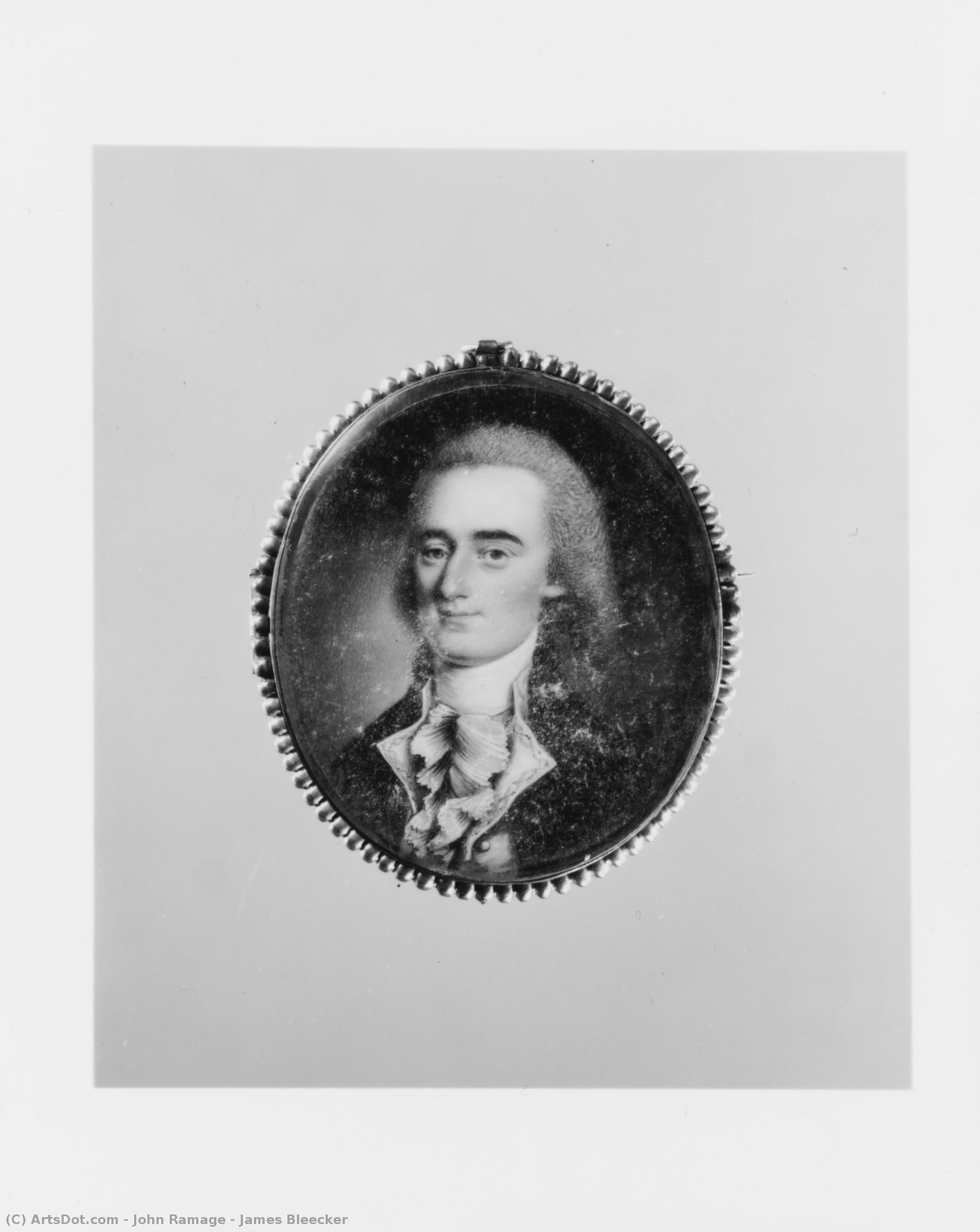
Despite the turbulent backdrop of revolution and political division, Ramage flourished as an artist, quickly gaining renown for his exquisite portrait miniatures on ivory. This was a particularly popular art form at the time, prized for its intimacy and portability. His skill lay in the masterful application of delicately shaded cross-hatching and fine linear strokes to model faces with remarkable realism and sensitivity. He didn’t merely replicate likenesses; he captured character, social standing, and a sense of individual presence within each miniature. Ramage's clientele quickly grew to include prominent figures from New York society—the Pintards, Gerrys, Ludlows, Van Rensselaers, and Van Cortlands all sought his services. Beyond his painting prowess, Ramage’s goldsmithing skills were also highly valued; he crafted elegant cases for his miniatures, showcasing a holistic artistic vision that combined artistry with meticulous craftsmanship. However, it was one commission in particular that cemented his place in history: in 1789, he received the honor of painting George Washington while serving as President of the United States—making him the first artist to officially portrait the president in office. Two distinct miniatures of Washington are known to exist today, each a testament to Ramage’s skill and a valuable historical record.
A Final Chapter Marked by Hardship and Legacy
The latter years of John Ramage's life were unfortunately marred by financial difficulties and personal hardship. Facing mounting debts in 1794, he fled to Montreal in an attempt to escape his creditors, only to encounter further misfortune upon arrival—imprisonment and a struggle to revive his artistic career. Despite these challenges, he continued to paint, claiming to have produced “extraordinary pictures,” though success proved elusive. On October 24, 1802, John Ramage died in Montreal, receiving a burial that was, sadly, reflective of his isolation and diminished circumstances. Yet, despite the hardships he faced, Ramage’s legacy endures—primarily through his distinction as the first artist to paint George Washington as President, an achievement that holds significant historical and artistic weight. His miniatures offer invaluable insights into the fashion, social circles, and personalities of late 18th-century America. Contemporary artist William R. Dunlap aptly considered him "the best artist in his branch in America," a testament to Ramage’s enduring talent and contribution to the art world.
Notable Works
- Portrait of George Washington (1789): The most famous work, marking Ramage as the first artist to officially portray the President.
- John Maunsell (1785): A rare and elegant miniature showcasing a stern figure in a red coat, demonstrating Ramage’s skill in capturing character.
- Miniature Portraits of Prominent New York Families: Works commissioned by the Pintards, Gerrys, Ludlows, Van Rensselaers, and Van Cortlands, offering glimpses into colonial society.



 Naručite reprodukciju
 Pošalji
 Podijeli
 Detalji o umjetničkom djelu

 Preuzmi
 Slični predmeti
 Rentgenska snimka
 Automatska prezentacija
 Prikaži više






































 Opcija stakla dostupna je samo za dimenzije manje od 110 cm





