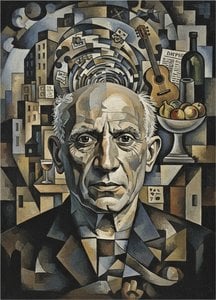
Biografija umjetnika
Katalanski Vizionar: Život i Umjetnost Joana Mira
Joan Miró i Ferrà, rođen u Barceloni 1893. godine, zauvijek je ostavio neizbrisiv trag na umjetnosti 20. stoljeća. Njegovo putovanje nije bilo samo napredovanje kroz stilove, već istraživanje unutarnjih svjetova, prevođenje snova, uspomena i katalonskog identiteta na platno jedinstvenim poetskim vizualnim jezikom. Od skromnih početaka obilježenih bolešću i prvotnom roditeljskom rezerviranošću prema njegovim umjetničkim ambicijama, Miró je uporno nastavio svoj put, pokretan urođenom potrebom da izrazi ono nemjerljivo – emocije, osjećaje i podsvjesne struje koje leže ispod površine stvarnosti. Njegov raniji život bio je prožet tradicijama Barcelone, grada prepunog arhitektonskih čuda zahvaljujući Antoniu Gaudiju, čiji organski oblici su suptilno utjecali na Miróve kasnija apstrakcije. Zanatstvo zlatara njegovog oca ugradilo je cijenjenje za pomnoću izrade, dok je strme katalonske krajolike postao ponavljajući motiv i izvor inspiracije tijekom njegove karijere.
Od Utjecaja do Nadrealizma: Formiranje Umjetničkog Jezika
Miróevo formalno umjetničko obrazovanje započelo je u La Llotji u Barceloni, gdje je usavršio svoje vještine tradicionalnim tehnikama. Međutim, izloženost avangardnim pokretima koji su harali Parizom zaista je potaknuo njegovu kreativnu evoluciju. Žive boje fauvizma i fragmentirani oblici kubizma duboko su odjeknuli u njemu, što ga je natjeralo da se preseli u Pariz 1920. godine. Ta je godina bila ključna jer je upoznao umjetnike poput Pabla Picassa i počeo eksperimentirati sa sve apstraktnijim kompozicijama. Ipak, Miró nije samo usvajao te stilove; sintetizirao ih je, kujući put prema svom prepoznatljivom estetskom izrazu. Težio je destilaciji oblika do njihove esencije, uklanjajući reprezentativne detalje u korist simboličnih oblika i evocirajućih boja. Ovo istraživanje ga je 1924. godine dovelo u grupu nadrealista, usklađujući ga s umjetnicima poput Maxa Ernsta i Salvadora Dalija. Iako je prihvatio nadrealistički interes za podsvjesno, Miró je zadržao jedinstvenu osjetljivost – njegov rad nije bio o šokantnoj slici ili Freudovoj simbolici, već o stvaranju svijeta igrivih oblika i poetskih sugestija.
Jezik Simbola: Ključna Djela i Umjetnička Inovacija
Tijekom 1920-ih i 30-ih godina Miró je razvio svoj prepoznatljivi vizualni vokabular – svemir naseljen biomorfnim oblicima, plutajućim formama i živopisnim bojama. The Farm (1922), često smatrana kamenom temeljcem njegovog opusa, utjelovljuje tu tranziciju. Nije samo prikaz ruralnog života, već evociranje katalonskog identiteta i simbolička reprezentacija prirodnog svijeta. Njegova suradnička priroda dovela je do inovativnih tehnika poput *grattage*, koju je pionirski uveo s Maxom Ernstom 1926. za dizajnove namijenjene Sergeju Djaghilevu i njegovoj balerini, gdje su teksture otkrivene grebanjem boje preko platna. Serija Dutch Interiors (1928) demonstrirala je njegovu sposobnost reinterpretiranja starih majstora kroz izrazito moderni prizor, pretvarajući domaće scene u snovite apstrakcije. Painting (1933), sa svojim hrabrim bojama i pojednostavljenim oblicima, kapsulira Miróvo istraživanje podsvjesnog i odbijanje konvencionalnih umjetničkih granica. Izvan slikarstva, Miró se bez straha eksperimentirao s kiparstvom, keramikom i grafičkim dizajnom, proširujući svoje kreativne horizonte i demonstrirajući iznimnu raznolikost.
Nasljeđe i Trajni Utjecaj
Utjecaj Joana Mira na umjetnost 20. stoljeća je neuporediv. Nije bio samo slikar; bio je vizionar koji je izazvao samu definiciju umjetničkog izraza. Njegovo djelo je utrlo put ekspresionizmu i nastavlja inspirirati umjetnike u različitim disciplinama. Osnovao je dva fondacije – Fundació Joan Miró u Barceloni (1975.) i Fundació Pilar i Joan Miró na Mallorci (1981.), osiguravajući da će se njegovo nasljeđe nastaviti, pružajući prostore za umjetničko istraživanje i obrazovanje. Tijekom svoje duge karijere ostao je posvećen rušenju granica, osporavanju konvencija i istraživanju dubina ljudske mašte. Miróvo djelo svjedočanstvo je moći apstrakcije, simbolizma i poetskog izraza – živopisna proslava života, snova i neugasivog duha katalonske kulture. Njegovo djelo nastavlja rezonirati s publikom širom svijeta, pozivajući nas da uđemo u svijet u kojem je sve moguće i granice između stvarnosti i fantazije nestaju u očaravajućem plesu boja i oblika.



 Pregledaj u stvarnoj veličini
 Naručite ručno oslikano reprodukciju
 Podijeli
 Podijeli
 Detalji
 Vodič
Vodič

 Preuzmi datoteku
 Slični predmeti
 Rentgenska snimka
 Slide show
 Statistika


 Pročitajte više






































 Opcija stakla dostupna je samo za dimenzije manje od 110 cm