Pregledaj u realnoj veličini Pregled u AR-u Kupi ručno oslikano djelo Prebacite na digitalnu sliku Pošalji
Detalji o umjetničkom djelu Vodič Dodaj u omiljene Preuzmi umjetničko djelo Slični predmeti Rentgenska snimka Slide show Q&A Statistika

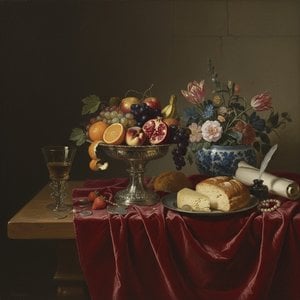
Petites chinoiseries bleues

Discover James Ensor's 'Petites Chinoiseries Bleues,' a captivating still life brimming with symbolic objects and masks, reflecting the artist’s unique vision of beauty and unsettling charm.

James Ensor bio je belgijski ekspresionista i surrealista poznat po svojim uznemirujućim djelima koje prikazuju maske, karneval i kostiju, promičući inovativnu umjetničku estetiku i izazivajući kritički pogled na društvo.

Giclée / Umjetnički otisak

Giclée tisak muzejske kvalitete ili otisak na platnu uz brzu izradu i raznolike opcije završne obrade. ( Kupi ručno oslikano djelo Prebacite na digitalnu sliku)

Corner sample of the P118B picture frame: oblikovani polistiren, 5 cm wide and 3 cm thick
P118B €10
Corner sample of the P118H picture frame: oblikovani polistiren, 5 cm wide and 3 cm thick
P118H €10
Corner sample of the P118W picture frame: oblikovani polistiren, 5 cm wide and 3 cm thick
P118W €10
Corner sample of the P438Z picture frame: oblikovani polistiren, 5.5 cm wide and 3.5 cm thick
P438Z €10
Corner sample of the P508JH picture frame: oblikovani polistiren, 7 cm wide and 3.5 cm thick
P508JH €12
Corner sample of the P508YH picture frame: oblikovani polistiren, 7 cm wide and 3.5 cm thick
P508YH €12
Corner sample of the P805H picture frame: oblikovani polistiren, 5 cm wide and 3.5 cm thick
P805H €10
Corner sample of the P805Z picture frame: oblikovani polistiren, 5 cm wide and 3.5 cm thick
P805Z €10
Corner sample of the P919BZ picture frame: oblikovani polistiren, 7 cm wide and 3.5 cm thick
P919BZ €10
Corner sample of the P919G picture frame: oblikovani polistiren, 7 cm wide and 3.5 cm thick
P919G €10
Corner sample of the P919XJ picture frame: oblikovani polistiren, 7 cm wide and 3.5 cm thick
P919XJ €10
Corner sample of the P959ZH picture frame: oblikovani polistiren, 5 cm wide and 3 cm thick
P959ZH €10
Corner sample of the P968JZ picture frame: oblikovani polistiren, 6 cm wide and 4 cm thick
P968JZ €12
Corner sample of the W106C picture frame: masivno drvo, 5 cm wide and 3 cm thick
W106C €8
Corner sample of the W218G picture frame: masivno drvo, 5 cm wide and 3 cm thick
W218G €10
Corner sample of the W218JH picture frame: masivno drvo, 5 cm wide and 3 cm thick
W218JH €8
Corner sample of the W218Y picture frame: masivno drvo, 5 cm wide and 3 cm thick
W218Y €10
Corner sample of the W307PJ picture frame: masivno drvo, 6 cm wide and 3 cm thick
W307PJ €10
Corner sample of the W316G picture frame: masivno drvo, 6 cm wide and 3 cm thick
W316G €10
Corner sample of the W316PJ picture frame: masivno drvo, 6 cm wide and 3 cm thick
W316PJ €8
Corner sample of the W316Y picture frame: masivno drvo, 6 cm wide and 3 cm thick
W316Y €10
Corner sample of the W398PJ picture frame: masivno drvo, 5 cm wide and 3 cm thick
W398PJ €8
Corner sample of the W4111J picture frame: masivno drvo, 6.5 cm wide and 3.5 cm thick
W4111J €10
Corner sample of the W500HY picture frame: masivno drvo, 7 cm wide and 5 cm thick
W500HY €15
Corner sample of the W500JH picture frame: masivno drvo, 7 cm wide and 5 cm thick
W500JH €15
Corner sample of the W692G picture frame: masivno drvo, 8 cm wide and 4 cm thick
W692G €12
Corner sample of the W849H picture frame: masivno drvo, 5 cm wide and 3 cm thick
W849H €8
Corner sample of the W940BG picture frame: masivno drvo, 7.5 cm wide and 4.5 cm thick
W940BG €15
Corner sample of the W953PJ picture frame: masivno drvo, 6 cm wide and 3.5 cm thick
W953PJ €8

Standardne dimenzije
po mjeri
CM
INCH

Odaberite jednu od naših unaprijed definiranih veličina koje odgovaraju izvornim proporcijama umjetničkog djela.

širina
visina

Unesite potrebnu širinu i visinu kako bi odgovarali vašem okviru ili zidu. Print se može samo izrezati, nikada ne može biti veći od slike, stoga format s drugačijim omjerom stranica uzrokuje gubitak dijela slike. Prije bilo kakve štampe šaljemo vam digitalni prikaz (mockup) na odobrenje. Slika prikazana na ovoj stranici ne prikazuje stvarni rez — to prikazuje isključivo digitalni prikaz.

Dostava širom svijeta () u roku od 2 tjedna umjesto standardnih 4/5 tjedana. (30 Listopad)

Besplatna ekspresna dostava širom svijeta
Visokokvalitetno laneno platno
Potpuno osiguranje dostave
Jamstvo povrata carine i uvoznih poreza
Jamstvo vjernosti boja
Politika povrata u roku od 100 dana (samo u slučaju nedostataka)
Jamstvo povrata 100% novca
Popust na više proizvoda

Ukupna cijena

€ 60

Petites chinoiseries bleues

Giclée / Umjetnički otisak

Veličina reprodukcije

-

Ukupna cijena

€ 60

Osnovne informacije

  • Year: 1906-1906
  • Dimensions: 78.5 × 98.5 cm
  • Artistic style: Symbolism, Surrealism
  • Location: KMSKA, Antwerp
  • Title: Petites chinoiseries bleues
  • Artist: James Ensor

A World Woven with Masks and Shadows: James Ensor’s “Petites Chinoiseries Bleues”

James Ensor's "Petites Chinoiseries Bleues" isn’t merely a still life; it’s a meticulously constructed tableau of unsettling beauty, a window into the artist’s uniquely fractured vision. Painted in 1906, this work embodies the core of Ensor’s artistic philosophy – a deliberate blurring of reality and dream, a fascination with the grotesque, and an exploration of the human psyche through carefully arranged objects. The painting depicts a tabletop laden with a collection of Chinese artifacts: porcelain bowls, delicate figurines, intricately patterned fans, and a scattering of bottles and cups. Yet, it’s not the objects themselves that hold primary interest, but rather their arrangement, their colors, and the subtle, almost menacing presence of figures lurking just beyond the frame. The dominant hue is a cool, melancholic blue – a color often associated with introspection, mourning, and the uncanny – which permeates the scene, lending it an atmosphere of quiet unease. This deliberate use of color, combined with Ensor’s signature style, immediately establishes a mood far removed from simple representation.

The Language of Masks and Exoticism

Ensor's preoccupation with masks is central to understanding his work, and “Petites Chinoiseries Bleues” provides a particularly potent example. The artist’s childhood spent in his parents’ souvenir shop, overflowing with carnival masks and exotic curiosities from around the world, profoundly shaped his artistic sensibility. These objects weren’t simply souvenirs; they were portals into other cultures, representations of hidden identities, and symbols of disguise. In this painting, the Chinese artifacts – particularly the porcelain figurines and the intricately patterned fans – function as metaphorical masks, concealing deeper meanings and inviting speculation about their origins and significance. The inclusion of Japanese elements—the fans and prints—further emphasizes this exoticism, reflecting Ensor’s interest in both Eastern cultures and the allure of the ‘other.’ The arrangement itself suggests a theatrical stage, with the objects positioned to create a narrative, albeit an ambiguous one.

Technique and Composition: A Deliberate Discomfort

Ensor's technique is characterized by a bold, expressive brushstroke and a masterful manipulation of color. He employs a broken, almost fragmented approach, layering paint in thick impasto to create texture and depth. The composition is carefully balanced, yet unsettlingly off-kilter. The objects are arranged with a deliberate asymmetry, creating a sense of visual tension. Notice the way the blue dominates, subtly shifting and reflecting light in unexpected ways. The figures glimpsed behind the table – often interpreted as shadowy servants or perhaps even distorted reflections of Ensor himself – contribute to this feeling of unease and suggest a hidden drama unfolding just beyond our perception. The use of light is particularly noteworthy; it’s not naturalistic but rather serves to heighten the painting's emotional impact, casting long shadows and creating areas of darkness that invite the viewer’s imagination.

Symbolism and the Artist’s Psyche

“Petites Chinoiseries Bleues” resonates with themes of isolation, mortality, and the anxieties of modern life – concerns that were increasingly prevalent in Ensor's time. The presence of skeletons (implied through the porcelain figurines) subtly references death and decay, while the overall atmosphere evokes a sense of melancholy and introspection. The painting can be interpreted as a meditation on the artificiality of appearances, the illusion of comfort, and the hidden darkness beneath the surface of everyday life. It’s a work that rewards close observation and invites repeated viewing, revealing new layers of meaning with each encounter. The title itself – “Petites Chinoiseries” – suggests a focus on small details, hinting at Ensor's ability to find profound significance in seemingly insignificant objects. Ultimately, "Petites Chinoiseries Bleues" is a testament to Ensor’s unique artistic vision—a hauntingly beautiful and deeply unsettling exploration of the human condition.

Pitanja i odgovori

U kojem se razdoblju karijere umjetnika James Ensor nalazi djelo "Petites chinoiseries bleues"?

"Petites chinoiseries bleues" pripada Mature Period u karijeri umjetnika James Ensor. Ova klasifikacija povezuje djelo s umjetnikovim stilskim razvojem.

Gdje mogu vidjeti pregled za "Petites chinoiseries bleues"?

Kako biste pregledali reprodukciju djela "Petites chinoiseries bleues" autora James Ensor, otvorite stranicu Pregled u prostoru tog umjetničkog djela.

Ima li "Petites chinoiseries bleues" snažan kontrast svjetla i sjene?

Svijetlo-tamni kontrast djela "Petites chinoiseries bleues" zabilježen je kao Gentle. Kontrast opisuje razliku u intenzitetu između svijetlijih i tamnijih područja.


Biografija umjetnika

James Ensor (1860-1949): A Pioneer of Expressionism & Surrealism

James Sidney Edouard Ensor, Baron Ensor (Ostend, 13 April 1860 – 19 November 1949) was a Belgian painter and printmaker who stands as one of the most influential figures in the development of Expressionism and Surrealism. Born into an English father and Belgian mother—a duality that profoundly shaped his artistic worldview—Ensor defied convention from the outset, rejecting academic formalism for a bold exploration of psychological depth and grotesque imagery.

Early Influences & Artistic Training

His formative years were marked by exposure to the vibrant atmosphere of Ostend’s seaside resort town, where his parents operated a souvenir shop brimming with curiosities—a veritable cabinet of wonders that ignited his imagination. From 1876 until 1880 he studied at the Académie Royale des Beaux-Arts in Brussels, alongside fellow students like Fernand Khnopff and Theo Van Rysselberghe, where Jean Portales instilled in him a commitment to artistic innovation.

A Shift Towards Grotesque Vision & Expressionist Style

Ensor’s early paintings reflected a more traditional approach, depicting scenes of everyday life rendered in somber tones. However, he swiftly abandoned these conventions as he embraced the expressive qualities of light, line, and color—a decisive move toward Expressionism. Influenced by Rembrandt, Goya, and Japanese woodcuts, Ensor developed a distinctive iconography characterized by unsettling juxtapositions and symbolic references to death and decay.

Key Masterpieces & Recurring Themes

His most celebrated works – including *Christ’s Entry into Brussels* (1888-1889), *The Scandalized Masks* (1883) and *Skeletons Fighting over a Hanged Man* (1891) – exemplify his unwavering commitment to confronting uncomfortable truths and exploring the darkest recesses of human psychology. These paintings are not merely aesthetically striking; they serve as powerful critiques of societal norms, religious hypocrisy, and the absurdity of existence.

Legacy & Influence

James Ensor’s artistic legacy extends far beyond his own lifetime. He is recognized as a pivotal catalyst in the transition from Symbolism to Expressionism and Surrealism—a true pioneer who challenged artistic conventions and paved the way for future generations of artists. His fearless exploration of the subconscious, combined with his masterful use of grotesque imagery and symbolic language, continues to inspire artists today.

James Ensor

James Ensor

1860 - 1949 , België

Osnovne informacije

  • Artistic Movement Or Style: Expressionism, Surrealism
  • Artists Who Influenced This Artist:
    • Bruegel the Elder
    • Francisco Goya
    • Whistler
  • Date Of Birth: April 13, 1860
  • Date Of Death: November 19, 1949
  • Full Name: James Sidney Edouard Ensor
  • Nationality: Belgian
  • Notable Artworks:
    • The Scandalized Masks
    • Skeletons Fighting...
    • Christ's Entry into Brussels
  • Place Of Birth: Ostend, Belgium
Istražite umjetnička djela organizirana prema temama, stilovima i karakteristikama.