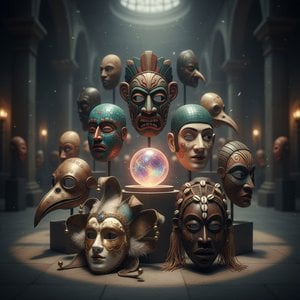
A Carnival of Shadows: Unveiling Ensor’s Masked Spectacle
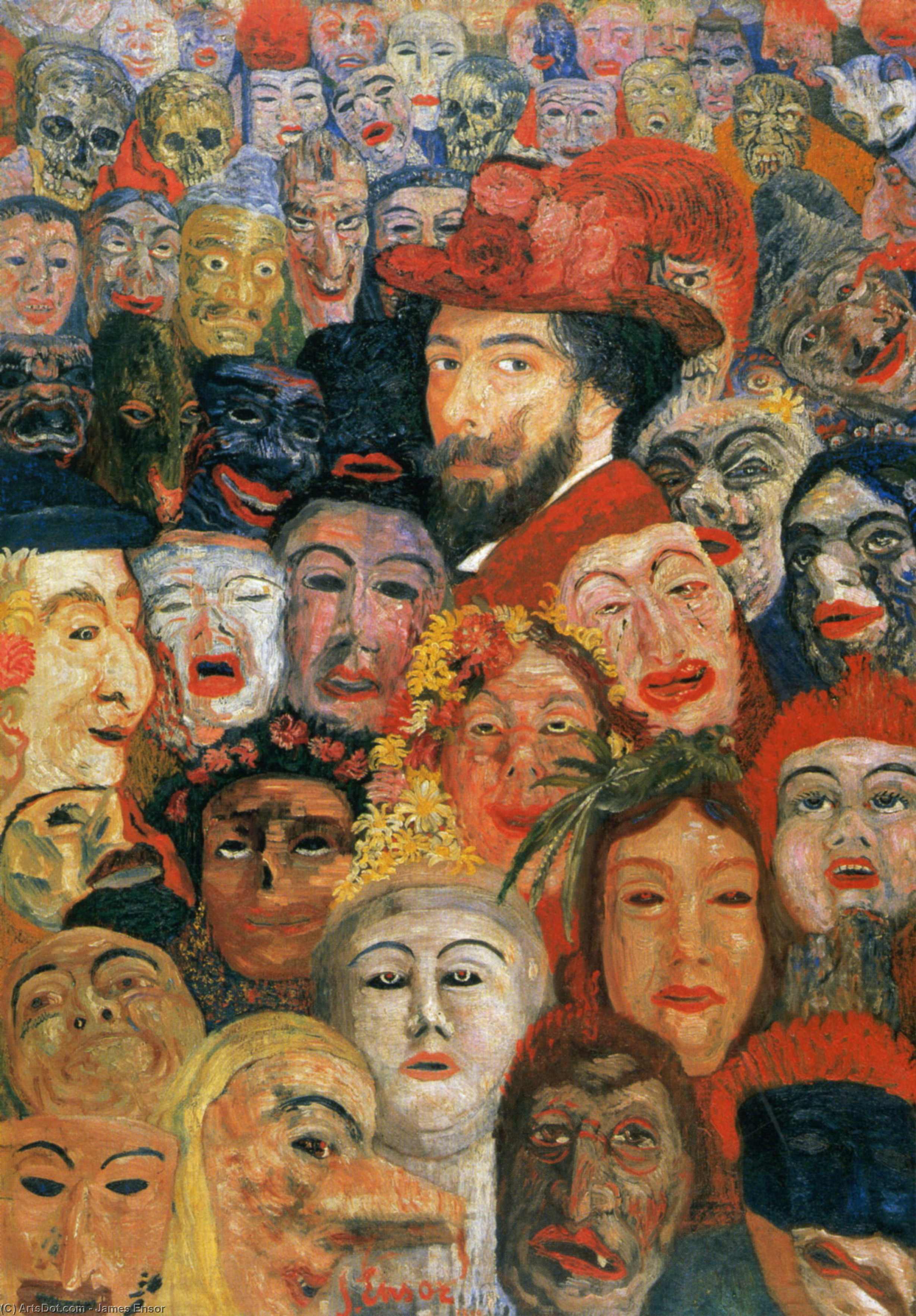
In the hauntingly vibrant canvas of Ensor aux masques, the viewer is not merely an observer but an uninvited guest at a feverish, nocturnal gathering. James Ensor, the Belgian master of the uncanny, presents us with a densely populated tableau where the boundaries between the human and the grotesque dissolve. A sea of figures, predominantly men, press against the edges of our vision, their faces obscured by painted masks that transform the crowd into a singular, undulating entity. There is an undeniable kinetic energy to this composition; as eyes wander across the varying planes of depth, one feels the restless movement of a public assembly caught in a moment of collective trance. The figures, some with mouths agape in silent cries or boisterous laughter, seem to be reacting to an unseen spectacle just beyond the frame, pulling the viewer into their disorienting, rhythmic world.
The aesthetic power of this work lies in its masterful rejection of academic restraint. Rooted deeply in the traditions of Symbolism and Expressionism, Ensor eschews the polished realism of his contemporaries to prioritize a raw, psychological intensity. His technique is visceral; through the use of thick impasto brushstrokes, he lends a physical weight to the paint itself, creating a rugged texture that mirrors the turbulent emotions on display. The color palette is a deliberate study in drama, dominated by deep blacks and piercing reds. These hues do more than just define form; they pulse with a life of their own, heightening the sense of theatricality and contributing to an atmosphere that feels both celebratory and deeply unsettling.
The Psychology of the Mask: Symbolism and Historical Resonance
Beyond the visual spectacle lies a profound exploration of the human psyche. For Ensor, the mask was never merely a festive accessory; it served as a potent symbol of concealment, deception, and the fragmentation of identity. In this piece, the masks represent the layers of social performance—the ways in which individuals suppress their true selves to inhabit roles within the collective. This theme of psychological torment and isolation is woven into the very fabric of the painting, as the painted faces evoke a sense of profound alienation despite the crowded setting. The red hats that punctuate the scene act as visual anchors, adding a rhythmic, almost ritualistic element to the composition that draws the eye through the labyrinthine crowd.
Emerging from the era of significant Belgian artistic experimentation, Ensor aux masques captures the lingering anxieties of the interwar period. While the Symbolist movement was beginning to wane, Ensor used its vocabulary to foreshadow the broader societal disillusionment and the fractured reality of a changing world. For the discerning collector or interior designer, this artwork offers more than just a striking visual; it provides a sophisticated focal point that invites deep contemplation. A high-quality reproduction of this masterpiece brings a sense of historical gravity and avant-garde elegance to any space, serving as a conversation piece that bridges the gap between the visceral energy of the past and the modern appreciation for psychological depth in fine art.
Pitanja i odgovori
Gdje mogu kupiti print djela "Ensor aux masques" autora James Ensor?
"Ensor aux masques" je dostupan kao umjetnički otisak na pamučnom platnu ili arhivskom kanvas papiru. Narudžbe se izvršavaju na stranici Umjetnička litografija, u dimenziji po vašem izboru.
Gdje mogu pronaći statistiku o djelu "Ensor aux masques" autora James Ensor?
Postoji Statistika stranica za "Ensor aux masques". Ona prikazuje mjesečne posjete umjetničkom djelu i drugim djelima umjetnika, uz podelu prema zemljama i jezicima.
U koji je umjetnički pokret i u koje razdoblje uvršteno djelo "Ensor aux masques" autora James Ensor?
U djelu "Ensor aux masques" autora James Ensor, pokret Symbolic Expressionism susreće eru 19. stoljeće.


 Pregledaj u stvarnoj veličini
 Naručite ručno oslikano reprodukciju
 Podijeli
 Podijeli
 Detalji
 Vodič
Vodič

 Preuzmi datoteku
 Slični predmeti
 Rentgenska snimka
 Slide show
 Statistika

 Pročitajte više






































 Opcija stakla dostupna je samo za dimenzije manje od 110 cm