
Pregledaj u realnoj veličini Pregled u AR-u Kupi ručno oslikano djelo Prebacite na digitalnu sliku Pošalji
Detalji o umjetničkom djelu Vodič Dodaj u omiljene Preuzmi umjetničko djelo Slični predmeti Rentgenska snimka Slide show Pitanja i odgovori Preuzmi prezentaciju Statistika

LA FONTAINE

Hubert Robert's Romantic landscape captures the serene beauty of ancient ruins. Explore this timeless masterpiece today.

Majstor romantičnih ruševina poput Rima. Otkrijte njegove evocativne krajolike i arhitektonske vizije već danas.

Giclée / Umjetnički otisak

Giclée tisak muzejske kvalitete ili otisak na platnu uz brzu izradu i raznolike opcije završne obrade. ( Kupi ručno oslikano djelo Prebacite na digitalnu sliku)

Corner sample of the P118B picture frame: oblikovani polistiren, 5 cm wide and 3 cm thick
P118B €10
Corner sample of the P118H picture frame: oblikovani polistiren, 5 cm wide and 3 cm thick
P118H €10
Corner sample of the P118W picture frame: oblikovani polistiren, 5 cm wide and 3 cm thick
P118W €10
Corner sample of the P438Z picture frame: oblikovani polistiren, 5.5 cm wide and 3.5 cm thick
P438Z €10
Corner sample of the P508JH picture frame: oblikovani polistiren, 7 cm wide and 3.5 cm thick
P508JH €12
Corner sample of the P508YH picture frame: oblikovani polistiren, 7 cm wide and 3.5 cm thick
P508YH €12
Corner sample of the P805H picture frame: oblikovani polistiren, 5 cm wide and 3.5 cm thick
P805H €10
Corner sample of the P805Z picture frame: oblikovani polistiren, 5 cm wide and 3.5 cm thick
P805Z €10
Corner sample of the P919BZ picture frame: oblikovani polistiren, 7 cm wide and 3.5 cm thick
P919BZ €10
Corner sample of the P919G picture frame: oblikovani polistiren, 7 cm wide and 3.5 cm thick
P919G €10
Corner sample of the P919XJ picture frame: oblikovani polistiren, 7 cm wide and 3.5 cm thick
P919XJ €10
Corner sample of the P959ZH picture frame: oblikovani polistiren, 5 cm wide and 3 cm thick
P959ZH €10
Corner sample of the P968JZ picture frame: oblikovani polistiren, 6 cm wide and 4 cm thick
P968JZ €12
Corner sample of the W106C picture frame: masivno drvo, 5 cm wide and 3 cm thick
W106C €8
Corner sample of the W218G picture frame: masivno drvo, 5 cm wide and 3 cm thick
W218G €10
Corner sample of the W218JH picture frame: masivno drvo, 5 cm wide and 3 cm thick
W218JH €8
Corner sample of the W218Y picture frame: masivno drvo, 5 cm wide and 3 cm thick
W218Y €10
Corner sample of the W307PJ picture frame: masivno drvo, 6 cm wide and 3 cm thick
W307PJ €10
Corner sample of the W316G picture frame: masivno drvo, 6 cm wide and 3 cm thick
W316G €10
Corner sample of the W316PJ picture frame: masivno drvo, 6 cm wide and 3 cm thick
W316PJ €8
Corner sample of the W316Y picture frame: masivno drvo, 6 cm wide and 3 cm thick
W316Y €10
Corner sample of the W398PJ picture frame: masivno drvo, 5 cm wide and 3 cm thick
W398PJ €8
Corner sample of the W4111J picture frame: masivno drvo, 6.5 cm wide and 3.5 cm thick
W4111J €10
Corner sample of the W500HY picture frame: masivno drvo, 7 cm wide and 5 cm thick
W500HY €15
Corner sample of the W500JH picture frame: masivno drvo, 7 cm wide and 5 cm thick
W500JH €15
Corner sample of the W692G picture frame: masivno drvo, 8 cm wide and 4 cm thick
W692G €12
Corner sample of the W849H picture frame: masivno drvo, 5 cm wide and 3 cm thick
W849H €8
Corner sample of the W940BG picture frame: masivno drvo, 7.5 cm wide and 4.5 cm thick
W940BG €15
Corner sample of the W953PJ picture frame: masivno drvo, 6 cm wide and 3.5 cm thick
W953PJ €8

Standardne dimenzije
po mjeri
CM
INCH

Odaberite jednu od naših unaprijed definiranih veličina koje odgovaraju izvornim proporcijama umjetničkog djela.

širina
visina

Unesite potrebnu širinu i visinu kako bi odgovarali vašem okviru ili zidu. Print se može samo izrezati, nikada ne može biti veći od slike, stoga format s drugačijim omjerom stranica uzrokuje gubitak dijela slike. Prije bilo kakve štampe šaljemo vam digitalni prikaz (mockup) na odobrenje. Slika prikazana na ovoj stranici ne prikazuje stvarni rez — to prikazuje isključivo digitalni prikaz.

Dostava širom svijeta () u roku od 2 tjedna umjesto standardnih 4/5 tjedana. (14 Studeni)

Besplatna ekspresna dostava širom svijeta
Visokokvalitetno laneno platno
Potpuno osiguranje dostave
Jamstvo povrata carine i uvoznih poreza
Jamstvo vjernosti boja
Politika povrata u roku od 100 dana (samo u slučaju nedostataka)
Jamstvo povrata 100% novca
Popust na više proizvoda

Ukupna cijena

€ 61

LA FONTAINE

Giclée / Umjetnički otisak

Veličina reprodukcije

-

Ukupna cijena

€ 61

Osnovne informacije

  • Artistic style: Classical Landscape Painting
  • Location: Private Collection
  • Title: LA FONTAINE
  • Influences: Claude Lorrain
  • Movement: Romanticism

Kviz o umjetnosti

Svako pitanje ima samo jedan točan odgovor.

Pitanje 1:
What artistic movement is Hubert Robert primarily associated with?
Pitanje 2:
The painting depicts a scene featuring ruins, what is the symbolic significance of these ruins?
Pitanje 3:
What technique did Robert employ to create soft transitions and subtle gradations in tone?
Pitanje 4:
Which artist is considered a stylistic influence on Hubert Robert?
Pitanje 5:
What type of lighting characterizes the scene depicted in LA FONTAINE?

Identification of LA FONTAINE by Hubert Robert

The scene unfolds within LA FONTAINE, a work painted by Hubert Robert in 1784. This piece emerges from a specific creative sequence, forming part of a series of paintings centered on the theme of water. The artist captures a moment where the elements of nature and the remnants of human construction meet under a soft, diffused light.

The origins of this work trace back to the patronage of David Etienne Rouillé de l'Etang, who served as the Treasurer General of the Police. He commissioned this vision to decorate the private residence of his estate, the Hôtel de la place Louis XV in Paris. Through his direction, the artist translates the quiet movement of water and the stillness of stone into a visual narrative that feels both expansive and intimate.

The Composition and Visual Elements

A serene pastoral vista unfolds before the eye, dominated by the crumbling ruins of an ancient temple or palazzo. These weathered stone structures lean into the landscape, their decaying forms asserting a monumental scale against the natural world. A solitary figure sits quietly beside a deer, a moment of stillness captured amidst the slow disintegration of the architecture. This central grouping anchors the midground, creating a focal point where humanity and nature meet in quiet companionship.

The composition is carefully structured vertically, drawing the gaze upward through the layers of the landscape. Linear perspective directs the eye away from the immediate ruins, guiding it toward the distant mountains that loom beneath a muted sky. An atmospheric haze settles over these far-off peaks, softening their edges and enhancing the sense of depth. This subtle blurring of the horizon contributes to a melancholic mood, as if the very air is heavy with the weight of passing time.

Technique, Materials and Support

Oil paints meet canvas in this quiet scene, where the medium allows for a profound sense of atmosphere. The artist works through a meticulous process of layering and blending, building up the surface to achieve a soft, diffused light that seems to hang in the air. This technique creates subtle gradations in tone, allowing the sky to transition seamlessly into the hazy distance and the stone of the ruins to melt into the surrounding greenery. There is a palpable sense of depth achieved through these tonal shifts, drawing the eye toward the mountains that loom in the pale background.

The execution relies on a delicate balance between the seen and the imagined. While the architectural forms of the fountain and the crumbling structures possess a grounded, physical presence, the brushwork avoids harshness. Instead, the colors blend into one another, minimizing visible strokes to favor a smooth, polished finish. This approach allows the textures of the weathered stone and the organic shapes of the foliage to coexist within a unified, atmospheric space. The light does not strike the scene with sharp intensity but rather settles softly over the landscape, as if filtered through a light overcast sky.

The History and Provenance of the Object

The life of this painting begins within the private walls of an hôtel on the place Louis XV in Paris, where it was commissioned by David Etienne Rouillé de l'Etang, the Treasurer General of the Police. It remains part of a series of works centered on the theme of water, intended to decorate the residence of its original patron. From there, the work moves through the hands of a single family across generations. It passes from Rouillé de l'Etang to his niece, the Marquise de Pastoret, and then to her son, Amédée de Pastoret. Eventually, the inheritance reaches his daughter, the Marquise du Plessis-Bellière.

The quiet continuity of family ownership ends following the death of the Marquise du Plessis-Bellière. The painting enters the public sphere during a sale at the Hôtel Drouot in Paris on May 10-11, 1897, appearing as lot number 79. It travels through various collections until 1946, when it arrives at the Musée du Louvre through a manual donation from Victor Lyon. This gift ensures the work remains a permanent part of the museum's collection. In 1971, the painting undergoes restoration at the hands of Lucien Aubert to preserve its appearance.

Pitanja i odgovori

Kolika je razina kontrasta u djelu "LA FONTAINE" autora Hubert Robert?

"LA FONTAINE" autora Hubert Robert prikazuje Statement kontrast između svojih svijetlih i tamnih područja.

Kolika je intenzitet boja u djelu "LA FONTAINE" autora Hubert Robert?

Boje u djelu "LA FONTAINE" autora Hubert Robert imaju Balanced intenzitet.

U kojoj je tehnici izvedeno djelo "LA FONTAINE" autora Hubert Robert?

Hubert Robert koristio je tehniku Oil On Canvas za "LA FONTAINE". Ova tehnika definira materijalnu prirodu izvornog djela.

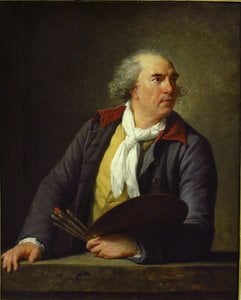
Biografija umjetnika

A Painter of Ruins and Visions: The World of Hubert Robert

Hubert Robert, čije je ime sinonim za evocativne krajolike i romantični šarm ruševina, zauzima jedinstvenu poziciju u francuskoj umjetnosti 18. stoljeća. Rođen u Parizu 1733. godine, njegov život se odvijao na pozadini promjenjivih umjetničkih stilova i monumentalnih povijesnih prevrata – od raziglane elegancije Rokokoa do zore Neoklasicizma, a zatim kroz burne godine Francuske revolucije. On nije samo bilježio propadanje; stvarao je vizije, spajajući promatranje s maštom kako bi stvorio scene koje su odjekivale nostalgijom za prošlošću i iščekivanjem budućnosti. Njegovo putovanje započelo je u strukturiranom svijetu umjetničkog obrazovanja, prvo pod skulptorom Michel-Ange Slodtzom, koji je prepoznao Robertov talent, ali ga mudro usmjerio prema slikarstvu, osjećajući da mu se prava poziv nalazi u hvatanju svjetla, atmosfere i suptilne poezije forme.

Rimski snovi: Oblikovanje umjetničkog identiteta

Pivotalni trenutak u Robertovom umjetničkom razvoju dogodio se njegovim dugotrajnim boravkom u Rimu 1754. godine. Prateći Étienne-François de Choiseula, uronio je u svijet prožet poviješću i arhitektonskom veličinom. Jedanaest godina Drevni grad postao je njegov studio na otvorenom, a njegove rušećine, impozantna vrata i obrasla dvorišta potaknuli su njegovu maštu. To nije bilo samo o replikaciji onoga što je vidio; radilo se o interpretiranju, ponovnoj zamisli i prožimanju scene osjećajem melankolične ljepote. Radio je uz Giovannija Paola Paninija, čiji je utjecaj vidljiv u Robertovim ranim *capriccio* kompozicijama – fantastičnim pogledima koji su stavljali klasične ruševine i suvremeni život jedne pored drugih. Međutim, Robert se brzo oslobodio imitacije, razvijajući vlastiti prepoznatljiv stil karakteriziran minucioznim detaljima, atmosferskom perspektivom i dubokom osjetljivošću na igru svjetla i sjene. On nije samo slikao ruševine; slikao je samo vrijeme, hvatajući bolnu ljepotu prolaznosti i trajna snaga sjećanja. Njegove skice iz tog razdoblja su neprocjenjivi zapisi njegovih promatranja, ispunjeni detaljnim studijama rimskih znamenitosti poput Ville d'Este i Caprarole, pokazujući oštar pogled za arhitektonsku nijansu i kompoziciju krajolika.

Pariski prijem i kraljevska zaštita

Robertov povratak u Pariz 1765. godine označio je prekretnicu u njegovoj karijeri. Brzo je stekao priznanje unutar umjetničke zajednice, osiguravši ulazak u Académie Royale de Peinture et de Sculpture s djelom “Luka Rima, ukrašena različitim spomenicima arhitekture, drevne i moderne.” Njegove sljedeće izložbe na Salonu izazvale su opći pljesak, očaravajući publiku evocativnim prikazima ruševina i slikovitih krajolika. Denis Diderot, istaknuta figura prosvjetiteljstva, pohvalio je veličanstvenost koju su Robertove slike pobudile, prepoznajući njegovu sposobnost da prenese gledatelje u drugo vrijeme i mjesto. Ovaj uspjeh doveo je do kraljevske zaštite, s narudžbama za dekorativne projekte i imenovanjem “Dizajnerom kraljevskih vrtova”, a kasnije “Čuvarom kraljevih slika”. Postao je traženi umjetnik, ne samo zbog svojih slika na platnu, već i zbog inovativnih dizajna za vrtove i palačinske interijere. Njegov rad rezonirao je s prevladajućim ukusom za *capriccio* slikarstvo – žanru koji se svidio kolekcionarima fasciniranim poviješću, arheologijom i pitoresknim – ali ga je Robert obogatio jedinstvenom osjetljivošću, podižući ga iznad pukle dekorativne umjetnosti.

Revolucija, otpornost i trajno nasljeđe

Francuska revolucija predstavljala je bez presedana izazov za Roberta. Dok se mnogi umjetnici borili da pronađu put kroz burnu političku klimu, on se našao uhvaćen u proturječnim strujama promjena. Bio je čak i zatvoren tijekom vladavine terora, potresno iskustvo koje ga je ipak nadahnulo na niz crteža koji su dokumentirali njegovo vrijeme u zatvoru. Iznenađujuće, nastavio je neumorno slikati tijekom tog razdoblja, pokazujući nepokolebljivu predanost svojoj umjetnosti. Nakon revolucije, Robert je imenovan kustosom novoustanovljenog Muséum Central des Arts – budućeg Musée du Louvrea – svjedočanstvo njegove stručnosti i posvećenosti očuvanju kulturnog nasljeđa. Imao je ključnu ulogu u organiziranju i katalogiziranju muzejske zbirke, osiguravajući da su francuska umjetnička blaga zaštićena za buduće generacije. Hubert Robert umro je u Parizu 1808. godine, ostavljajući iza sebe izvanredno djelo koje nastavlja nadahnjivati divljenje i strahopoštovanje. Njegovo nasljeđe ne leži samo u njegovoj tehničkoj vještini, već i u njegovoj jedinstvenoj sposobnosti da spoji povijesnu točnost s maštovitom vizijom. Pionir je žanra slikarstva koji je proslavio ljepotu propadanja i trajna snaga ljudske kreativnosti, učvršćujući svoj položaj kao ključna figura koja povezuje Rokoko i Neoklasicizam te predviđa aspekte romantizma sa svojim zanimanjem za povijest i maštu.
  • Ključni utjecaji: Giovanni Paolo Panini, Piranesi, arhitektonski krajolik Rima.
  • Glavne teme: Ruševine, krajolici, *capriccio* slike, povijesno sjećanje, protok vremena.
  • Umjetnički stil: Minuciozni detalji, atmosferska perspektiva, evocativno osvjetljenje, spajanje promatranja i mašte.
Hubert Robert

Hubert Robert

1733 - 1808 , Francuska

Osnovne informacije

  • Artistic Movement Or Style: Romantizam, Neoklasicizam
  • Artists Or Movements Influenced By This Artist: ['Romantizam']
  • Artists Who Influenced This Artist:
    • Michel-Ange Slodtz
    • Giovanni Paolo Panini
    • Piranesi
  • Date Of Birth: 1733
  • Date Of Death: 1808
  • Full Name: Hubert Robert
  • Nationality: Francuski
  • Notable Artworks:
    • Pogled na Ripettu
    • Portik seoske vile
    • The Ponte Solario
    • Stari most
    • Pješački most
    • Lutajući pjevači
    • Fontana
    • Arhitektonski krajolik s kanalom
    • Capriccio ruševina
    • Rušenje kuća na Pont Notre-Dame
    • Pont du Gard
    • Maison Carée
    • Splom za pobjedu i kazalište u Orangeu
    • Zamišljeni pogled na Grande Galerie u Louvreu
    • Iskorištene ruševine
    • Slikar
    • Grande Galerie
    • Antičke ruševine korištene kao javna kupališta
    • Rimski capriccio
  • Place Of Birth: Pariz, Francuska


































