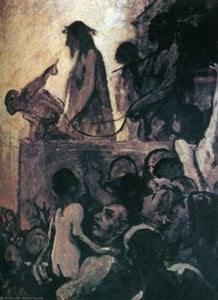
Ratapoil: A Study in Stoicism and Parisian Observation
Honoré Daumier’s “Ratapoil,” completed in 1850, stands as a testament to the artist's unwavering commitment to capturing the spirit of his era – a period defined by social unrest, political maneuvering, and a burgeoning fascination with observation. Executed in bronze, this sculpture transcends mere representation; it embodies a profound contemplation on human resilience amidst societal pressures.
Subject Matter & Composition: The statue depicts a solitary man seated rigidly upright, his arms crossed firmly across his chest. This posture exudes an aura of composure and resistance—a deliberate choice by Daumier to portray not triumphant heroism but quiet dignity under duress. He is positioned against a backdrop of two figures standing at a distance, subtly emphasizing the individual’s isolation within a larger social landscape.
Style & Technique: Daumier's style is characterized by its unflinching realism blended with expressive draftsmanship. The bronze casting demonstrates meticulous attention to detail—the subtle creases in the fabric of his tunic, the musculature of his torso, and the careful rendering of facial features convey a palpable sense of physicality. Unlike idealized depictions prevalent during Romanticism, Daumier eschewed embellishment, prioritizing accuracy and conveying emotion through nuanced observation.
Historical Context: “Ratapoil” emerged from the turbulent atmosphere of mid-Victorian Paris. The sculpture reflects the anxieties surrounding social reform movements and the pervasive influence of republican ideals—themes central to Daumier’s artistic output. It speaks directly to the concerns of a society grappling with questions of justice, liberty, and the role of the individual within collective action.
Symbolism & Emotional Impact: The crossed arms symbolize steadfastness and defiance – an assertion of inner strength against external pressures. The solitary figure embodies the artist’s own philosophical stance; Daumier believed in confronting uncomfortable truths with courage and integrity. “Ratapoil” invites contemplation on themes of perseverance, moral fortitude, and the importance of maintaining composure amidst adversity. It resonates powerfully with viewers seeking inspiration from art that captures the complexities of human experience.
Interior Design Considerations: This sculpture’s austere aesthetic lends itself beautifully to minimalist interiors, providing a striking focal point against neutral backgrounds. Its bronze hue imparts warmth and sophistication, complementing both contemporary and classic design styles. Collectors appreciate “Ratapoil” for its artistic merit and historical significance—a timeless masterpiece that continues to inspire dialogue about human character and societal responsibility.



 Prebacite na prodaju printova
 Podijeli
 Podijeli
 Detalji
 Vodič
Vodič

 Preuzmi datoteku
 Slični predmeti
 Slide show
 Statistika


 Pročitajte više






































 Opcija stakla dostupna je samo za dimenzije manje od 110 cm