Biografija umjetnika
Početak života i umjetnički poziv Honoréa Daumiera
Honoré-Victorin Daumier rođen je u Marseilleu 1808. godine, a njegov život bio je duboko isprepleten s burnim događajima devetnaestostoljetne Francuske. Rano djetinstvo obilježeno je književnim ambicijama oca i preseljenjem u Pariz 1814. godine, što ga je uronilo u grad koji je vrveo umjetničkom energijom. Iako mu je prvotno bila predodređena pravna karijera, mladom Daumieru su sklonosti neporecivo bile usmjerene prema umjetnosti. Učio je kod Alexandrea Lenoir-a, upijajući klasične utjecaje uz divljenje dramatičnom chiaroscuro-u Rubensa, a svoje vještine dalje brusio u Académie Suisse. Ova temeljna obuka pokazala se ključnom u oblikovanju njegovog prepoznatljivog stila – snažne kombinacije realizma i ekspresivnog crteža. Međutim, nije samo umjetnička tehnika definirala Daumiera; bila je to duboka osjetljivost na socijalne nepravde i političke apsurde koji su ga okruživali. Njegova obitelj se borila s financijskim poteškoćama, što je utjecalo na njegov pogled na svijet i kasnije umjetničko stvaralaštvo.
Oštro pero: Karikatura i društvena kritika
Daumierova karijera doista je procvala nakon Revolucije iz 1830. godine, događaja koji je nepovratno promijenio tijek francuske povijesti i istovremeno pružio plodno tlo za njegov rastući satirični talent. Brzo se etablirao kao majstor litografije, isprva anonimno doprinoseći raznim publikacijama prije nego što je postigao priznanje kroz rad s *Le Charivari*, žustrim nezavisnim strip-časopisom koji je osnovao Charles Philipon. Upravo je ovdje Daumierov genij u potpunosti procvjetao. Njegove karikature nisu bile samo humoristični prikazi; bile su oštre optužbe buržoazije, pravnog sustava i političke elite. Bez straha se rugao kralju Louis-Philippeu, zaradivši šestomjesečni zatvor 1832. godine zbog posebno gorke karikature. To iskustvo, umjesto da ga ušuti, samo je učvrstilo njegovu predanost razotkrivanju hipokrizije i osporavanju autoriteta kroz umjetnost. Njegove litografije postale su vizualni manifesti, uhvativši duh neslaganja i nudeći kritički komentar na društvene mahine njegova vremena. Ogroman volumen njegove produkcije tijekom tog razdoblja je zapanjujući – tisuće litografija koje su služile kao popularna zabava i snažne političke izjave. Njegov rad često prikazuje pravosuđe, parlament i visoko društvo u ironičnom i karikaturalnom svjetlu, ističući njihove mane i pretencioznost.
Iznad karikature: Slikarska i skulptorska vizija
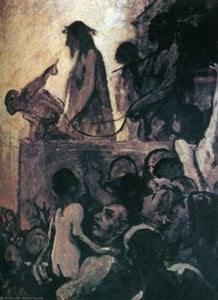
Iako je Daumier najpoznatiji po svojoj litografiji, ograničiti ga samo na područje karikature bio bi ozbiljna nepravda. Bio je i posvećen slikar i kipar, iako je priznanje za ova djela stiglo kasnije u životu. Njegova slika, često prikazujuća scene iz svakodnevnog pariške života – treći razred vagona, praonice rublja, odvjetnike – prožeta je dubokim osjećajem realizma i empatije. To nisu idealizirani portreti, već nepristrasni prikazi poteškoća i borbe. Majstorski je koristio slobodne poteze kista i dramatično osvjetljenje kako bi prenio emocije i atmosferu, najavljujući neke od tehnika koje su kasnije prihvatili impresionisti. Njegov skulptorski rad, uglavnom izrađen od gline (mnoga djela ostala nepečena tijekom njegovog života), otkriva sličnu predanost prikazivanju ljudske figure s iskrenošću i emocionalnom dubinom. Te se skulpture, ponovno otkrivene nakon njegove smrti, pokazuju izvanredan talent za modeliranje i sposobnost prenošenja psihološke složenosti kroz fizičke geste.
Trajno nasljeđe: Utjecaj i povijesni značaj
Utjecaj Honoréa Daumiera na povijest umjetnosti je neosporan. Premostio je jaz između romantizma i realizma, utirući put budućim generacijama umjetnika koji su nastojali prikazati svijet kakav zaista jest – sa svim manama. Njegova neumoljiva društvena kritika utjecala je na umjetnike poput Gustava Courbeta i Édouarda Maneta, dok je njegova inovativna upotreba litografije revolucionirala grafičko stvaralaštvo. Njegov rad nastavlja odjekivati danas, podsjećajući nas na moć umjetnosti da osporava autoritet, razotkriva nepravdu i svjedoči o ljudskom stanju. Muzej d'Orsay u Parizu posjeduje značajnu zbirku njegovih slika i skulptura, nudeći posjetiteljima pogled u svijet koji je tako živo prikazao. Njegove litografije su široko dostupne kroz kolekcije poput onih pronađenih na WahooArt, osiguravajući da njegova satirična genijalnost nastavlja poticati razmišljanje i inspirirati dijalog. Daumier nije bio samo umjetnik; bio je kroničar svog vremena – vizualni pjesnik koji je koristio svoj talent kako bi dao glas onima bez glasa i tražio odgovornost od moćnika. Njegovo nasljeđe traje kao svjedočanstvo trajnog značaja umjetnosti kao sile za društvenu promjenu.



 Pregledaj u stvarnoj veličini
 Naručite ručno oslikano reprodukciju
 Podijeli
 Podijeli
 Detalji
 Vodič
Vodič

 Preuzmi datoteku
 Slični predmeti
 Rentgenska snimka
 Slide show
 Statistika


 Pročitajte više






































 Opcija stakla dostupna je samo za dimenzije manje od 110 cm