BESPLATNE UMJETNIČKE KONSULTACIJE

x
Naručite reprodukciju Naručite reprodukcijuKupi digitalnu sliku Kupi digitalnu sliku PošaljiPošalji
DetaljiDetalji Dodaj u omiljene Dodaj u omiljene PreuzmiPreuzmi Slični predmetiSlični predmeti Rentgenska snimkaRentgenska snimka Automatska prezentacijaAutomatska prezentacija

Hands I

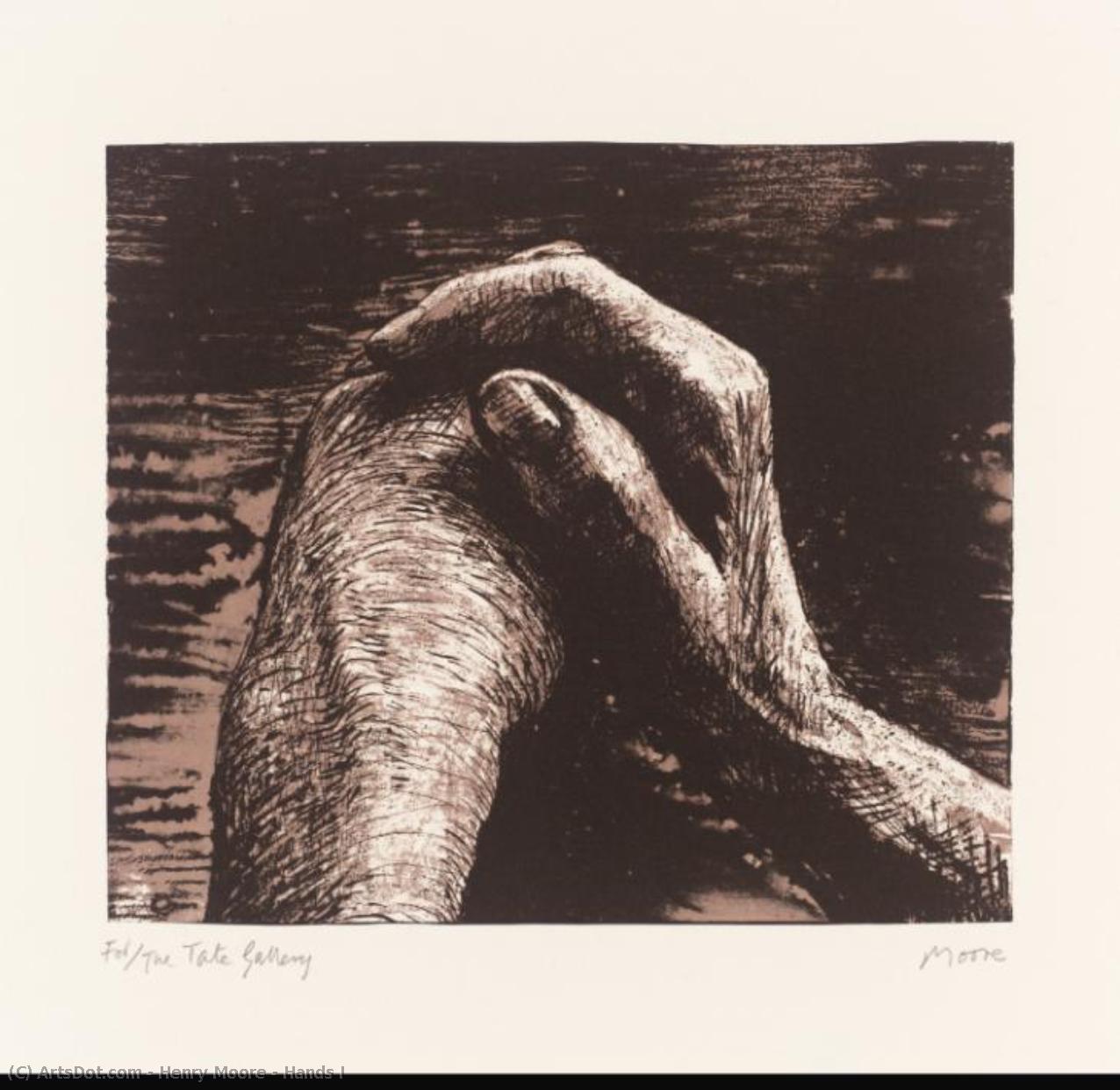
Henry Moore’s ‘Hands I’ (1973) captures intimacy and connection through a striking black & white lithograph of intertwined hands. Explore the artist's exploration of human form and emotion.

Henry Moore je najpoznatiji po monumentalnim apstraktnim brončanim skulpturama koje prikazuju ljudsko tijelo u jednostavnoj i elegantnoj obliku – često majku s djetetom ili položaj ležeće osobe. Njegova umjetnička ostvarenja inspiriraju ljepotu i unutarnju harmoniju, dok je njegov stil revolucionarno promijenio britanski suvremeni kiparstvo.

Giclée / Umjetnički otisak

Giclée tisak muzejske kvalitete ili otisak na platnu uz brzu proizvodnju i fleksibilne opcije završne obrade.

Standard
custom
CM
INCH

Odaberite jednu od naših unaprijed definiranih veličina koje odgovaraju izvornim proporcijama umjetničkog djela.

širina
visina

Možete unijeti vlastite dimenzije kako biste umjetničko djelo prilagodili specifičnom okviru ili prostoru. Ako odabrana veličina ne odgovara proporcijama izvornog rada, izrezat ćemo dio slike ili je proširiti pomoću ogledalnog efekta ili jednobojne rubne površine. Digitalni prikaz (mockup) bit će vam poslan na odobrenje prije početka proizvodnje.
Imajte na umu da pregled na zaslonu ne odražava stvarno izrezivanje ili proširivanje. Samo će mockup točno prikazati konačnu kompoziciju.
Iako su dostupne prilagođene veličine, preporučujemo odabir dimenzije iz unaprijed definirane liste kako biste očuvali izvorne proporcije.

Dostava širom svijeta () u roku od 2 tjedna umjesto standardnih 4/5 tjedana. (2 Srpanj)

why_choose_icon
Besplatna ekspresna dostava širom svijeta
why_choose_icon
Visokokvalitetno laneno platno
why_choose_icon
Potpuno osiguranje dostave
why_choose_icon
Jamstvo povrata carine i uvoznih poreza
why_choose_icon
Garancija vjernog podudaranja boja
why_choose_icon
Politika povrata u roku od 60 dana (samo u slučaju nedostataka)
why_choose_icon
Jamstvo povrata 100% novca
why_choose_icon
Popust na više proizvoda

Ukupna cijena

-

reproduction

Hands I

Giclée / Umjetnički otisak

Veličina reprodukcije

-

Ukupna cijena

-

Osnovne informacije

  • Title: Hands I
  • Subject or theme: Hands holding hands
  • Location: Tate Britain, London
  • Movement: Neo-Romanticism
  • Influences: Sculpture
  • Artistic style: Abstracted figure
  • Dimensions: 24 x 22 cm

Kviz o umjetnosti

Svako pitanje ima samo jedan točan odgovor.

Pitanje 1:
What is the primary subject matter of Henry Moore’s ‘Hands I’?
Pitanje 2:
In what year was ‘Hands I’ created?
Pitanje 3:
Which art movement is most closely associated with Henry Moore’s ‘Hands I’?
Pitanje 4:
The lithograph technique used to create ‘Hands I’ is best described as:
Pitanje 5:
Considering Henry Moore's broader body of work, what is a recurring theme often found in his sculptures?

Opis djela

A Moment Frozen in Time: Henry Moore’s ‘Hands I’

Henry Moore's 'Hands I,' created in 1973, is more than just a lithograph depicting two hands clasped together; it’s a profound meditation on connection, vulnerability, and the enduring human need for touch. Born in Castleford, Yorkshire, in 1898, Henry Spencer Moore rose to international prominence as a sculptor, yet his exploration of form extended into printmaking with remarkable sensitivity. This particular work, rendered in stark black and white, captures an intimate exchange – a gesture poised between greeting and reassurance – that resonates deeply across time and cultures. The image itself is deceptively simple: two hands, rendered with Moore’s signature elongated forms and subtle textural variations, intertwine within the frame. The lack of background emphasizes the central focus, drawing the viewer into this quiet tableau of human interaction.

Neo-Romanticism and the Language of Form

‘Hands I’ firmly situates itself within Moore's evolving Neo-Romantic style. Following his earlier explorations with abstract sculpture, he began to revisit figurative work in the 1960s and 70s, often drawing inspiration from ancient art and pre-historic forms. This period saw a shift towards a more lyrical and expressive approach, characterized by undulating lines, hollow spaces, and a deliberate avoidance of sharp angles. Moore’s lithograph reflects this evolution; the hands are not depicted with photographic realism but rather as stylized representations imbued with emotional weight. The technique itself—lithography—contributes to the work's quiet power. The process involves transferring ink from a stone onto paper through a series of carefully controlled washes, resulting in subtle tonal shifts and a remarkable depth of texture that mimics the feel of skin and fabric.

Symbolism of Gesture and Connection

Beyond its formal qualities, ‘Hands I’ is rich with symbolic meaning. The act of holding hands—a gesture universally understood as representing connection, support, and intimacy—is central to the work's impact. Moore was deeply interested in the human body and its capacity for expressing emotion through form. The elongated fingers and subtly curved palms suggest a sense of vulnerability and openness, inviting the viewer to contemplate the shared experience of touch. Considering Moore’s own life – his early exposure to the Yorkshire landscape, his experiences during World War I, and later his exploration of the female form – this image can be interpreted as a yearning for connection amidst uncertainty and loss. The hands themselves become emblems of resilience and hope.

A Legacy in Reproduction

WahooArt offers meticulously crafted hand-painted reproductions of ‘Hands I,’ ensuring that the subtle nuances of Moore’s original lithograph are faithfully preserved. Unlike digital prints, our reproductions capture the tonal variations, textural details, and overall atmosphere of the artwork with exceptional accuracy. This allows collectors and interior designers to incorporate this powerful image into their spaces, bringing a touch of contemplative beauty and emotional resonance to any setting. The choice of a hand-painted reproduction not only guarantees superior quality but also honors the artist’s intention – to create an enduring work that speaks to the fundamental human need for connection and understanding. Explore our range of sizes and framing options to find the perfect way to experience ‘Hands I’ in your own home.

Srodna umjetnička djela


Biografija umjetnika

A Life Sculpted in Form: The World of Henry Moore

Henry Spencer Moore, OM CH FBA (30 July 1898 – 31 August 1986) was an English visual artist. He is best known for his semi-abstract monumental bronze sculptures, which are prominently displayed across the globe and have profoundly impacted the trajectory of modern British sculpture. Born in Castleford, a modest mining town nestled within Yorkshire’s rolling hills—a landscape that would indelibly shape his artistic vision—Moore embarked on an extraordinary journey from humble beginnings to become one of Britain's most revered sculptors. His formative years were marked by a profound appreciation for education instilled by his father, Raymond Spencer Moore, who steered him away from the traditional path of coal mining towards formal schooling, fostering a lifelong dedication to intellectual pursuits. Even as a young boy, Moore exhibited an innate fascination with manipulating clay and carving wood—activities that foreshadowed the artistic vocation he would embrace throughout his life. This early engagement with tactile materials served as a catalyst for honing his sculptural skills and cultivating a distinctive aesthetic sensibility rooted in organic form and spatial exploration.

Early Influences and Artistic Development

Moore’s formal artistic education commenced at Castleford Secondary School, where his art teacher recognized and nurtured his burgeoning talent—a recognition that would prove pivotal in shaping his future endeavors. Subsequently, he pursued higher studies at Leeds School of Art and then the Royal College of Art in London, immersing himself in the study of classical sculpture alongside pioneering movements like Cubism. However, Moore’s artistic trajectory wasn't merely dictated by prevailing trends; rather, he skillfully synthesized these influences into a singular style characterized by profound innovation. A transformative encounter occurred during his visit to Mexico in 1925—a journey that exposed him to the breathtaking artistry of pre-Columbian civilizations, particularly Aztec sculptures. The striking simplicity and evocative abstraction inherent in these monumental forms captivated Moore’s imagination, liberating him from restrictive representational conventions and propelling him toward a more liberated artistic expression. This pivotal period witnessed the genesis of his signature style: semi-abstract sculptures imbued with rounded, organic shapes—a stylistic hallmark that would define his oeuvre for decades to come—and frequently incorporating voids or apertures that skillfully manipulated light and space.

The Reclining Figure and Mother and Child

Moore’s artistic explorations centered around two recurring motifs—the reclining figure and the mother and child—which became synonymous with his artistic identity. The *reclining figure*, in particular, transcended mere depiction; it functioned as a conduit for investigating fundamental concepts of form, volume, and the relationship between the human body and its surrounding environment. These sculptures weren’t simply representations of repose but rather meditations on stillness, contemplation, and the inherent beauty of natural curves—a stylistic choice that echoed the undulating contours of Yorkshire's landscape. Simultaneously, Moore relentlessly pursued the depiction of *mother and child*, recognizing in this primal pairing universal themes of love, protection, and nurturing. His sculptures portraying mothers and children captured not idealized perfection but rather honest portrayals of human connection—often reflecting anxieties and uncertainties prevalent during his lifetime—demonstrating a remarkable ability to convey profound emotional depth through sculptural form.

Wartime Reflections and Public Commissions

The Second World War irrevocably altered Moore’s artistic trajectory, prompting him to document the experiences of Londoners sheltering from the Blitz—a harrowing period marked by fear and resilience—through a series of poignant drawings executed during the siege. These *Shelter Drawings*, far surpassing mere historical records, showcased Moore's mastery in translating sculptural principles into two-dimensional media—a testament to his versatility as an artist. Following the war’s conclusion, Moore received numerous prestigious public commissions—opportunities that enabled him to create monumental sculptures for educational institutions, hospitals, and civic spaces—affirming his conviction that art should serve the broader community. His unwavering commitment to artistic innovation while maintaining fidelity to his distinctive sculptural style solidified his reputation as a luminary of twentieth-century sculpture.

Legacy and Enduring Influence

Henry Moore’s legacy extends far beyond his individual artworks; he fundamentally reshaped the landscape of modern sculpture, challenging conventional notions of representation and advocating for exploration of form and space—a pioneering stance that paved the way for subsequent generations of sculptors. His sculptures continue to inspire awe and contemplation today—serving as enduring emblems of human creativity and ingenuity—and demonstrating the transformative power of art. In 1977, Moore established the Henry Moore Foundation—a philanthropic endeavor dedicated to nurturing artistic talent and disseminating knowledge about sculpture—ensuring that his profound contribution to the arts would endure for posterity. The foundation actively supports artists, scholars, and institutions worldwide—furthering Moore’s unwavering belief in fostering creativity and artistic innovation—solidifying his position as one of Britain's most influential sculptors and cementing his enduring impact on the global art scene.
  • Major Themes: Human form, abstraction, mother and child, reclining figures, landscape
  • Key Influences: Classical sculpture, Cubism, pre-Columbian art, Yorkshire’s rolling hills
  • Notable Works: *Reclining Figure: 1951*, *Family Group*, *Shelter Drawings*
Moore's sculptures stand as timeless monuments to human ingenuity and a poignant reminder of the transformative potential inherent in artistic expression.
Henry Lambov

Henry Lambov

1898 - 1986 , Velika Britanija

Osnovne informacije

  • Artistic Movement Or Style: Modernizam, Apstraktna skulptura
  • Artists Who Influenced This Artist:
    • Klasička skulptura
    • Kubizam
  • Date Of Birth: 30 srpnja 1898.
  • Date Of Death: 31 kolovoza 1986.
  • Full Name: Henry Spencer Moore
  • Nationality: Engleski
  • Notable Artworks:
    • Ležeća figura
    • Podzemlje
  • Place Of Birth: Castleford, UK
Istražite umjetnička djela organizirana prema temama, stilovima i karakteristikama.