


 Oil On CanvasWallArtFauvism
 1919Modern
 100.0 x 60.0 cm
Giclée tisak muzejske kvalitete ili otisak na platnu uz brzu proizvodnju i fleksibilne opcije završne obrade. ( Kupi ručno naslikanu sliku Kupi digitalnu sliku)





























Odaberite jednu od naših unaprijed definiranih veličina koje odgovaraju izvornim proporcijama umjetničkog djela.

Možete unijeti vlastite dimenzije kako biste umjetničko djelo prilagodili specifičnom okviru ili prostoru. Ako odabrana veličina ne odgovara proporcijama izvornog rada, izrezat ćemo dio slike ili je proširiti pomoću ogledalnog efekta ili jednobojne rubne površine. Digitalni prikaz (mockup) bit će vam poslan na odobrenje prije početka proizvodnje.
Imajte na umu da pregled na zaslonu ne odražava stvarno izrezivanje ili proširivanje. Samo će mockup točno prikazati konačnu kompoziciju.
Iako su dostupne prilagođene veličine, preporučujemo odabir dimenzije iz unaprijed definirane liste kako biste očuvali izvorne proporcije.
Dostava širom svijeta () u roku od 2 tjedna umjesto standardnih 4/5 tjedana. (7 Rujan)


The Black Table
Veličina reprodukcije
“The Black Table,” painted in 1919 by Henri Matisse, presents a serene domestic scene imbued with the artist’s signature vibrancy. The painting depicts a woman seated at a black table, her form gently framed by potted plants and a vase of flowers resting on her lap. The composition is carefully balanced; the dark table acts as an anchor, contrasting beautifully with the lighter hues of the woman's dress (a striking blue) and the vibrant yellows of her hat. Two potted plants flank the scene – one positioned near the top left corner and another towards the bottom right, adding depth and visual interest. A cup sits on a nearby surface, subtly contributing to the overall sense of quiet intimacy. The chair itself features a cushion, further softening the composition.
This work exemplifies Matisse’s mastery of Fauvism, an art movement characterized by bold, non-naturalistic colors and expressive brushwork. Matisse rejected traditional representational techniques, instead prioritizing emotional impact through color. In “The Black Table,” the use of blue and yellow is particularly noteworthy – these complementary colors create a harmonious balance while simultaneously generating visual excitement. The application of paint is fluid and deliberate; lines are often simplified or abstracted, contributing to the painting’s overall sense of decorative elegance. Notice how Matisse uses flat planes of color rather than detailed shading, a hallmark of his style.
Created in 1919, “The Black Table” reflects a period of relative calm for Matisse following World War I. Having settled on the French Riviera, he began to explore themes of domesticity and leisure with renewed focus. The Fauvist movement, which had initially caused controversy, was gaining recognition as a significant force in modern art. Matisse’s work during this time demonstrated a shift towards greater clarity and simplification, while retaining the vibrant color palette that defined his style. “The Black Table” stands as a testament to Matisse's ability to synthesize these elements into a cohesive and compelling visual experience.
Beyond its aesthetic appeal, "The Black Table" evokes a sense of tranquility and quiet contemplation. The woman’s relaxed posture and the still life arrangement suggest a moment of peaceful repose. While not overtly symbolic, the black table itself can be interpreted as representing stability and grounding amidst the vibrant colors surrounding it. The flowers symbolize beauty and fleeting moments, while the overall composition conveys a feeling of harmonious balance – a reflection of Matisse's artistic philosophy and his desire to create art that celebrates life’s simple pleasures.


1869 - 1954 , Francuska
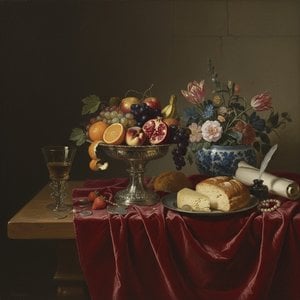
Embark on a sophisticated journey through the history of still life art. From Dutch Golden Age masterpieces to Baroque opulence, explore the profound symbolism and timeless beauty of the world's most exquisite table compositions.

 Pregledaj u stvarnoj veličini
 Pošalji
 Podijeli
 Detalji o umjetničkom djelu

 Preuzmi
 Slični predmeti
 Rentgenska snimka
 Automatska prezentacija
 Prikaži više







 Opcija stakla dostupna je samo za dimenzije manje od 110 cm


