Pregledaj u realnoj veličini Pregled u AR-u Kupi ručno oslikano djelo Prebacite na digitalnu sliku Pošalji
Detalji o umjetničkom djelu Vodič Dodaj u omiljene Preuzmi umjetničko djelo Slični predmeti Rentgenska snimka Slide show Q&A Statistika

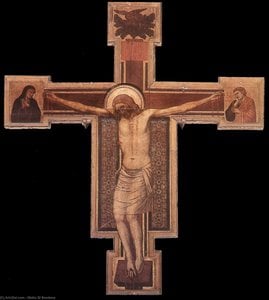
Crucifix

Experience the emotional realism of Giunta Pisano's 13th-century Crucifix, a masterpiece blending Byzantine grandeur with human suffering; discover this medieval icon today.

Discover Giunta Pisano's masterful Pisan paintings & sculptures from Pisa, Italy (1190-1260). Explore his Renaissance style and legacy at Piazza dei Cavalieri.

Giclée / Umjetnički otisak

Giclée tisak muzejske kvalitete ili otisak na platnu uz brzu izradu i raznolike opcije završne obrade. ( Kupi ručno oslikano djelo Prebacite na digitalnu sliku)

Corner sample of the P118B picture frame: oblikovani polistiren, 5 cm wide and 3 cm thick
P118B €10
Corner sample of the P118H picture frame: oblikovani polistiren, 5 cm wide and 3 cm thick
P118H €10
Corner sample of the P118W picture frame: oblikovani polistiren, 5 cm wide and 3 cm thick
P118W €10
Corner sample of the P438Z picture frame: oblikovani polistiren, 5.5 cm wide and 3.5 cm thick
P438Z €10
Corner sample of the P508JH picture frame: oblikovani polistiren, 7 cm wide and 3.5 cm thick
P508JH €12
Corner sample of the P508YH picture frame: oblikovani polistiren, 7 cm wide and 3.5 cm thick
P508YH €12
Corner sample of the P805H picture frame: oblikovani polistiren, 5 cm wide and 3.5 cm thick
P805H €10
Corner sample of the P805Z picture frame: oblikovani polistiren, 5 cm wide and 3.5 cm thick
P805Z €10
Corner sample of the P919BZ picture frame: oblikovani polistiren, 7 cm wide and 3.5 cm thick
P919BZ €10
Corner sample of the P919G picture frame: oblikovani polistiren, 7 cm wide and 3.5 cm thick
P919G €10
Corner sample of the P919XJ picture frame: oblikovani polistiren, 7 cm wide and 3.5 cm thick
P919XJ €10
Corner sample of the P959ZH picture frame: oblikovani polistiren, 5 cm wide and 3 cm thick
P959ZH €10
Corner sample of the P968JZ picture frame: oblikovani polistiren, 6 cm wide and 4 cm thick
P968JZ €12
Corner sample of the W106C picture frame: masivno drvo, 5 cm wide and 3 cm thick
W106C €8
Corner sample of the W218G picture frame: masivno drvo, 5 cm wide and 3 cm thick
W218G €10
Corner sample of the W218JH picture frame: masivno drvo, 5 cm wide and 3 cm thick
W218JH €8
Corner sample of the W218Y picture frame: masivno drvo, 5 cm wide and 3 cm thick
W218Y €10
Corner sample of the W307PJ picture frame: masivno drvo, 6 cm wide and 3 cm thick
W307PJ €10
Corner sample of the W316G picture frame: masivno drvo, 6 cm wide and 3 cm thick
W316G €10
Corner sample of the W316PJ picture frame: masivno drvo, 6 cm wide and 3 cm thick
W316PJ €8
Corner sample of the W316Y picture frame: masivno drvo, 6 cm wide and 3 cm thick
W316Y €10
Corner sample of the W398PJ picture frame: masivno drvo, 5 cm wide and 3 cm thick
W398PJ €8
Corner sample of the W4111J picture frame: masivno drvo, 6.5 cm wide and 3.5 cm thick
W4111J €10
Corner sample of the W500HY picture frame: masivno drvo, 7 cm wide and 5 cm thick
W500HY €15
Corner sample of the W500JH picture frame: masivno drvo, 7 cm wide and 5 cm thick
W500JH €15
Corner sample of the W692G picture frame: masivno drvo, 8 cm wide and 4 cm thick
W692G €12
Corner sample of the W849H picture frame: masivno drvo, 5 cm wide and 3 cm thick
W849H €8
Corner sample of the W940BG picture frame: masivno drvo, 7.5 cm wide and 4.5 cm thick
W940BG €15
Corner sample of the W953PJ picture frame: masivno drvo, 6 cm wide and 3.5 cm thick
W953PJ €8

Standardne dimenzije
po mjeri
CM
INCH

Odaberite jednu od naših unaprijed definiranih veličina koje odgovaraju izvornim proporcijama umjetničkog djela.

širina
visina

Unesite potrebnu širinu i visinu kako bi odgovarali vašem okviru ili zidu. Print se može samo izrezati, nikada ne može biti veći od slike, stoga format s drugačijim omjerom stranica uzrokuje gubitak dijela slike. Prije bilo kakve štampe šaljemo vam digitalni prikaz (mockup) na odobrenje. Slika prikazana na ovoj stranici ne prikazuje stvarni rez — to prikazuje isključivo digitalni prikaz.

Dostava širom svijeta () u roku od 2 tjedna umjesto standardnih 4/5 tjedana. (30 Listopad)

Besplatna ekspresna dostava širom svijeta
Visokokvalitetno laneno platno
Potpuno osiguranje dostave
Jamstvo povrata carine i uvoznih poreza
Jamstvo vjernosti boja
Politika povrata u roku od 100 dana (samo u slučaju nedostataka)
Jamstvo povrata 100% novca
Popust na više proizvoda

Ukupna cijena

€ 60

Crucifix

Giclée / Umjetnički otisak

Veličina reprodukcije

-

Ukupna cijena

€ 60

Osnovne informacije

  • Medium: Tempera painting
  • Movement: Medieval art
  • Location: San Domenico, Bologna
  • Title: Crucifix
  • Year: 1240
  • Artistic style: Byzantine/Italian blend
The Crucifix by Giunta Pisano is a seminal work of medieval art that showcases the artist's skill and innovation. Created in 1240, this tempera painting measures 316 x 285 cm and is housed in the San Domenico museum in Bologna, Italy. The painting depicts a crucifixion scene with Jesus Christ at its center, surrounded by intricate details and gold leaf accents.

Artistic Style and Influence

Giunta Pisano's style is characterized by his use of Byzantine influences, which were prevalent in Italy during the 13th century. However, he also introduced a new way of representing Christ, focusing on his suffering and humanity. This approach would later influence other artists, such as Cimabue, who would develop their own unique styles. The Crucifix by Giunta Pisano is a prime example of this shift towards a more emotional and realistic representation of Christ.

Key Features and Symbolism

The painting features several key elements, including:
  • The use of gold leaf to create a sense of luxury and reverence
  • Intricate details, such as the crown of thorns and the nails on the cross
  • A focus on Christ's suffering and humanity, rather than his divinity
These elements work together to create a powerful and moving representation of the crucifixion scene. For more information on Giunta Pisano and his works, visit /art/list/?Filter=8Y3PBG-Giunta-Pisano-(Giunta-Da-Pisa)-Crucifix. You can also learn more about the San Domenico museum on /art/list/?Filter=A@D3BJLT-The-Museum-San-Domenico-Bologna-Italy. Handmade oil painting reproductions of the Crucifix by Giunta Pisano are available on https://WahooArt.com, allowing art lovers to own a piece of medieval history. For more information on the artist and his style, visit Wikipedia: https://en.wikipedia.org/wiki/Giunta_Pisano.
The Crucifix by Giunta Pisano is a masterpiece of medieval art that continues to inspire and influence artists to this day. Its unique blend of Byzantine and Italian styles, combined with its powerful symbolism and emotional representation of Christ, make it a must-see for anyone interested in art history.

Pitanja i odgovori

Kakvu paletu boja i kakav osjećaj spaja "Crucifix"?

Neutrals paleta djela "Crucifix" autora Giunta Pisano (Giunta Da Pisa) skladno se uklapa s njegovim Spiritual emocionalnim tonom. Boja je jedan od načina na koji umjetničko djelo prenosi osjećaj.

Koliko je zasićena paleta djela "Crucifix"?

Paleta djela "Crucifix" ima Balanced Soft zasićenost.

Gdje mogu kupiti print djela "Crucifix" autora Giunta Pisano (Giunta Da Pisa)?

"Crucifix" je dostupan kao umjetnički otisak na pamučnom platnu ili arhivskom kanvas papiru. Narudžbe možete izvršiti na stranici Umjetnička litografija, u dimenziji po vašem izboru.


Biografija umjetnika

Giunta Pisano: The Pioneer of Italian Crucifixion

Giunta Pisano, a name often overshadowed by the towering figures of his contemporaries, stands as a pivotal figure in the early development of Italian painting. Born in Pisa around 1190 and tragically dying sometime before 1258 or 1260, Giunta’s legacy rests primarily on his profoundly influential crucifixes – works that dramatically shifted the artistic representation of Christ's suffering and laid the groundwork for subsequent generations of Renaissance artists. While he remains a relatively obscure figure in broader art historical narratives, examining his life and work reveals a remarkably innovative artist who dared to challenge established Byzantine conventions and forge a distinctly Italian path.

Pisa during Giunta’s formative years was a vibrant hub of artistic activity, deeply influenced by the remnants of the Roman Empire and increasingly exposed to the wealth and culture of the East through trade routes. The city's strategic location as a major port facilitated contact with Byzantine artists and craftsmen, creating an environment ripe for artistic exchange. Giunta’s early career is shrouded in some mystery; he is believed to have been working by 1202, possibly influenced by Greek art following the Fourth Crusade. He was one of the first Italian painters whose name appears on a work, solidifying his place as a significant contributor to the burgeoning artistic landscape.

The Masterpiece: The Crucifix of San Raniero and Beyond

Giunta’s most celebrated works are undoubtedly his crucifixes. The *Crucifix of San Raniero*, housed in the Museo Nazionale di San Matteo in Pisa, exemplifies his groundbreaking approach. Unlike earlier depictions of Christ on the cross, which often presented a serene, almost triumphant image – a “Christus gloriosus” – Giunta depicted a Christ writhing in agony, consumed by physical and emotional suffering. His portrayal was strikingly realistic, emphasizing the wounds, contortions, and vulnerability of the dying figure. This shift towards a "Christus patiens" (suffering Christ) marked a radical departure from Byzantine iconography and established a new standard for representing the crucifixion that would profoundly influence artists like Cimabue and ultimately, Giotto.

Technique and Style: A Synthesis of Byzantine and Italian Traditions

Giunta’s style is characterized by a fascinating synthesis of Byzantine and emerging Italian artistic traditions. He inherited the meticulous detail, rich colors, and gold leaf characteristic of Byzantine art, particularly in his use of tempera on wood panels. However, he infused these elements with a distinctly Italian sensibility – a greater emphasis on naturalism, emotional intensity, and a more dynamic composition. His figures possess a remarkable sense of volume and weight, achieved through careful modeling and shading. The *Crucifix of San Raniero* demonstrates this perfectly, showcasing the artist’s ability to convey both physical pain and spiritual anguish with astonishing realism.

  • Tempera on Wood: Giunta primarily utilized tempera paint applied to wooden panels, a technique common in Italy at the time.
  • Byzantine Influence: His early works show clear traces of Byzantine iconography, particularly in the composition and rendering of Christ’s figure.
  • Italian Realism: He gradually introduced elements of Italian realism, evident in his attention to anatomical detail and emotional expression.

Giunta's Circle and Lasting Legacy

While Giunta Pisano is often considered a solitary figure, evidence suggests he had a circle of followers and assistants. Artists like the Master of the Blue Crucifixes, the Master of the Treasury, and Vicino da Pistoia are believed to have been influenced by his work. His influence extended beyond Pisa, impacting artists in other regions of Italy. Notably, Giunta’s depiction of Christ as a suffering figure paved the way for Cimabue's own groundbreaking crucifixes, which further solidified this new artistic direction. The imposing *Crucifix* in the Basilica of Saint Dominic in Bologna, bearing the inscription “Cuius docta manus me pixit Junta Pisanus” (painted by the learned or skilled hand of Giunta Pisano), stands as a testament to his enduring impact on Italian art – a powerful symbol of the transition from Byzantine tradition to the nascent Renaissance.

Giunta Pisano’s contribution to the history of art is often underestimated, but his pioneering work in depicting Christ's suffering represents a crucial turning point. He was not merely a follower of Byzantine conventions; he was an innovator who dared to reshape the visual language of Christian iconography and set the stage for the artistic achievements of subsequent generations.

Giunta Pisano (Giunta Da Pisa)

Giunta Pisano (Giunta Da Pisa)

1190 - 1260 , Italy

Osnovne informacije

  • Artistic Movement Or Style: Renaissance style
  • Artists Or Movements Influenced By This Artist:
    • Cimabue
    • Giotto
  • Artists Who Influenced This Artist: ['Byzantine artists']
  • Date Of Birth: 1190
  • Date Of Death: 1260
  • Full Name: Giunta Pisano (Giunta da Pisa)
  • Nationality: Italian
  • Notable Artworks:
    • Crucifix of Pisa
    • Crucifix (Bologna)
  • Place Of Birth: Pisa, Italy