Pregledaj u stvarnoj veličiniPregledaj u stvarnoj veličini AR pregledAR pregled Kupi ručno naslikanu sliku Kupi ručno naslikanu slikuKupi digitalnu sliku Kupi digitalnu sliku PošaljiPošalji
Detalji o umjetničkom djeluDetalji o umjetničkom djelu Dodaj u omiljene Dodaj u omiljene PreuzmiPreuzmi Slični predmetiSlični predmeti Rentgenska snimkaRentgenska snimka Automatska prezentacijaAutomatska prezentacija

untitled (9456)

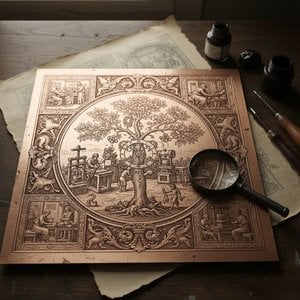
Explore Giorgio de Chirico’s "untitled (9456)", a dramatic monochrome etching of a mythological scene. Discover Metaphysical art's haunting beauty & timeless narrative.

Giorgio de Chirico bio je italijanski umjetnik koji je osnovao metafizičku školu slikarstva i bio velik utjecaj na Surrealizam. Poznat po svojim dremljivim gradskim pejzažima, filozofskim temama i ikoničnim manekinama, De Chirico je jedan od najvažnijih predstavnika moderne umjetnosti.

Giclée / Umjetnički otisak

Giclée tisak muzejske kvalitete ili otisak na platnu uz brzu proizvodnju i fleksibilne opcije završne obrade. (Kupi ručno naslikanu sliku Kupi ručno naslikanu slikuKupi digitalnu sliku Kupi digitalnu sliku)

P118B $10
P118H $10
P118W $10
P438Z $10
P508JH $12
P508YH $12
P805H $10
P805Z $10
P919BZ $10
P919G $10
P919XJ $10
P959ZH $10
P968JZ $12
W106C $8
W218G $10
W218JH $8
W218Y $10
W307PJ $10
W316G $10
W316PJ $8
W316Y $10
W398PJ $8
W4111J $10
W500HY $15
W500JH $15
W692G $12
W849H $8
W940BG $15
W953PJ $8

Standardne dimenzije
po mjeri
CM
INCH

Odaberite jednu od naših unaprijed definiranih veličina koje odgovaraju izvornim proporcijama umjetničkog djela.

širina
visina

Možete unijeti vlastite dimenzije kako biste umjetničko djelo prilagodili specifičnom okviru ili prostoru. Ako odabrana veličina ne odgovara proporcijama izvornog rada, izrezat ćemo dio slike ili je proširiti pomoću ogledalnog efekta ili jednobojne rubne površine. Digitalni prikaz (mockup) bit će vam poslan na odobrenje prije početka proizvodnje.
Imajte na umu da pregled na zaslonu ne odražava stvarno izrezivanje ili proširivanje. Samo će mockup točno prikazati konačnu kompoziciju.
Iako su dostupne prilagođene veličine, preporučujemo odabir dimenzije iz unaprijed definirane liste kako biste očuvali izvorne proporcije.

Dostava širom svijeta () u roku od 2 tjedna umjesto standardnih 4/5 tjedana. (7 Rujan)

why_choose_icon
Besplatna ekspresna dostava širom svijeta
why_choose_icon
Visokokvalitetno laneno platno
why_choose_icon
Potpuno osiguranje dostave
why_choose_icon
Jamstvo povrata carine i uvoznih poreza
why_choose_icon
Garancija vjernog podudaranja boja
why_choose_icon
Politika povrata u roku od 100 dana (samo u slučaju nedostataka)
why_choose_icon
Jamstvo povrata 100% novca
why_choose_icon
Popust na više proizvoda

Ukupna cijena

$ 68

reproduction

untitled (9456)

Giclée / Umjetnički otisak

Veličina reprodukcije

-

Ukupna cijena

$ 68

Osnovne informacije

  • Influences:
    • Arthur Schopenhauer
    • Friedrich Nietzsche
  • Medium: Etching/Charcoal on Paper
  • Artistic style: Romanticism
  • Subject or theme: Mythology
  • Location: Private Collection
  • Artist: Giorgio de Chirico

A Dreamscape of Classical Myth Revisited: Giorgio de Chirico’s “Untitled (9456)”

Giorgio de Chirico's "Untitled (9456)" isn’t merely an image; it’s a portal into a realm where rationality yields to the unsettling beauty of subconsciousness. Executed in monochrome etching, this artwork encapsulates the essence of Metaphysical Art—a movement born from the anxieties and intellectual ferment of pre-war Europe—and firmly establishes de Chirico as one of its foremost champions. The piece transports viewers back to a time when philosophers like Nietzsche and Schopenhauer wrestled with existential questions, mirroring the profound meditations embedded within the artwork’s visual language.

Composition & Narrative Depth

The illustration depicts a dramatic tableau centered around a female figure positioned prominently in the foreground—a woman seemingly captive, her posture conveying vulnerability and despair. Surrounding her are symbolic elements that amplify the scene's narrative complexity: an angel hovering above, representing divine compassion yet simultaneously hinting at inescapable fate; and a warrior, embodying strength and protection but ultimately powerless against the forces shaping the woman’s destiny. These figures inhabit a landscape dominated by towering mountains and a distant castle—a setting deliberately chosen to evoke grandeur and heighten the emotional resonance of the composition. The artist skillfully employs perspective to create depth, drawing the eye upwards towards the monumental backdrop while anchoring it in the immediate presence of the tormented protagonist.

Technique & Artistic Vision

De Chirico’s masterful technique is evident in every meticulously rendered line and shade. The etching process itself—characterized by its grainy surface achieved through pressure applied to metal plates inked with pigment—perfectly captures the artist's preoccupation with texture and materiality. Heavy shading creates a palpable sense of volume, emphasizing the contours of the figures and landscape alike. The artist’s unwavering attention to detail speaks volumes about his commitment to conveying not just what he sees but also how he *feels*. This dedication aligns seamlessly with Schopenhauer’s concept of “will”—the driving force behind all existence—and Nietzsche's proclamation that "God is dead," reflecting a broader disillusionment with traditional beliefs and values.

Symbolism & Philosophical Resonance

Beyond its visual splendor, “Untitled (9456)” resonates deeply with philosophical ideas. The woman’s plight symbolizes the human condition—a confrontation with mortality and the inescapable influence of circumstance. The angel and warrior serve as reminders that we are perpetually caught between benevolent forces and destructive impulses. De Chirico's deliberate use of illogical perspective—a hallmark of Metaphysical Art—challenges our perception of reality, prompting contemplation on the elusive nature of consciousness and experience. It’s a visual meditation on themes of sacrifice, fate, and the unsettling beauty found in confronting the abyss.

A Legacy of Surreal Influence

“Untitled (9456)” stands as a cornerstone of Metaphysical Art's contribution to Surrealism. Artists like René Magritte and Max Ernst were profoundly impacted by de Chirico’s exploration of dreamlike landscapes and irrational juxtapositions—techniques that would become central to the Surrealist movement’s artistic vocabulary. De Chirico’s enduring legacy lies in his ability to capture the unsettling grandeur of the human psyche, transforming familiar imagery into symbols of profound philosophical inquiry.

Biografija umjetnika

Giorgio de Chirico (1888–1978): The Architect of Dreamlike Landscapes

Giorgio de Chirico, born in Volos, Greece, on July 10th, 1888, to Italian parents—a Genoese mother and a Sicilian father—was an artist whose life was inextricably linked with the intellectual currents of his time. From a young age, he demonstrated an exceptional talent for drawing and painting, nurtured by a formal education at Athens Polytechnic where he honed his skills in classical techniques. However, it was his relocation to Munich in 1906 that truly propelled him onto the artistic stage, immersing him in the vibrant atmosphere of German Symbolism and fostering connections with artists like Arnold Böcklin and Max Klinger—figures whose haunting landscapes and symbolic imagery profoundly shaped his aesthetic sensibilities. These encounters instilled within him a fascination for mythology and a preoccupation with exploring the hidden realities beneath the surface of perception.

The Genesis of Metaphysical Art

Around 1909, de Chirico embarked on an unprecedented artistic endeavor: the creation of “Metaphysical” art—a style that defied conventional categorization and sought to capture the unsettling poetry residing within familiar spaces. Inspired by the philosophical writings of Friedrich Nietzsche, Arthur Schopenhauer, and Otto Weininger—who wrestled with questions of existentialism and the irrationality of human desire—he began to depict scenes populated by enigmatic figures and architectural elements rendered in jarring juxtapositions. His most iconic works, such as *The Vexations of the Thinker* and *The Enigma of an Autumn Afternoon*, exemplify this distinctive aesthetic: desolate cityscapes bathed in melancholic shadows, inhabited by mannequins and statues imbued with a palpable sense of loneliness—a visual language that resonated deeply with the anxieties of the era. This groundbreaking style quickly gained recognition within the artistic community, establishing him as a pioneer of Surrealism and influencing artists like René Magritte and Salvador Dalí.

A Collaborative Spirit & Early Recognition

In 1919, de Chirico moved to Paris alongside his brother Alberto Savinio—a partnership that proved pivotal in shaping their artistic trajectory. Together, they founded the Scuola Metafisica, a collective dedicated to exploring the metaphysical principles of art and challenging established conventions. Their initial exhibitions at the Salon d’Autoumne and Salon des Indépendants garnered critical acclaim and cemented their connections with influential figures like Guillaume Apollinaire—who penned one of his earliest biographical texts—and Paul Guillaume—who secured him his first commercial contract. Notably, he befriended Mario Tozzi, Massimo Campigli, Alberto Magnelli and Gino Severini, all Italian artists who were operating in Paris during this period.

Expanding Horizons & Embracing Surrealism

The Second World War interrupted de Chirico’s artistic pursuits but did not diminish his influence on the burgeoning Surrealist movement. He continued to paint prolifically, experimenting with diverse styles and subjects—from monumental sculptures inspired by classical mythology to intimate portraits reflecting a profound engagement with human psychology. His exploration of architectural spaces and enigmatic figures—recurring motifs in his oeuvre—became emblematic of Surrealism’s quest for dreamlike imagery and subconscious expression. Despite facing criticism from some quarters regarding the perceived decline in quality of his later works, de Chirico remained steadfast in his artistic convictions, revisiting themes from his formative years while maintaining a meticulous attention to craftsmanship and technical skill.

Legacy & Enduring Influence

Giorgio de Chirico’s contribution to art history transcends stylistic innovation; it represents a fundamental rethinking of perception and representation—a challenge to the accepted norms of Western painting that continues to inspire artists today. His pioneering exploration of metaphysical principles paved the way for Surrealism, influencing generations of creatives who sought to capture the elusive realm of dreams and unconsciousness. Beyond his artistic achievements, de Chirico’s intellectual engagement with Nietzsche and Schopenhauer—and his unwavering commitment to humanist values—solidified his place as a visionary artist whose work embodies the spirit of an era marked by profound philosophical questioning and aesthetic experimentation. His paintings remain treasured artifacts of 20th-century art, inviting viewers to contemplate the mysteries of existence and the transformative power of imagination.
Giorgio De Chirico

Giorgio De Chirico

1888 - 1978 , Грчка

Osnovne informacije

  • Artistic Movement Or Style: Metafizička umjetnost
  • Artists Who Influenced This Artist:
    • Arnold Böcklin
    • Max Klinger
    • Friedrich Nietzsche
  • Date Of Birth: 10 srpnja 1888.
  • Date Of Death: 20. studenoga 1978.
  • Full Name: Giorgio de Chirico
  • Nationality: Talijan
  • Notable Artworks:
    • The Vexations of the Thinker
    • The Enigma of an Autumn Afternoon
  • Place Of Birth: Volos, Grčka
Istražite umjetnička djela organizirana prema temama, stilovima i karakteristikama.