Pregledaj u stvarnoj veličini Isprobaj u AR-u Prebacite na prodaju printova Naručite ručno oslikano reprodukciju Podijeli
Detalji Guide Dodaj u omiljene Preuzmi datoteku Slični predmeti Rentgenska snimka Slide show Statistika

untitled (7811)

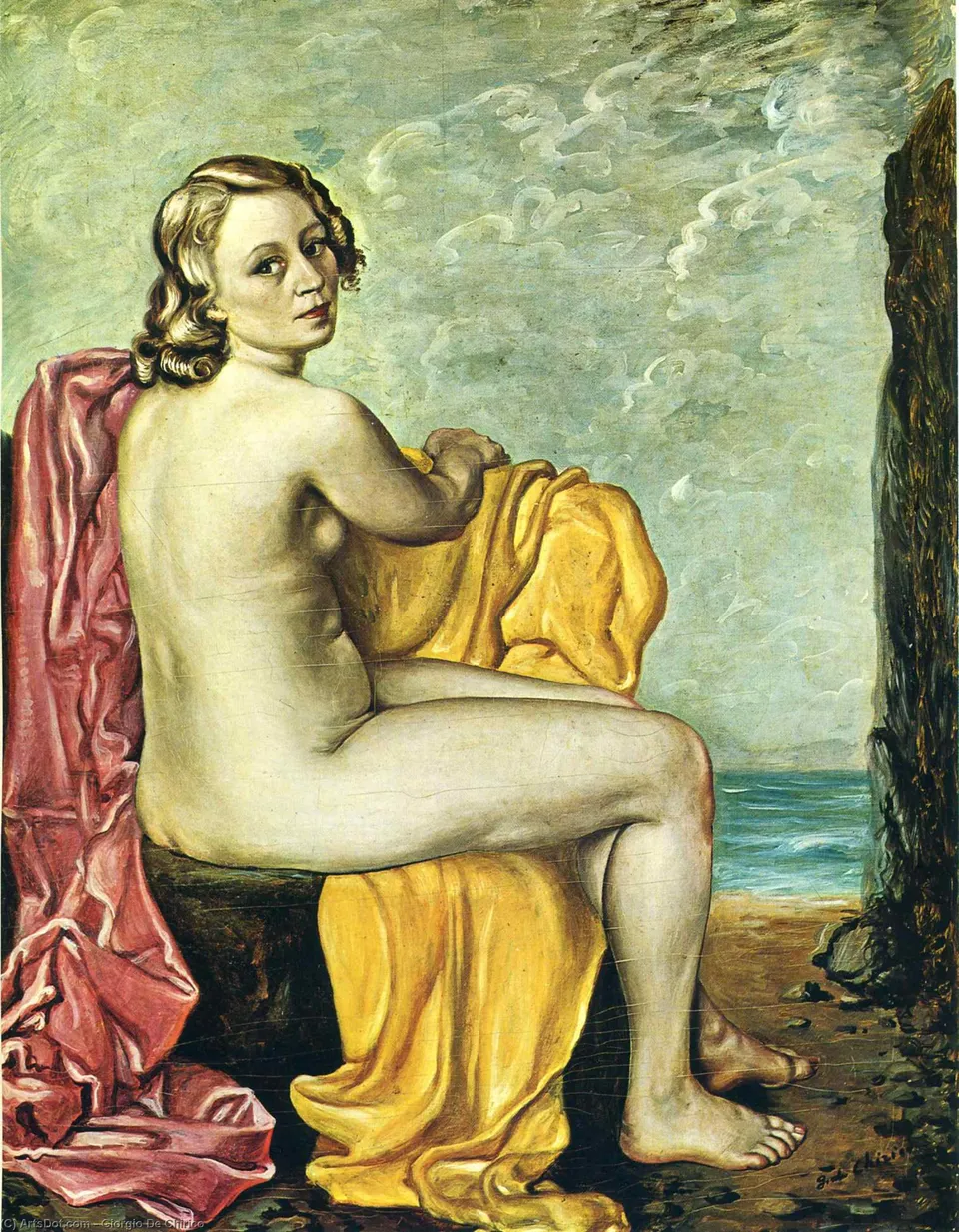
Delve into the surreal world of Giorgio de Chirico's 'Untitled (7811)'. This enigmatic portrait captures a woman gazing off-camera, set against a dreamlike beachscape – a haunting exploration of memory and alienation.

Giorgio de Chirico bio je italijanski umjetnik koji je osnovao metafizičku školu slikarstva i bio velik utjecaj na Surrealizam. Poznat po svojim dremljivim gradskim pejzažima, filozofskim temama i ikoničnim manekinama, De Chirico je jedan od najvažnijih predstavnika moderne umjetnosti.

Kupite digitalnu sliku visoke rezolucije i poboljšane kvalitete, koja je znatno superiornija od online prikaza.

Svaku datoteku pedantno pripremaju naši internim stručnjaci koristeći napredne alate i vještinsku ručnu retušu. Osiguravamo da svaka slika ima iznimnu jasnoću, preciznu točnost boja i vrhunsku razinu detalja.

Konačna datoteka dostavlja se putem e-pošte u roku od 72 sata, optimizirana za neposrednu upotrebu u profesionalnim, uredničkim i tiskarskim okruženjima. To je ista kvaliteta kojoj vjeruju vrhunski studiji dizajna, izdavači i galerije.

Digitalna slika

Preuzmite datoteku visoke rezolucije za osobnu izložbu, tisak i kreativne projekte. ( Prebacite na prodaju printova Naručite ručno oslikano reprodukciju)

Ukupna cijena

$ 24,90

Uključeno uz svaku narudžbu digitalne slike

Stručna digitalna dostava, zajamčena

Odabirom WahooArt.com ne dobivate samo sliku – dobivate profesionalno unapređeno digitalno umjetničko djelo, izrađeno s najvećom preciznošću uz jamstvo zadovoljstva. Evo svega što automatski dolazi uz vašu narudžbu:

shipping_icon
Brza dostava e-poštom

Vaša digitalna slika visoke rezolucije bit će vam poslana e-mailom u roku od 72 sata od trenutka narudžbe – spremna za neposrednu upotrebu.

canvas_icon
Digitalna datoteka uz pomoć AI-a

Vaše umjetničko djelo profesionalno je optimizirano pomoću naprednih AI alata i ručnog uređivanja, čime se osigurava maksimalna razina detalja, oštrine i točnosti boja.

insurance_icon
Besplatna doživotna ponovna dostava

Slučajno ste obrisali ili izgubili svoju datoteku? Ne brinite – ponovno ćemo vam je poslati u bilo kojem trenutku, potpuno besplatno.

tax_icon
Bez uvoznih pristojnika – ikada

Uživajte u svojim umjetničkim djelima trenutno, bez carina, pristojbi ili troškova dostave – digitalni downloadi uvijek su oslobođeni poreza.

color_icon
Jamstvo točnosti boja

Uz pomoć profesionalnih alata i upravljanja bojama, osiguravamo da vaša digitalna slika što vjernije odražava izvorne boje.

return_icon
Jamstvo zadovoljstva u trajanju od 100 dana

Ako niste zadovoljni svojom digitalnom slikom, revidirat ćemo je ili vratiti 100% iznosa u roku od 100 dana – bez suvišnih pitanja.

guarantee_icon
100% Jamstvo povrata novca

Niste zadovoljni? Osigurajte puni povrat novca u roku od 100 dana od primitka digitalne datoteke – bez suvišnih pitanja.

discount_icon
Popusti na velike narudžbe

Kupite 3 slike, uštedite 10% - Kupite 5 slika, uštedite 15% - Kupite 10+ slika, uštedite 20%. Odlično za kreativne projekte, galerije i agencije.

Brzi pregled

  • Movement: Metaphysical Art
  • Notable elements: Mannequins, arches
  • Title: untitled (7811)
  • Subject or theme: Portrait, Beach scene
  • Influences:
    • Nietzsche
    • Schopenhauer

Kviz o umjetnosti

Svako pitanje ima samo jedan točan odgovor.

Pitanje 1:
What is the primary mood or atmosphere conveyed by Giorgio de Chirico’s ‘untitled (7811)’?
Pitanje 2:
The woman in the painting is depicted with her back turned to the viewer. What does this likely suggest about her role or perspective?
Pitanje 3:
Which of the following best describes the artistic movement to which Giorgio de Chirico’s work belongs?
Pitanje 4:
The beach scene in ‘untitled (7811)’ includes elements such as waves, rocks, and sand. What effect does this background contribute to the overall artwork?
Pitanje 5:
Giorgio de Chirico was heavily influenced by philosophical ideas. Which philosopher's writings most directly informed his artistic vision?

The Enigmatic Figure: De Chirico’s “Untitled (7811)”

Giorgio de Chirico's "Untitled (7811)," a captivating portrait of a woman turned away from the viewer, is more than just a depiction of a figure; it’s an immersion into a dreamscape of unsettling beauty and profound philosophical inquiry. Painted around 1920, this work exemplifies the core tenets of de Chirico's groundbreaking Metaphysical art movement – a style that sought to capture not merely reality but the elusive, often melancholic, feelings associated with memory and the subconscious. The painting immediately draws the eye with its stark contrast: the vibrant yellow cloth held in the woman’s hand against the muted tones of the beach backdrop, creating an immediate tension between warmth and detachment. It's a visual riddle, inviting us to contemplate what she is observing, what thoughts occupy her mind, and why she remains so resolutely turned away.

A World Constructed from Fragments: Style and Technique

De Chirico’s technique is deliberately precise yet imbued with an unsettling artificiality. He employs a flattened perspective, reminiscent of Byzantine art, which creates a sense of spatial ambiguity – distances are distorted, and the background feels strangely detached from the foreground figure. The use of hard edges and simplified forms contributes to this dreamlike quality, as if the world itself is constructed from fragments of memory and imagination. The meticulous rendering of details—the texture of the sand, the ripples in the water—is juxtaposed with the almost mannequin-like stillness of the woman, further emphasizing the painting’s unsettling atmosphere. Notice how he uses a limited color palette – primarily blues, yellows, and browns – to heighten the emotional impact and create a sense of timelessness. The overall effect is less about realistic representation and more about evoking a specific mood or psychological state.

Echoes of Philosophy: Symbolism and Context

“Untitled (7811)” resonates deeply with de Chirico’s intellectual influences, particularly the writings of Friedrich Nietzsche and Arthur Schopenhauer. The painting speaks to themes of alienation, the subjective nature of reality, and the inherent loneliness of human existence – core concerns explored by these philosophers. The woman's averted gaze suggests a withdrawal from the world, a refusal to engage with its complexities. The beach setting itself is laden with symbolic weight; beaches often represent transition, liminal spaces between the known and unknown, mirroring the psychological state of the figure. The presence of the other two individuals in the background—one standing and one further back—hints at an unseen narrative, adding another layer of mystery to the composition. The mannequins, a recurring motif in de Chirico’s work, represent the dehumanizing effects of modern society and the loss of individual identity.

Beyond Representation: The Emotional Resonance

Ultimately, “Untitled (7811)” is not simply a portrait; it's an exploration of the human psyche. It evokes a profound sense of melancholy, nostalgia, and perhaps even a touch of dread. The painting’s power lies in its ability to bypass literal representation and tap directly into our own subconscious anxieties and longings. De Chirico wasn’t interested in depicting what he *saw*, but rather what he *felt* – the unsettling beauty of forgotten memories and the quiet solitude of existence. This work, like much of de Chirico's oeuvre, invites viewers to contemplate their own relationship with time, memory, and the elusive nature of reality. A reproduction of this piece offers a unique opportunity to bring this evocative dreamscape into your home, serving as a constant reminder of the power of art to provoke thought and stir the soul.
  • Artist: Giorgio de Chirico
  • Year: 1920 (approximate)
  • Medium: Oil on Canvas
  • Dimensions: Unknown

Explore more about Giorgio de Chirico’s life and work. Discover the philosophical depths of Metaphysical art.


Biografija umjetnika

Giorgio de Chirico (1888–1978): The Architect of Dreamlike Landscapes

Giorgio de Chirico, born in Volos, Greece, on July 10th, 1888, to Italian parents—a Genoese mother and a Sicilian father—was an artist whose life was inextricably linked with the intellectual currents of his time. From a young age, he demonstrated an exceptional talent for drawing and painting, nurtured by a formal education at Athens Polytechnic where he honed his skills in classical techniques. However, it was his relocation to Munich in 1906 that truly propelled him onto the artistic stage, immersing him in the vibrant atmosphere of German Symbolism and fostering connections with artists like Arnold Böcklin and Max Klinger—figures whose haunting landscapes and symbolic imagery profoundly shaped his aesthetic sensibilities. These encounters instilled within him a fascination for mythology and a preoccupation with exploring the hidden realities beneath the surface of perception.

The Genesis of Metaphysical Art

Around 1909, de Chirico embarked on an unprecedented artistic endeavor: the creation of “Metaphysical” art—a style that defied conventional categorization and sought to capture the unsettling poetry residing within familiar spaces. Inspired by the philosophical writings of Friedrich Nietzsche, Arthur Schopenhauer, and Otto Weininger—who wrestled with questions of existentialism and the irrationality of human desire—he began to depict scenes populated by enigmatic figures and architectural elements rendered in jarring juxtapositions. His most iconic works, such as *The Vexations of the Thinker* and *The Enigma of an Autumn Afternoon*, exemplify this distinctive aesthetic: desolate cityscapes bathed in melancholic shadows, inhabited by mannequins and statues imbued with a palpable sense of loneliness—a visual language that resonated deeply with the anxieties of the era. This groundbreaking style quickly gained recognition within the artistic community, establishing him as a pioneer of Surrealism and influencing artists like René Magritte and Salvador Dalí.

A Collaborative Spirit & Early Recognition

In 1919, de Chirico moved to Paris alongside his brother Alberto Savinio—a partnership that proved pivotal in shaping their artistic trajectory. Together, they founded the Scuola Metafisica, a collective dedicated to exploring the metaphysical principles of art and challenging established conventions. Their initial exhibitions at the Salon d’Autoumne and Salon des Indépendants garnered critical acclaim and cemented their connections with influential figures like Guillaume Apollinaire—who penned one of his earliest biographical texts—and Paul Guillaume—who secured him his first commercial contract. Notably, he befriended Mario Tozzi, Massimo Campigli, Alberto Magnelli and Gino Severini, all Italian artists who were operating in Paris during this period.

Expanding Horizons & Embracing Surrealism

The Second World War interrupted de Chirico’s artistic pursuits but did not diminish his influence on the burgeoning Surrealist movement. He continued to paint prolifically, experimenting with diverse styles and subjects—from monumental sculptures inspired by classical mythology to intimate portraits reflecting a profound engagement with human psychology. His exploration of architectural spaces and enigmatic figures—recurring motifs in his oeuvre—became emblematic of Surrealism’s quest for dreamlike imagery and subconscious expression. Despite facing criticism from some quarters regarding the perceived decline in quality of his later works, de Chirico remained steadfast in his artistic convictions, revisiting themes from his formative years while maintaining a meticulous attention to craftsmanship and technical skill.

Legacy & Enduring Influence

Giorgio de Chirico’s contribution to art history transcends stylistic innovation; it represents a fundamental rethinking of perception and representation—a challenge to the accepted norms of Western painting that continues to inspire artists today. His pioneering exploration of metaphysical principles paved the way for Surrealism, influencing generations of creatives who sought to capture the elusive realm of dreams and unconsciousness. Beyond his artistic achievements, de Chirico’s intellectual engagement with Nietzsche and Schopenhauer—and his unwavering commitment to humanist values—solidified his place as a visionary artist whose work embodies the spirit of an era marked by profound philosophical questioning and aesthetic experimentation. His paintings remain treasured artifacts of 20th-century art, inviting viewers to contemplate the mysteries of existence and the transformative power of imagination.
Giorgio De Chirico

Giorgio De Chirico

1888 - 1978 , Грчка

Osnovne informacije

  • Artistic Movement Or Style: Metafizička umjetnost
  • Artists Who Influenced This Artist:
    • Arnold Böcklin
    • Max Klinger
    • Friedrich Nietzsche
  • Date Of Birth: 10 srpnja 1888.
  • Date Of Death: 20. studenoga 1978.
  • Full Name: Giorgio de Chirico
  • Nationality: Talijan
  • Notable Artworks:
    • The Vexations of the Thinker
    • The Enigma of an Autumn Afternoon
  • Place Of Birth: Volos, Grčka