
BESPLATNE UMJETNIČKE KONSULTACIJE


x

 Kupi otisak Kupi digitalnu sliku
 Pošalji
 Details
 Dodaj u omiljene
 Preuzmi
 Slični predmeti
 X-Ray
X-Ray
 Automatska prezentacija
 Acrylic On CanvasWallArtCubist Abstraction
 1937Modern
 129.0 x 160.0 cm
Ručno oslikano uljanim bojama na platnu u dimenzijama i okviru po vašem izboru, izrađeno po narudžbi od strane naših umjetnika.





























Odaberite jednu od naših unaprijed definiranih veličina koje odgovaraju izvornim proporcijama umjetničkog djela.

Možete unijeti vlastite dimenzije kako bi odgovarale određenom okviru ili prostoru. Ako odabrana veličina ne odgovara proporcijama izvorne slike, izrezat ćemo umjetničko djelo ili proširiti sliku dodatnim ručno oslikanim elementima. Digitalni nacrt bit će vam poslan na odobrenje prije početka proizvodnje.
Imajte na umu da pregled na ekranu ne prikazuje stvarno izrezivanje ili proširivanje. Samo će nacrt točno prikazati konačni sastav.
Iako su dostupne prilagođene veličine, preporučujemo odabir dimenzije s preddefiniranog popisa kako bismo očuvali izvorne proporcije.
Isporuka širom svijeta () u roku od 3-4 tjedna umjesto standardnih 5 tjedana. (2 Srpanj). Bez kompromisa u kvaliteti.


The Duet
Veličina reprodukcije
Georges Braque's "The Duet," painted in 1937, isn’t merely a depiction of two figures playing the piano; it’s a carefully constructed tableau brimming with quiet intimacy and subtle artistic exploration. Measuring 129 x 160 cm, this work offers a glimpse into the heart of Braque's Cubist sensibilities while simultaneously conveying a profound sense of human connection. The scene unfolds within a modestly sized room, its walls bathed in a warm, inviting yellow – a color choice that immediately establishes an atmosphere of comfort and domesticity, yet also subtly hints at the artificiality of the setting.
The composition is deliberately restrained, focusing on the interaction between the two individuals. Braque masterfully employs his signature Cubist techniques to fragment and reassemble forms, presenting multiple viewpoints simultaneously. The piano itself isn’t rendered with photographic realism; instead, it's broken down into geometric planes, suggesting its structure while maintaining an abstract quality. The figures are similarly treated – their bodies are not presented as solid masses but rather as a collection of interlocking shapes, reflecting Braque’s ongoing investigation into the nature of perception and representation. Notice how the hands poised over the keys seem to both connect and separate, embodying the duality inherent in musical performance and human relationships.
Braque was a pivotal figure in the development of Cubism, alongside Pablo Picasso, and “The Duet” exemplifies this movement’s core tenets. He initially collaborated closely with Picasso, developing Analytical Cubism – characterized by its monochromatic palette and deconstruction of objects into their fundamental geometric components. This work demonstrates a shift towards Synthetic Cubism, incorporating elements of collage and brighter colors, though the underlying principles of fragmented form remain. The use of overlapping planes creates an illusionistic depth, challenging the viewer’s traditional understanding of space and perspective. It's not about replicating reality; it’s about presenting multiple facets of an object or scene simultaneously, inviting the viewer to actively participate in constructing meaning.
The inclusion of the umbrella is a particularly intriguing detail. It adds a layer of narrative complexity, suggesting perhaps a shared moment of respite from an external element – rain, sunlight, or simply the demands of daily life. It’s a small object that anchors the scene and subtly directs our gaze, drawing attention to the quiet intimacy between the musicians.
Painted in 1937, “The Duet” was created during a tumultuous period in European history. The shadow of impending war hung heavy over the continent, and anxieties about political instability were palpable. While seemingly a simple domestic scene, the artwork can be interpreted as a reflection on human connection amidst uncertainty. Braque’s exploration of fragmented forms mirrors the fractured state of society at the time – a world grappling with profound change and division. The muted palette and restrained composition contribute to a sense of melancholy, subtly hinting at the fragility of peace.
Despite its historical context, “The Duet” ultimately evokes a feeling of quiet contemplation and shared experience. The musicians’ posture suggests a comfortable familiarity, a connection forged through music. The scene invites us to imagine their conversation, their shared enjoyment of the performance, and perhaps even a deeper understanding of one another. Braque's masterful use of light and shadow creates a warm, inviting atmosphere, drawing the viewer into this intimate moment. This reproduction offers an exceptional opportunity to bring this evocative artwork into your home, allowing you to experience its subtle beauty and profound emotional resonance daily.


Though Braque started out as a member of the Fauves—a group that included Henri Matisse and André Derain among others—he began developing a Cubist style after meeting Pablo Picasso. While their paintings shared many similarities in palette, style and subject matter, Braque stated that unlike Picasso, his work was “devoid of iconological commentary,” and was concerned purely with pictorial space and composition.
Braque’s early works were impressionistic, but after seeing the work exhibited by the Fauves in 1905, Braque adopted a Fauvist style. The Fauves, a group that included Henri Matisse and André Derain among others, used brilliant colors and loose structures of forms to capture the most intense emotional response.
He conducted an intensive study of the effects of light and perspective and the technical means that painters use to represent these effects, time dovodeći u pitanje najstandardnije umjetničke konvencije. In his village scenes, for example, Braque redovito smanjivao arhitektonsku strukturu do geometrijske forme slične kocki, no predočio je njezinu sjenu tako da ona izgleda i ravna i trodimenzionalna.
A decisive moment in its development occurred during the summer of 1907, when Georges Braque and Pablo Picasso painted side by side in Céret, in the French Pyrenees, each artist producing paintings that are difficult—sometimes virtually impossible—to distinguish from those of the other.
Together, Braque and Picasso developed Analytical Cubism, dissecting objects into fragmented geometric shapes and presenting multiple viewpoints simultaneously. Works like Houses at L'Estaque demonstrate this early phase, showcasing a radical departure from conventional perspective and a focus on the underlying structure of forms.
Their palette became deliberately muted, emphasizing form over color, as they sought to represent the totality of an object’s presence rather than merely its appearance.
The invention of Cubism was a joint effort between Picasso and Braque, then residents of Montmartre, Paris. These artists were the movement’s main innovators.

1882 - 1963 , Francuska
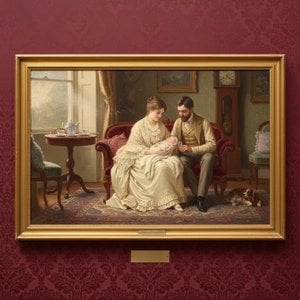
Explore the evocative Victorian paintings of George Goodwin Kilburne. Discover his detailed scenes of domestic life, masterful use of light, and lasting impact on British genre painting. Learn more at WahooArt.
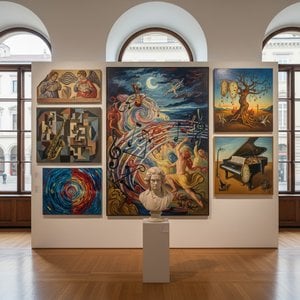
Explore the fascinating history of music's visual representation in art! From ancient symbolism to modern abstraction, discover how artists have captured sound and emotion on canvas. Expert insights & stunning examples.

Explore the fascinating history of art collectors in Western painting, from Renaissance patrons to modern museum founders. Discover how portraits revealed status, shaped artistic movements & built lasting legacies. Expert insights at WahooArt.
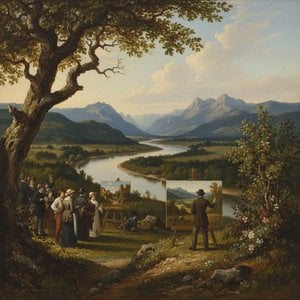
Explore the captivating genre scenes of Thomas George Webster, a Victorian painter bridging British traditions with American themes. Discover his style, influences & legacy in 19th-century art history.

Uronite u svijet Georges Seurata i njegovih 25 remek-djela pointilizma! Otkrijte priče iza ikonskih slika, tehniku chromoluminarizma i inspiraciju za vaš dom. Reprodukcije vrhunske kvalitete dostupne na WahooArt.com.


Budite u tijeku s najnovijim umjetničkim vijestima, ekskluzivnim ponudama i idejama za dekoraciju.
Recite nam nešto o svom projektu, a naši će stručnjaci za umjetnost pripremiti 3 personalizirana prijedloga umjetnina.
Dopustite nam da odaberemo 3 opcije samo za Vas – Besplatno!

 Podijeli

 Prikaži više







 Opcija stakla dostupna je samo za dimenzije manje od 110 cm


