BESPLATNE UMJETNIČKE KONSULTACIJE

x
Naručite reprodukciju Naručite reprodukcijuKupi digitalnu sliku Kupi digitalnu sliku PošaljiPošalji
DetaljiDetalji Dodaj u omiljene Dodaj u omiljene PreuzmiPreuzmi Slični predmetiSlični predmeti Rentgenska snimkaRentgenska snimka Automatska prezentacijaAutomatska prezentacija

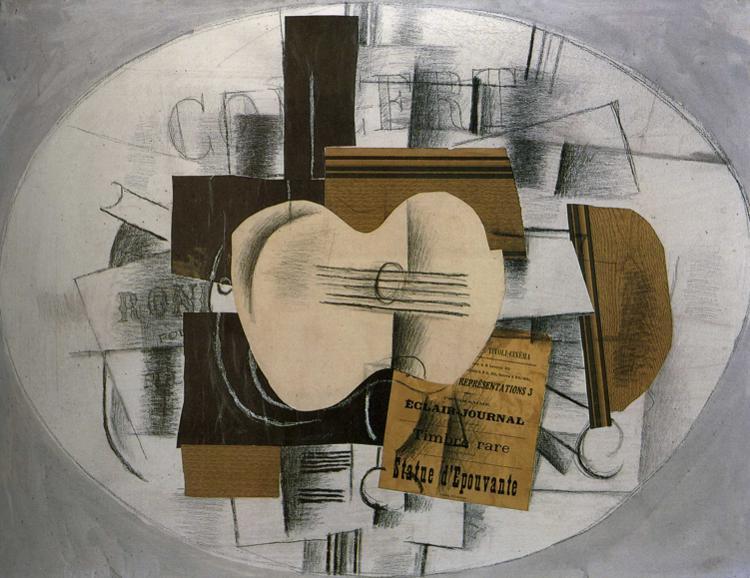
Guitar ''Program statue d'epouvante''

Explore Georges Braque’s "Guitar ''Program statue d'epouvante'' – a Cubist masterpiece! This 1913 artwork features fragmented forms, muted tones & spatial ambiguity. A unique piece for art collectors.

Meta Description: Georges Braque (1882-1963): Kubizam revolucionirao umjetnost! Poznati djela uključuju pejzaže L'Estaque i inovativne kolaže koji su promijenili način prikazivanja stvarnosti.

Giclée / Umjetnički otisak

Giclée tisak muzejske kvalitete ili otisak na platnu uz brzu proizvodnju i fleksibilne opcije završne obrade.

P118B $10
P118H $10
P118W $10
P438Z $10
P508JH $12
P508YH $12
P805H $10
P805Z $10
P919BZ $10
P919G $10
P919XJ $10
P959ZH $10
P968JZ $12
W106C $8
W218G $10
W218JH $8
W218Y $10
W307PJ $10
W316G $10
W316PJ $8
W316Y $10
W398PJ $8
W4111J $10
W500HY $15
W500JH $15
W692G $12
W849H $8
W940BG $15
W953PJ $8

Standard
custom
CM
INCH

Odaberite jednu od naših unaprijed definiranih veličina koje odgovaraju izvornim proporcijama umjetničkog djela.

širina
visina

Možete unijeti vlastite dimenzije kako biste umjetničko djelo prilagodili specifičnom okviru ili prostoru. Ako odabrana veličina ne odgovara proporcijama izvornog rada, izrezat ćemo dio slike ili je proširiti pomoću ogledalnog efekta ili jednobojne rubne površine. Digitalni prikaz (mockup) bit će vam poslan na odobrenje prije početka proizvodnje.
Imajte na umu da pregled na zaslonu ne odražava stvarno izrezivanje ili proširivanje. Samo će mockup točno prikazati konačnu kompoziciju.
Iako su dostupne prilagođene veličine, preporučujemo odabir dimenzije iz unaprijed definirane liste kako biste očuvali izvorne proporcije.

Dostava širom svijeta () u roku od 2 tjedna umjesto standardnih 4/5 tjedana. (4 Srpanj)

why_choose_icon
Besplatna ekspresna dostava širom svijeta
why_choose_icon
Visokokvalitetno laneno platno
why_choose_icon
Potpuno osiguranje dostave
why_choose_icon
Jamstvo povrata carine i uvoznih poreza
why_choose_icon
Garancija vjernog podudaranja boja
why_choose_icon
Politika povrata u roku od 60 dana (samo u slučaju nedostataka)
why_choose_icon
Jamstvo povrata 100% novca
why_choose_icon
Popust na više proizvoda

Ukupna cijena

-

reproduction

Guitar ''Program statue d'epouvante''

Giclée / Umjetnički otisak

Veličina reprodukcije

-

Ukupna cijena

-

Osnovne informacije

  • year: 1913
  • subject: Still life (guitar and books)
  • movement: Cubism
  • medium: Graphite/Charcoal on paper
  • dimensions: 73 x 100 cm
  • influences:
    • Pablo Picasso
    • Georges Braque

Kviz o umjetnosti

Svako pitanje ima samo jedan točan odgovor.

Pitanje 1:
To which art movement does 'Guitar ''Program statue d'epouvante''', by Georges Braque, belong?
Pitanje 2:
What is a dominant characteristic of the composition in this artwork?
Pitanje 3:
The color palette used by Braque in 'Guitar ''Program statue d'epouvante''', is best described as:
Pitanje 4:
What materials were most likely used to create this artwork?
Pitanje 5:
The subject matter of a guitar and books in this Cubist work can be interpreted as representing:

Opis djela

A Cubist Still Life: Deconstructing Form in Braque’s ‘Guitar ''Program statue d'epouvante''’

Georges Braque’s *Guitar ''Program statue d'epouvante''* (1913) is a pivotal example of Analytical Cubism, showcasing the artist’s revolutionary approach to representation. Measuring 73 x 100 cm, this work isn’t merely a depiction of objects; it’s an intellectual exploration of form and perception, inviting viewers into a fragmented world where reality is dissected and reassembled.

Subject & Composition: A Dialogue Between Art Forms

The artwork presents a still life featuring an acoustic guitar alongside a stack of books. However, Braque doesn't offer a traditional rendering. Instead, both objects are broken down into geometric shapes – rectangles, triangles, and overlapping planes – creating a dynamic composition within a circular frame. The arrangement isn’t accidental; it suggests a deliberate interplay between musicality (the guitar) and intellectual pursuit (the books), hinting at the interconnectedness of artistic disciplines. The title itself, translating to “Program statue of fright,” adds an intriguing layer, suggesting a conceptual framework or perhaps even a playful subversion of traditional still life conventions.

Style & Technique: The Essence of Analytical Cubism

*Guitar ''Program statue d'epouvante''* exemplifies the core tenets of Analytical Cubism. Braque, alongside Pablo Picasso, pioneered this style by rejecting traditional perspective and embracing multiple viewpoints simultaneously. The color palette is deliberately restrained – muted browns, grays, and off-whites dominate – emphasizing form over coloristic expression. The technique relies heavily on layering pencil or charcoal strokes to build up tones and textures, creating a sense of solidity despite the fragmented forms. Lines are sharply defined, further contributing to the geometric abstraction. This isn’t about replicating what the eye sees but rather conveying an object's essential structure through intellectual analysis.

Historical Context: A Revolution in Visual Language

Created during a period of intense artistic experimentation, this work reflects the radical shifts occurring in early 20th-century art. Braque and Picasso were challenging centuries-old conventions of representation, influenced by Paul Cézanne’s emphasis on geometric forms and their own shared explorations. The emergence of Cubism marked a turning point in art history, paving the way for abstract art movements that would follow. 1913 was a crucial year; it saw the full development of Analytical Cubism before Braque began to incorporate collage elements into his work.

Symbolism & Emotional Impact: Beyond Representation

While seemingly abstract, *Guitar ''Program statue d'epouvante''* carries symbolic weight. The guitar, a symbol of artistic expression and harmony, is deconstructed alongside the books, representing knowledge and intellect. This juxtaposition suggests a contemplation on the nature of creativity itself – how ideas are formed, broken down, and reassembled. The overall effect isn’t necessarily emotional in a traditional sense; rather, it evokes a feeling of intellectual curiosity and invites viewers to actively participate in deciphering the artwork's meaning. The flattened perspective and lack of strong shadows contribute to a sense of ambiguity and spatial disorientation, challenging our perceptions of reality.

For Collectors & Designers

This piece, or a high-quality reproduction, would be a striking addition to any collection focused on modern art. Its muted palette and geometric forms lend themselves well to contemporary interiors, adding a sophisticated touch without overwhelming the space.
  • Ideal for: Modern living rooms, studies, or galleries.
  • Complements: Minimalist furniture, neutral color schemes, and other abstract artworks.
  • Considerations: The artwork’s intellectual nature makes it a conversation starter and a focal point for contemplation.

Biografija umjetnika

Georges Braque

Georges Braque was at the forefront of the revolutionary art movement of Cubism. His work throughout his life focused on still lifes and means of viewing objects from various perspectives through color, line, and texture. While his collaboration with Pablo Picasso and their Cubist works are best known, Braque had a long painting career that continued well beyond that period.

Though Braque started out as a member of the Fauves—a group that included Henri Matisse and André Derain among others—he began developing a Cubist style after meeting Pablo Picasso. While their paintings shared many similarities in palette, style and subject matter, Braque stated that unlike Picasso, his work was “devoid of iconological commentary,” and was concerned purely with pictorial space and composition.

Braque’s early works were impressionistic, but after seeing the work exhibited by the Fauves in 1905, Braque adopted a Fauvist style. The Fauves, a group that included Henri Matisse and André Derain among others, used brilliant colors and loose structures of forms to capture the most intense emotional response.

He conducted an intensive study of the effects of light and perspective and the technical means that painters use to represent these effects, time dovodeći u pitanje najstandardnije umjetničke konvencije. In his village scenes, for example, Braque redovito smanjivao arhitektonsku strukturu do geometrijske forme slične kocki, no predočio je njezinu sjenu tako da ona izgleda i ravna i trodimenzionalna.

A decisive moment in its development occurred during the summer of 1907, when Georges Braque and Pablo Picasso painted side by side in Céret, in the French Pyrenees, each artist producing paintings that are difficult—sometimes virtually impossible—to distinguish from those of the other.

Together, Braque and Picasso developed Analytical Cubism, dissecting objects into fragmented geometric shapes and presenting multiple viewpoints simultaneously. Works like Houses at L'Estaque demonstrate this early phase, showcasing a radical departure from conventional perspective and a focus on the underlying structure of forms.

Their palette became deliberately muted, emphasizing form over color, as they sought to represent the totality of an object’s presence rather than merely its appearance.

The invention of Cubism was a joint effort between Picasso and Braque, then residents of Montmartre, Paris. These artists were the movement’s main innovators.

Georges Braque

Georges Braque

1882 - 1963 , Francuska

Osnovne informacije

  • Artistic Movement Or Style: Kubizam i Fovizam
  • Artists Who Influenced This Artist:
    • Henri Matisse
    • André Derain
    • Paul Cézanne
  • Date Of Birth: 13. svibnja 1882.
  • Date Of Death: 31. kolovoza 1963.
  • Full Name: Georges Braque
  • Nationality: Francuski
  • Notable Artworks:
    • Kuće L'Estaque
    • Strpljenje
    • Violina i Paletu
  • Place Of Birth: Argenteuil, Francuska
Istražite umjetnička djela organizirana prema temama, stilovima i karakteristikama.