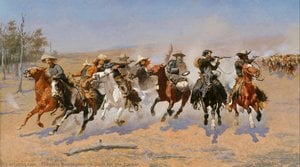
Kroničar nestajućeg Zapada: Život i umjetnost Frederica Remingtona
Frederic Sackrider Remington, rođen u Cantonu, New Yorku, 4. listopada 1861., nije bio dijete Divljeg Zapada koji je tako živopisno prikazivao; već istočnjak koji je oblikovao svoj umjetnički identitet kroz fascinaciju i posvećenu studiju. Njegovo podrijetlo nagovještavalo je život udaljen od prašnjavih staza i napada konjice – francusko-baskijski korijeni pomiješani s čvrstim republikanskim novenglandskim korijenima, otac koji je bio pukovnik u Građanskom ratu i urednik novina te veze s poznatom Remington Arms dinastijom kroz daljnje rođake. Ipak, rano izlaganje vojnim temama, zajedno s nemirnim duhom i oštrim okom za pripovijedanje, postavilo ga je na put da postane vjerojatno najpoznatiji umjetnik Američkog Zapada. Njegovo djetinjstvo preselilo se u Bloomington, Illinois, zatim natrag u Canton i konačno Ogdensburg, New York, ali njegova mašta ostala je očarana pričama o graničnom životu. Iako je prvotno usmjeren na vojnu edukaciju na Vermont Episcopal Institutu, Reminghtonov pravi poziv nije bio slijediti naredbe, već promatrati i tumačiti svijet oko sebe kroz umjetnost. Kratak boravak na Sveučilištu Yale to je potvrdio; nogomet i skiciranje imali su puno više privlačnosti od formalnog akademskog nastojanja.
Od ilustratora do slikara: Kovanje umjetničke vizije
Remingtonovo umjetničko putovanje nije započelo s grandioznim platnima, već s tintom i papirom. Njegov prvi objavljeni rad, karikatura za *Yale Courant*, signalizirao je rani talent za hvatanje akcije i naracije. Ključno putovanje u Montanu 1881. potaknulo je njegovu doživotnu opsesiju Zapadom. To nije bio samo pogled turista; Remington je nastojao uroniti u kulturu, promatrajući kauboje, Indijance i sam krajolik. U početku se pokušao okušati u ranchingu i rudarenju, ali to se pokazalo neuspješnim, oslobodivši ga da se u potpunosti posveti umjetnosti. Vrativši se na Istok, brzo se etablirao kao ilustrator za časopise poput *Harper's Weekly* i *Collier’s*, a njegove dinamične prikazi zapadnih scena očarali su nacionalnu publiku žednu priča s granice. Ove ilustracije nisu bile samo izvještaji; bili su prožete dramom, energijom i romantiziranom vizijom Zapada koja je duboko rezonirala s javnom maštom. Kroz ovaj rad usavršio je svoje vještine u kompoziciji, hvatanju pokreta i prenošenju emocija – kvalitete koje su kasnije definirale njegova slika. Primio je minimalnu formalnu obuku osim nekoliko tečajeva crtanja na Yaleu i kratkog razdoblja na Art Students Leagueu, umjesto toga razvio je prepoznatljiv stil karakteriziran energičnim potezima kista, smjelim bojama i fokusom na realizam pomiješan s dramatičnim žarom.
Hvatanje nestajućeg svijeta: Teme i stil
Remingtonova umjetnost je neraskidivo povezana sa specifičnim trenutkom u američkoj povijesti – zalazak Stareg Zapada. Njegova platna nastanjuju ikonične figure: grubi kauboje koji gone stoku, stoički Indijanci suočeni s raseljavanjem i vojnici američke konjice angažirani u herojskim bitkama i tragičnim sukobima. Nije se skriva od prikazivanja teških stvarnosti graničnog života, ali njegov rad često naginje romantiziranom prikazu, naglašavajući hrabrost, avanturu i sudar kultura.
Njegova slika nisu samo povijesni dokumenti; to su evocativne naracije koje istražuju teme heroizma, gubitka i neizbježnog napretka. Remingtonov stil se vremenom razvijao, od čvršćih, akademskijih prikaza do labavijih, ekspresivnijih poteza kista. Bio je majstor hvatanja pokreta – konji galopiraju po ravnicama, kauboje rve s bikovima, vojnici napadaju u bitku.
Često je koristio brze skice i fotografije kao referentni materijal, ali njegova umjetnost uvijek nadilazi puku imitaciju, prožeta njegovom jedinstvenom vizijom i emocionalnom snagom. Značajna djela poput *My Ranch*, *Waiting in the Moonlight*, *Ridden Down* (1905.) i *The Long-Horn Cattle Sign* (1908.) primjer su njegove sposobnosti da uhvati veličanstvo i ranjivost Američkog Zapada.
Nasljeđe i trajni utjecaj
Frederic Remington umro je neočekivano 1909. godine u dobi od 48 godina, ostavivši iza sebe obiman opus koji nastavlja očaravati publiku danas. Njegov utjecaj na umjetnost Zapada neosporan; on nije samo prikazao Zapad, već pomogao *definirati* ga za generacije Amerikanaca. Uspostavio je vizualni jezik granice – ikonografiju kauboja, Indijanaca i konjanika koja se duboko ugriza u popularnu kulturu.
- Njegov rad inspirirao je mnoge druge umjetnike, uključujući N.C. Wyetha i Zanea Greya.
- Muzej umjetnosti Frederica Remingtona u Ogdensburgu, New York, stoji kao svjedočanstvo njegovog trajnog nasljeđa, čuvajući opsežnu zbirku njegovih slika, skulptura i arhivskog materijala.
- Njegova se umjetnost nastavlja izlagati u glavnim muzejima diljem zemlje, uključujući Metropolitan Museum of Art i Amon Carter Museum of American Art.
Remingtonovi prikazi, iako ponekad kritizirani zbog romantiziranog prikaza Zapada, nude dragocjen pogled na ključno razdoblje u američkoj povijesti. Uhvatio je ne samo što *jeste*, već i što su ljudi *vjerovali* o Zapadu – njegove mitove, legende i trajni doseg. Ostaje moćan simbol američkog duha—kroničar nestajućeg svijeta koji ga je pretvorio u trajno umjetničko nasljeđe.



 Pregledaj u stvarnoj veličini
 Naručite ručno oslikano reprodukciju
 Podijeli
 Podijeli
 Detalji
 Vodič
Vodič

 Preuzmi datoteku
 Slični predmeti
 Rentgenska snimka
 Slide show
 Statistika


 Pročitajte više






































 Opcija stakla dostupna je samo za dimenzije manje od 110 cm