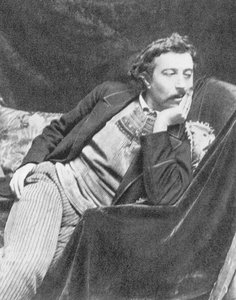
Biografija umjetnika
Eugène Henri Paul Gauguin: Master of Color|Artist Biography
Eugène Henri Paul Gauguin, a name that resonates with vibrant color and rebellious spirit, stands as a pivotal figure in the transition from Impressionism to modern art. Born in Paris in 1848, his life was anything but conventional. His early years were shaped by an unusual upbringing; his father a journalist, and his mother descended from Peruvian aristocracy—her grandmother, Flora Tristan, a pioneering feminist and socialist writer whose ideals undoubtedly resonated within the family. This heritage would profoundly shape Gauguin’s artistic vision, instilling in him a fascination with cultures beyond Europe. A formative period spent in Peru as a child, following his family's relocation in 1850, immersed him in a world vastly different from Parisian society, an experience that lingered and ultimately fueled his quest for authenticity in art. Returning to France after his father’s death, Gauguin received a formal education but found himself drawn not to academia, but to the burgeoning financial world, embarking on a career as a stockbroker—a path seemingly at odds with the artistic destiny that awaited him.
Early Influences and Artistic Beginnings
Initially captivated by Impressionism – particularly the works of Monet, Pissarro, and Renoir – Gauguin experimented with color and light in his spare time, attempting to capture the fleeting beauty of everyday life. However, he quickly recognized the limitations of Impressionistic technique, perceiving it as too concerned with optical observation and insufficiently expressive of inner emotion. The financial crisis of 1882 proved a decisive turning point, forcing him to abandon his lucrative career and wholeheartedly dedicate himself to painting—a decision that would fundamentally alter the trajectory of his artistic life. This wasn’t merely a change in profession; it was a profound reimagining of his worldview. Influenced by the writings of Friedrich Nietzsche and Henri Bergson, Gauguin sought guidance from Camille Pissarro, who encouraged him to develop his own distinctive style—one rooted not in imitation but in personal experience. Recognizing the influence of Cézanne’s geometric simplification and Raphael's harmonious compositions, he began to refine his technique, moving away from Impressionistic brushstrokes toward a more deliberate and controlled approach.
Brittany and the Symbolist Movement
Before embarking on his transformative journey to Tahiti, Gauguin spent time in Brittany—the region of France where he was born—captivated by its rugged landscapes and deeply rooted traditions. During this period, he produced paintings that reflected both Impressionistic sensibilities and emerging Symbolist ideas. He explored themes of spirituality and mythology, depicting Breton peasants and rural scenes with a sensitivity to color and form that foreshadowed his later stylistic innovations. Gauguin’s artistic explorations were further enriched by his engagement with Japanese prints—Japonisme—which exerted a powerful influence on his visual vocabulary. The flattened perspectives, bold outlines, and decorative patterns characteristic of Japanese art captivated him, prompting him to adopt similar techniques in his own paintings. This fascination with “primitive” cultures – fueled by readings of Edgar Allan Poe and Gustave Flaubert – would ultimately propel him toward Tahiti and the pursuit of a radically different artistic vision.
Tahiti: A Quest for Authenticity
The decision to relocate permanently to Tahiti in 1891 represented a culmination of Gauguin’s lifelong quest for authenticity—a rejection of Western civilization and its perceived artificiality in favor of a simpler, more spiritually fulfilling existence. Seeking refuge from the pressures of Parisian society and artistic conventions, he envisioned Tahiti as a sanctuary where he could reconnect with his primal instincts and express himself freely. He immersed himself in Polynesian culture, documenting rituals, myths, and daily life through his paintings—a process that profoundly shaped his artistic style. Influenced by medieval art – particularly Byzantine iconography – Gauguin employed bold colors, flattened perspectives, and stylized figures to convey symbolic meanings rooted in religious tradition. Iconic canvases such as “Vahine no te miti” (Woman with Mango), “Manao Tupapau” (Watched by the Spirit of the Dead), and “The Vision After The Sermon” exemplify this distinctive aesthetic—a testament to Gauguin’s unwavering commitment to artistic innovation.
Legacy and Influence
Paul Gauguin died in Atuana, Hiva Oa, Marquesas Islands, in 1903, leaving behind a legacy that continues to inspire artists and scholars alike. His groundbreaking stylistic innovations – characterized by bold color palettes, simplified forms, and symbolic imagery – irrevocably altered the course of modern art, paving the way for movements such as Fauvism and Expressionism. Artists like Pablo Picasso, Henri Matisse, Edvard Munch, and Vincent van Gogh acknowledged Gauguin’s profound influence on their own creative endeavors—a recognition of his enduring contribution to the artistic canon. His unwavering belief in the transformative power of art – coupled with his courageous rejection of societal norms – cemented his place as a visionary artist who dared to challenge conventions and forge his own path, leaving behind a body of work that remains both captivating and enigmatic. Gauguin’s exploration of themes of spirituality, myth, and primal instinct continues to resonate with audiences today, ensuring that his artistic legacy will endure for generations to come.



 Pregledaj u stvarnoj veličini
 Kupi ručno naslikanu sliku
 Pošalji
 Podijeli
 Detalji o umjetničkom djelu

 Preuzmi
 Slični predmeti
 Rentgenska snimka
 Automatska prezentacija
 Statistika


 Prikaži više






































 Opcija stakla dostupna je samo za dimenzije manje od 110 cm