Ernest D. Roth: A Pioneer of Parisian Academic Realism
Ernest D. Roth (1879 – 1964) stands as a significant figure in the landscape of late nineteenth-century French art, particularly renowned for his unwavering dedication to academic realism and his celebrated success within the Parisian Salon circuit. Born in Paris, Roth’s artistic journey began amidst the burgeoning Impressionist movement, yet he resolutely pursued a path distinct from its stylistic explorations—a commitment that cemented his place as one of the foremost practitioners of traditional technique and subject matter during his era.
- Early Life & Education: Roth received his formative artistic training at the École Supérieure des Beaux-Arts in Paris, where he honed his skills under influential instructors who championed classical principles of composition and draughtsmanship. This grounding in academic tradition would profoundly shape his subsequent artistic endeavors.
- Salon Successes: Roth’s career gained considerable momentum through his consistent participation in the Salon exhibitions held annually by the Société Nationale des Beaux-Arts. His meticulously rendered landscapes, portraits, and architectural studies garnered critical acclaim and established him as a respected artist within Parisian intellectual circles. Notably, his etching of Riverside Church, completed in 1930, exemplifies his masterful command of drypoint technique—a testament to his unwavering adherence to classical artistic standards.
Style & Technique: Embracing Classical Precision
Roth’s artistic style is characterized by an uncompromising devotion to academic realism – a stylistic approach that prioritizes accurate representation and meticulous detail. Unlike the Impressionists who sought to capture fleeting moments of light and atmosphere, Roth meticulously studied his subjects, employing precise draughtsmanship and tonal gradations to convey their form and texture with remarkable fidelity. His favored medium was etching, specifically drypoint—a technique demanding exceptional control over linework and requiring painstaking preparation of the plate surface. This meticulous process resulted in prints imbued with a subtle luminescence and textural richness that distinguished them from more ephemeral artistic expressions.
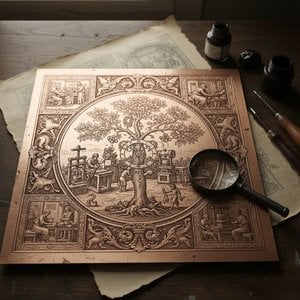
- Drypoint Technique: Roth’s mastery of drypoint involved incising lines into a copper plate using a stylus, creating a textured surface that would absorb ink during printing. This technique allowed for nuanced tonal variations and produced prints possessing an unparalleled level of detail—a hallmark of his oeuvre.
- Subject Matter Preferences: While influenced by the Impressionist aesthetic, Roth consistently focused on subjects rooted in classical tradition – landscapes depicting serene vistas of France’s countryside, portraits capturing dignified expressions of human character, and architectural renderings showcasing monumental buildings with meticulous accuracy.
Notable Works & Artistic Legacy
Roth's artistic output comprises a substantial collection of etchings and lithographs that continue to resonate with collectors and art historians alike. Among his most celebrated pieces are “Our Neighbor’s Yard” (1916), an evocative depiction of Parisian urban life rendered in exquisite detail, and "A Quiet Canal" (circa 1920), which captures the tranquil beauty of a riverside scene with understated elegance. These artworks serve as enduring reminders of Roth's commitment to classical realism and his ability to convey profound emotional depth through masterful draughtsmanship.
- “Our Neighbor’s Yard”: This etching exemplifies Roth’s meticulous observation of everyday life, capturing the subtle nuances of light and shadow within a domestic setting.
- “A Quiet Canal”: Demonstrating Roth's sensitivity to atmospheric conditions, this print portrays a serene canal scene bathed in soft sunlight—a testament to his artistic vision.
Historical Significance & Influence
Ernest D. Roth’s unwavering dedication to academic realism positioned him as a counterpoint to the dominant Impressionist movement of his time – an artist who championed tradition while simultaneously acknowledging the influence of contemporary artistic trends. His Salon successes solidified his reputation as one of Paris's most respected artists, ensuring that his legacy would endure for generations to come. Furthermore, Roth’s meticulous technique and unwavering commitment to classical principles continue to inspire artists today, demonstrating the enduring relevance of traditional artistic approaches in capturing beauty and conveying emotion.



 Pregledaj u stvarnoj veličini
 Naručite ručno oslikano reprodukciju
 Podijeli
 Podijeli
 Detalji
 Vodič
Vodič

 Preuzmi datoteku
 Slični predmeti
 Rentgenska snimka
 Slide show
 Statistika


 Pročitajte više






































 Opcija stakla dostupna je samo za dimenzije manje od 110 cm