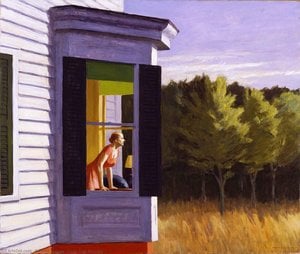
Pregledaj u stvarnoj veličini Isprobaj u AR-u Naručite ručno oslikano reprodukciju Prebacite na digitalnu prodaju slika Podijeli
Detalji Vodič Dodaj u omiljene Preuzmi datoteku Slični predmeti Rentgenska snimka Slide show Statistika

Automat

Otkrijte 'Automat' Edwarda Hoppera - majstorsko djelo američkog realizma koje prikazuje usamljenost i tišinu modernog života. Pogledajte kako Hopper koristi svjetlo i sjenu u ovom ikoničnom djelu.

Edward Hopper: Majstor američke realizma koji je oslavio pojedinačnost i urbano život svjetlom i sjajem. Poznatiji djelovanja su Nighthawks i Kuća pored pruga.

Djelo prikazano na ovoj stranici zaštićeno je autorskim pravima, što znači da zakonski ne možemo izraditi niti prodati identičnu reprodukciju. Ova se zaštita provodi u skladu s međunarodnim sporazumima kao što su Bernska konvencija i nacionalnim zakonima, uključujući i one koji su utvrđeni u Američki zakon o autorskom pravu – Title 17.

Ova metoda u potpunosti je usklađena s autorskim pravima jer ne uključuje kopiranje ili dupliciranje zaštićenih umjetničkih djela. Umjesto toga, riječ je o kreativnoj reinterpretaciji – novoj slici koja je dobila utjecaj na izvornik, ali nije identična njemu.

Giclée / Umjetnički otisak

Giclée tisak muzejske kvalitete ili otisak na platnu uz brzu proizvodnju i fleksibilne opcije završne obrade. ( Naručite ručno oslikano reprodukciju Prebacite na digitalnu prodaju slika)

Corner sample of the P118B picture frame: moulded polystyrene, 5 cm wide and 3 cm thick
P118B €10
Corner sample of the P118H picture frame: moulded polystyrene, 5 cm wide and 3 cm thick
P118H €10
Corner sample of the P118W picture frame: moulded polystyrene, 5 cm wide and 3 cm thick
P118W €10
Corner sample of the P438Z picture frame: moulded polystyrene, 5.5 cm wide and 3.5 cm thick
P438Z €10
Corner sample of the P508JH picture frame: moulded polystyrene, 7 cm wide and 3.5 cm thick
P508JH €12
Corner sample of the P508YH picture frame: moulded polystyrene, 7 cm wide and 3.5 cm thick
P508YH €12
Corner sample of the P805H picture frame: moulded polystyrene, 5 cm wide and 3.5 cm thick
P805H €10
Corner sample of the P805Z picture frame: moulded polystyrene, 5 cm wide and 3.5 cm thick
P805Z €10
Corner sample of the P919BZ picture frame: moulded polystyrene, 7 cm wide and 3.5 cm thick
P919BZ €10
Corner sample of the P919G picture frame: moulded polystyrene, 7 cm wide and 3.5 cm thick
P919G €10
Corner sample of the P919XJ picture frame: moulded polystyrene, 7 cm wide and 3.5 cm thick
P919XJ €10
Corner sample of the P959ZH picture frame: moulded polystyrene, 5 cm wide and 3 cm thick
P959ZH €10
Corner sample of the P968JZ picture frame: moulded polystyrene, 6 cm wide and 4 cm thick
P968JZ €12
Corner sample of the W106C picture frame: solid wood, 5 cm wide and 3 cm thick
W106C €8
Corner sample of the W218G picture frame: solid wood, 5 cm wide and 3 cm thick
W218G €10
Corner sample of the W218JH picture frame: solid wood, 5 cm wide and 3 cm thick
W218JH €8
Corner sample of the W218Y picture frame: solid wood, 5 cm wide and 3 cm thick
W218Y €10
Corner sample of the W307PJ picture frame: solid wood, 6 cm wide and 3 cm thick
W307PJ €10
Corner sample of the W316G picture frame: solid wood, 6 cm wide and 3 cm thick
W316G €10
Corner sample of the W316PJ picture frame: solid wood, 6 cm wide and 3 cm thick
W316PJ €8
Corner sample of the W316Y picture frame: solid wood, 6 cm wide and 3 cm thick
W316Y €10
Corner sample of the W398PJ picture frame: solid wood, 5 cm wide and 3 cm thick
W398PJ €8
Corner sample of the W4111J picture frame: solid wood, 6.5 cm wide and 3.5 cm thick
W4111J €10
Corner sample of the W500HY picture frame: solid wood, 7 cm wide and 5 cm thick
W500HY €15
Corner sample of the W500JH picture frame: solid wood, 7 cm wide and 5 cm thick
W500JH €15
Corner sample of the W692G picture frame: solid wood, 8 cm wide and 4 cm thick
W692G €12
Corner sample of the W849H picture frame: solid wood, 5 cm wide and 3 cm thick
W849H €8
Corner sample of the W940BG picture frame: solid wood, 7.5 cm wide and 4.5 cm thick
W940BG €15
Corner sample of the W953PJ picture frame: solid wood, 6 cm wide and 3.5 cm thick
W953PJ €8

Standardne dimenzije
prilagođeno po mjeri
CM
INCH

Odaberite jednu od naših unaprijed definiranih veličina koje odgovaraju izvornim proporcijama umjetničkog djela.

širina
visina

Možete unijeti vlastite dimenzije kako biste umjetničko djelo prilagodili specifičnom okviru ili prostoru. Ako odabrana veličina ne odgovara proporcijama izvornog rada, izrezat ćemo dio slike ili je proširiti pomoću ogledalnog efekta ili jednobojne rubne površine. Digitalni prikaz (mockup) bit će vam poslan na odobrenje prije početka proizvodnje.
Imajte na umu da pregled na zaslonu ne odražava stvarno izrezivanje ili proširivanje. Samo će mockup točno prikazati konačnu kompoziciju.
Iako su dostupne prilagođene veličine, preporučujemo odabir dimenzije iz unaprijed definirane liste kako biste očuvali izvorne proporcije.

Dostava širom svijeta () u roku od 2 tjedna umjesto standardnih 4/5 tjedana. (10 Listopad)

Besplatna ekspresna dostava širom svijeta
Visokokvalitetno laneno platno
Potpuno osiguranje transporta
Jamstvo povrata carine i uvoznih poreza
Jamstvo vjernosti boja
Politika povrata u roku od 100 dana (samo u slučaju nedostataka)
Jamstvo povrata 100% novca
Popust na više proizvoda

Ukupna cijena

€ 59

Automat

Giclée / Umjetnički otisak

Veličina reprodukcije

-

Ukupna cijena

€ 59

Brzi pregled

  • artist: Edward Hopper
  • title: Automat
  • medium: Oil on canvas
  • movement: American Realism
  • notable_elements:
    • Use of deep blues and dark tones creating a somber atmosphere
    • Contrast between the illuminated figure and the dark background
    • Subdued lighting casting gentle shadows and highlighting specific areas
  • dimensions: {'height': 91, 'unit': 'cm', 'width': 71}
  • influences:
    • Ralph Waldo Emerson
    • Édouard Manet
    • Edgar Degas

Kviz o umjetnosti

Svako pitanje ima samo jedan točan odgovor.

Pitanje 1:
Who is the artist of the painting 'Automat'?
Pitanje 2:
In what year was 'Automat' created?
Pitanje 3:
What is the primary color palette of 'Automat'?
Pitanje 4:
Which artistic movement does 'Automat' belong to?
Pitanje 5:
What is the subject matter of 'Automat'?

"Automat": Pogled u Samotnu Introspekciju

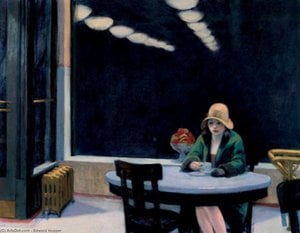
Edward Hopperova "Automat" (1927.) nije samo slika; to je poetski zapis o usamljenosti i svjetlu, ključni primjer američkog realizma koji duboko utječe na promatrača. Ova djela nas poziva u prigušeno osvijetljen interijer gdje žena sjedi za okruglim stolom u onome što se čini automat restoranom – popularnim mjestima samoposluživanja u ranoj 20. godini. Svjetlo, nježno i suptilno, naglašava njezino lice i zdjelu voća na stolu, stvarajući atmosferu tihe drame i emocionalne dubine koja je karakteristična za Hopperovo djelo. Ovo nije samo prizor; to je trenutak zaleđen u vremenu, poziv da se razmisli o prolaznosti vremena i ljudskoj izolaciji.

Realizam s Intimnom Stilizacijom

Hopperov stil obilježen je realizmom i pažnjom na detalj, ali istovremeno prožet stiliziranom kvalitetom koja pojačava emocionalni utjecaj. Kompozicija je uravnotežena, iako pomalo izvan centra, privlačeći pogled gledatelja prema ženi kao središnjem elementu. Vertikalne i horizontalne linije okvira prozora i radijatora pružaju strukturu, dok zaobljene linije ženinog šešira i zdjele dodaju mekoću sceni. Mješavina geometrijskih i organskih oblika, uz raznolikost tekstura – od glatkih površina do taktilnih elemenata poput tkanog stolca – stvara bogato vizualno iskustvo. Hopper je majstorski kombinirao stroge linije arhitekture s nježnim oblinama voća i ženinog lica, stvarajući harmoniju koja je istovremeno privlačna i pomalo neugodna.

Paleta Boja i Svjetlosni Učinci

Dominantne boje su duboki plavi tonovi i tamne nijanse koje doprinose svečanom ozračju, u kontrastu s svjetlijim bojama ženinog odijela – zelenom za kaput i ružičastom za haljinu. Zdjela voća donosi dozu topline crvenim i žutim tonovima. Hopperova vještina korištenja svjetla i sjene očituje se u nježnom sjaju koji osvjetljava ženoino lice i voće, bacajući meke sjene i dodajući dubinu sceni. Ovaj igrokaz svjetlosti i sjene ne samo da pojačava vizualnu privlačnost, već i doprinosi sveopćem osjećaju melankolije koji prožima sliku. Svjetlo nije samo sredstvo za prikazivanje forme; to je nositelj emocija, naglašavajući ženininu izoliranost u okruženju koje je istovremeno urbano i hladno.

Simbolizam i Povijesni Kontekst

Slikana 1927., "Automat" odražava društveni i kulturni krajolik rane 20. godini Amerike. Automat, simbol modernosti i učinkovitosti, bio je dio promjene u načinu života i društvenim navikama. Žena na slici nije samo pojedinac; ona predstavlja izolaciju unutar dinamičnog okruženja. Njezina odmaknuta poza i pogled upućuju na unutarnju introspekciju, a možda i tugu. Hopper je uhvatio duh vremena – osjećaj usamljenosti u modernom društvu, gdje su ljudi često okruženi drugima, ali ipak osjećaju se izolirano. "Automat" nije samo slika mjesta; to je slika stanja uma, dubok portret ljudske duše koja traži utjehu i razumijevanje u svijetu koji se ubrzano mijenja.

Pitanja i odgovori

Tko je stvorio "Automat"?

Autor djela "Automat" je Edward Hopper.

Gdje mogu pronaći umjetnička djela slična djelu "Automat" autora Edward Hopper?

Stranica Slična djela za djelo "Automat" autora Edward Hopper prikazuje srodna umjetnička djela.

Je li dostupna digitalna datoteka visoke rezolucije za "Automat"?

Kako biste dobili digitalnu datoteku djela "Automat" autora Edward Hopper, naručite preuzimanje digitalne slike visoke rezolucije na ova stranica.

Koji je datum nastanka djela "Automat" autora Edward Hopper?

"Automat" autora Edward Hopper nastalo je 1927.

Je li "Automat" slobodan od autorskih prava?

Odgovor o autorskim pravima za "Automat" autora Edward Hopper: djelo je još uvijek pod autorskim pravima. To određuje smiju li se slobodno izrađivati reprodukcije slike.

Je li "Automat" autora Edward Hopper u javnom vlasništvu i zašto?

Status autorskih prava za djelo "Automat" - još uvijek pod autorskim pravima - proizlazi iz smrti umjetnika 1967.

Tko prodaje ručno oslikane kopije djela "Automat" autora Edward Hopper?

Ručno oslikane kopije djela "Automat" autora Edward Hopper prodaju se na stranici ovaj web-mjesto: ručno oslikana uljana reprodukcija na lanenom platnu, a mogu se naručiti putem ova stranica.


Biografija umjetnika

Edward Hopper: A Master of American Realism

Edward Hopper, a name inextricably linked to the quietude and subtle melancholy that permeated 20th-century American life, wasn’t simply a painter of scenes; he was a poet of light and shadow, a chronicler of modern isolation. Born in Nyack, New York, in 1882, to middle-class parents of Dutch ancestry, Hopper's early years provided a stable upbringing that nurtured his artistic inclinations. From childhood sketches meticulously dated and signed, it became evident that keen observation and an innate talent for drawing were central to his being. Though initially encouraged towards commercial illustration – a pragmatic suggestion from his parents – Hopper’s ambitions leaned toward fine art, leading him to the New York School of Art where he studied under William Merritt Chase and Robert Henri. These formative years instilled not only technical skill but also an appreciation for realism and a commitment to depicting the world as he saw it—unvarnished and honest. The writings of Ralph Waldo Emerson resonated deeply with Hopper, reinforcing his sense of individualism and acute observation – qualities that would become hallmarks of his artistic vision. Early travels to Paris exposed him to Impressionism, yet Hopper quickly diverged from its fleeting brushstrokes, forging a path uniquely his own.

Early Life and Artistic Beginnings

Hopper’s fascination with art began in childhood, fueled by a family tradition of sketching and drawing. He displayed remarkable talent from an early age, diligently documenting the world around him with meticulous detail—a habit that would continue throughout his life. Despite initial reservations about pursuing artistic endeavors due to familial pressure for a more conventional career path, Hopper remained steadfast in his desire to express himself creatively. His formal training at the New York School of Art solidified his foundational skills and exposed him to influential teachers who championed realism as an artistic ideal. William Merritt Chase instilled in him a disciplined approach to technique, emphasizing anatomical accuracy and tonal gradation—skills that would prove invaluable in his subsequent work. Robert Henri encouraged Hopper’s experimentation with expressive brushwork while simultaneously upholding the importance of capturing psychological truthfulness. These formative influences shaped Hopper's artistic sensibilities and established him on a trajectory toward producing art that transcended mere visual representation.

Realism as Artistic Expression

Hopper distinguished himself from many of his contemporaries by rejecting Impressionistic techniques in favor of a rigorously realistic style—a stylistic choice driven by a profound conviction that art should faithfully reflect the world as it is perceived. He eschewed idealized forms and decorative embellishments, prioritizing clarity and precision to convey emotional resonance. Hopper’s canvases often depict solitary figures inhabiting unremarkable spaces—houses, diners, offices—yet these scenes radiate an atmosphere of palpable tension and unspoken longing. His masterful manipulation of light and shadow became a defining characteristic of his oeuvre, transforming ordinary environments into evocative landscapes imbued with psychological depth. He achieved this effect through careful tonal planning and meticulous blending techniques—skills honed during his years studying under Chase and Henri—resulting in paintings that captivate viewers not only aesthetically but also emotionally.

Iconic Visions: Nighthawks and Beyond

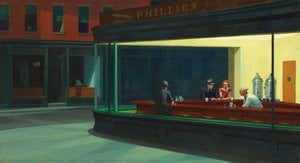
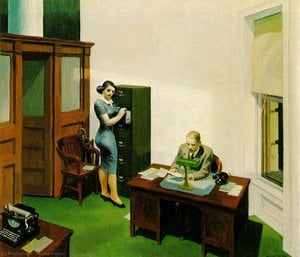
While Hopper’s career unfolded gradually, certain works catapulted him to widespread recognition. Nighthawks (1942), arguably his most famous painting, became an instant icon of American culture. The late-night diner scene, bathed in stark fluorescent light, perfectly encapsulates the alienation and anonymity of modern urban life. The figures within are lost in their own thoughts, disconnected from one another despite their proximity—a poignant commentary on the human condition. Hopper’s printmaking, often overlooked, ran parallel to his painting, sharing similar themes and stylistic qualities, demonstrating his mastery across mediums. He wasn't interested in grand historical narratives or allegorical symbolism; he focused on the mundane, elevating it through careful observation and emotional resonance. House by the Railroad (1925), an early masterpiece, exemplifies this approach—a seemingly simple composition radiating a profound sense of isolation and mystery. Hopper’s printmaking, often overlooked, ran parallel to his painting, sharing similar themes and stylistic qualities, demonstrating his mastery across mediums. He wasn't interested in grand historical narratives or allegorical symbolism; he focused on the mundane, elevating it through careful observation and emotional resonance. Other notable works like *Gas*, *Automat*, and *Office in a Small City* each offer unique insights into the complexities of 20th-century American society. These paintings weren't merely depictions of places; they were explorations of mood, psychology, and the subtle dramas unfolding within ordinary settings.

Legacy and Influence

Edward Hopper’s enduring legacy rests on his profound contribution to American art history—his unwavering commitment to realism as an artistic ideal and his ability to capture the psychological nuances of everyday life with unparalleled sensitivity. His paintings continue to resonate with audiences today because they speak to universal themes of loneliness, isolation, and the search for meaning in a rapidly changing world. Hopper’s influence extends far beyond the realm of painting, inspiring filmmakers (like Alfred Hitchcock) and writers who explore similar themes of alienation and psychological tension. He established himself as one of the most important artists of the 20th century—a visual poet whose work transcends time and continues to captivate viewers with its haunting beauty and intellectual depth. Hopper’s distinctive style has influenced countless painters, cementing his place as a pivotal figure in American art history. His ability to capture the essence of modern American life with honesty, sensitivity, and a stylistic vision that distinguishes him from many of his contemporaries ensures his enduring relevance—a testament to the power of art to illuminate the human condition.
Edward Hopper

Edward Hopper

1931 - 1967 , Sjedinjene Američke Države

Brzi pregled

  • Artistic Movement Or Style: Realizam
  • Artists Who Influenced This Artist:
    • William Merritt Chase
    • Robert Henri
  • Date Of Birth: 22. srpnja 1882.
  • Date Of Death: 15. svibnja 1967.
  • Full Name: Edward Hopper
  • Nationality: Američan
  • Notable Artworks:
    • Nighthawks
    • Kuća pored pruga
    • Benzinska stanica
  • Place Of Birth: Nyack, SAD
Istražite umjetnička djela organizirana prema temama, stilovima i karakteristikama.