

Giclée tisak muzejske kvalitete ili otisak na platnu uz brzu izradu i raznolike opcije završne obrade. ( Kupi ručno oslikano djelo Prebacite na digitalnu sliku)





























Odaberite jednu od naših unaprijed definiranih veličina koje odgovaraju izvornim proporcijama umjetničkog djela.

Unesite potrebnu širinu i visinu kako bi odgovarali vašem okviru ili zidu. Print se može samo izrezati, nikada ne može biti veći od slike, stoga format s drugačijim omjerom stranica uzrokuje gubitak dijela slike. Prije bilo kakve štampe šaljemo vam digitalni prikaz (mockup) na odobrenje. Slika prikazana na ovoj stranici ne prikazuje stvarni rez — to prikazuje isključivo digitalni prikaz.
Dostava širom svijeta () u roku od 2 tjedna umjesto standardnih 4/5 tjedana. (11 Studeni)
Portrait Head
Veličina reprodukcije
In the quiet corners of late nineteenth-century Scotland, a revolution was brewing—not of politics, but of perception. David Gauld, a visionary of the celebrated Glasgow Boys movement, captured this transformative era in his evocative work, Portrait Head. Created around 1893, this painting serves as more than just a likeness; it is a profound meditation on stillness and the burgeoning aesthetic of the Glasgow Style. As one gazes upon the subject, there is an immediate sense of being invited into a private moment of introspection. The woman’s profile, bathed in a soft, ethereal light, possesses an understated dignity that eschews the theatricality common in academic portraiture of the time. Instead, Gauld offers us a serene, almost haunting presence that lingers in the mind long after the first encounter.
The composition is a masterclass in psychological depth and subtle nuance. Gauld directs our attention to the subject’s gaze, which drifts outward toward an unseen horizon, suggesting a world of unspoken emotions and internal reflection. This sense of mystery is heightened by the artist's meticulous technique. Every strand of hair and every delicate shadow around the eyes is rendered with a precision that speaks to his early training as a lithographer. There is a rhythmic harmony in the way the soft light interacts with her features, creating a texture that feels both tangible and dreamlike. For the collector or interior designer, this piece offers a sophisticated focal point—a work that does not demand attention through loudness, but commands it through a quiet, magnetic grace.
What truly distinguishes Portrait Head is its seamless integration of global artistic currents. During this period, Gauld was deeply enamored with the aesthetics of Japan, particularly the ukiyo-e woodblock prints. This fascination is palpable in his use of flattened planes of color and a muted, earthy palette. By moving away from heavy, traditional chiaroscuro and embracing more streamlined, graphic elements, Gauld bridged the gap between Western oil painting and Eastern minimalism. The result is a composition that feels remarkably modern, even by contemporary standards. The subtle interplay of tones—the deep reds of her attire against the organic, verdant backdrop—creates a balanced, harmonious atmosphere that resonates with the principles of the Art Nouveau movement.
This stylistic synthesis provides a rich layer of symbolism for the discerning viewer. The painting represents a period of intense cultural exchange, where the boundaries of tradition were being pushed by artists seeking a new visual language. To hang such a reproduction in a curated space is to bring a piece of art history into the present—a testament to the enduring power of innovation and the beauty found in the intersection of different worlds. Whether placed in a sunlit study or a contemporary living gallery, Gauld’s work provides an atmosphere of contemplative elegance, making it an exquisite choice for those who appreciate art that tells a story of both personal emotion and historical significance.
U djelu "Portrait Head" tehnika Oil susreće pokret Glasgow Style.
Uz svoj Serene ugođaj, djelo "Portrait Head" preporučuje se za Living Room.
David Gauld koristio je tehniku Oil za "Portrait Head". Ova tehnika definira materijalnu prirodu izvornog djela.

U živopisnom, promjenjivom krajoliku Škotske kasnog devetnaestog stoljeća, malo je umjetnika dočaralo presjek tradicije i modernizma s tolikom milošću kao David Gauld. Rođen u Glasgowu 1865. godine, Gauld se nije pojavio samo kao slikar, već kao pionir koji je premostio jaz između delikatnih složenosti grafičkog dizajna i monumentalnog prisustva vitražnog stakla. Njegovo putovanje bilo je prožeto dubokom estetskom evolucija, snažno ukorijenjenom u umjetničkom fervoru pokreta Glasgow Boys, skupine koja je nastojala osloboditi se rigidnog akademicizma tog doba u korist prirodnijih, emotivnijih i eksperimentalnih pristupa.
Gauldovi rani kreativni impulsi oblikovani su pedantnim oko za detalje, osobinom izbrušenom tijekom njegovih formativnih godina kao litografa. Kada je 1882. godine upisao Glasgow School of Art, sa sobom je donio rastuću fascinaciju estetikom Istoka. Ovo razdoblje obilježeno je intenzivnim angažmanom s japanskim printovima, čije su ravnate perspektive i odvažne, kaligrafske linije vječno prožimale njegove kompozicije. Njegovo rano javno priznanje došlo je kroz evokativne crteže perom i tušem za The Glasgow Weekly Citizen, djela koja su pokazivala majstorsko vladanje linijom i ritmičnu, organsku senzibilitnost koja je nagovještavala revoluciju Art Nouveau stila koja je još uvijek bila na horizontu.
Kako je Gauldova karijera napredovala, njegov umjetnički medij širio se s delikatne površine papira na luminozni, prozirni medij vitraža. Ova tranzicija omogućila mu je istraživanje interakcije svjetla i boje na način koji je malo koji od njegovih suvremenika mogao parirati. Tijekom vremena provedenog u Kirkcudbrightu između 1891. i 1894. godine, Gauld je preuzeo značajne narudžbe za Guthrieja i Wellsa, stvarajući prozore koji su bili mnogo više od običnih arhitektonskih ukrasa. Ta djela bila su tapiserije svjetlosti, u kojima su se organski, tekući oblici Art Nouveau stila susreli sa sjetnom, simboličkom dubinom Pre-Raphaelite tradicije.
Njegova tehnika u radu sa staklom obilježena je dubokim razumijevanjem načina na koji boja komunicira s prirodnim osvjetljenjem. Manipulacijom teksture i pigmenta, mogao je izazvati osjećaj atmosfere koja djeluje istovremeno eterično i utemeljeno. Ovo majstorstvo u mediju odražavalo je njegovu širu umjetničku filozofiju: vjerovanje da umjetnost ne bi trebala samo predstavljati svijet, već i transformirati prostor u kojem boravi. Bilo da je radio u ulju, tušu ili staklu, Gauld je nastojao uhvatiti bit svojih subjekata — bilo to tiha dostojanstvenost portreta ili sirova ljepota škotskog krajolika — kroz leću stilizirane elegancije.
Put života Davida Gaulda obilježili su i suradnja i usamljeno usavršavanje. Njegove veze s drugim luminarima Glasgow škole, poput Williama Stewarta Shirreffsa i Harringtona Manna, smjestile su ga u srce transformativnog razdoblja u povijesti škotske umjetnosti. Čak i kada su se njegovi profesionalni odnosi mijenjali i dok se preseljavao između Glasgowa, Kirkcudbrighta i North Berwicka, njegova posvećenost inovacijama ostala je nepokolebljiva. Stajao je kao vitalna karika između fascinacije naturalizmom devetnaestog stoljeća i prihvaćanja dekorativnog modernizma dvadesetog stoljeća.
Danas se Gauld pamti kao umjetnik neizmjerne svestranosti i predviđanja. Njegova sposobnost sinteze različitih utjecaja — od preciznosti japanskih drvenoreznih printova do romantizma Pre-Raphaelita — omogućila mu je da dopremi jedinstven glas Glasgow Style stilu. Njegovo naslijeđe živi u trajnoj ljepoti njegovih staklenih radova i tihom, moćnom prisustvu njegovih slika, koje i dalje odjekuju poštovanjem prema vrhunskom zanatstvu, svjetlu i neprolaznom duhu škotske inovacije.

1865 - 1936 , Ujedinjeno Kraljevstvo

Explore the profound beauty of Japanese landscape painting. From Hokusai's iconic vistas to Zen-inspired compositions, discover the spiritual depth and historical mastery of Ukiyo-e art in this expert cultural retrospective.

Explore the profound beauty of Japanese Ukiyo-e art. Discover the legacy of Hokusai and the Utagawa school through an expert exploration of Edo-period aesthetics, seasonal motifs, and the enduring global influence of Japan's 'Floating World' on fine art history.

Explore the ephemeral beauty of Japanese Ukiyo-e art. From the dynamic warriors of Kuniyoshi to serene landscapes, discover the profound history, masterful techniques, and global influence of these iconic woodblock prints in our deep cultural retrospective.

Embark on a visual journey through the luminous world of stained glass art. Discover the exquisite craftsmanship, historical significance, and captivating beauty of masterworks from Art Nouveau to the Gothic era, curated for the discerning fine art enthusiast.
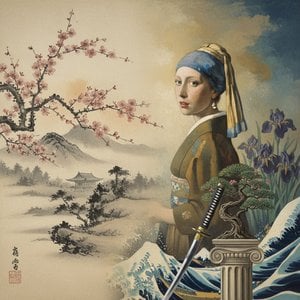
Explore the profound influence of Japanese artistry on global masterpieces. From Ukiyo-e prints to Zen aesthetics, discover how Eastern elegance transformed Western art history in this deep cultural reflection for fine art enthusiasts and collectors.
 Pregledaj u realnoj veličini
 Pošalji
 Podijeli
 Detalji o umjetničkom djelu
 Vodič
Vodič

 Preuzmi umjetničko djelo
 Slični predmeti
 Rentgenska snimka
 Slide show
 Pitanja i odgovori
 Statistika


 Prikaži više









 Opcija stakla dostupna je samo za dimenzije manje od 110 cm


