Pregledaj u stvarnoj veličini AR pregled Kupi ručno naslikanu sliku Prebacite na digitalnu sliku Pošalji
Detalji o umjetničkom djelu Dodaj u omiljene Preuzmi Slični predmeti Rentgenska snimka Automatska prezentacija Statistika

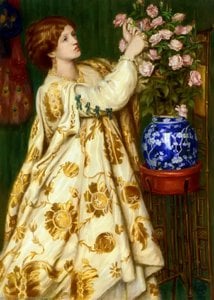
Lucrezia Borgia

Dante Gabriel Rossetti's haunting portrait of Lucrezia Borgia captures the enigmatic beauty and controversial legacy of the Renaissance’s infamous figure. Explore its symbolism & artistic details.

Meta Description: Dante Gabriel Rossetti bio je revolucionarni pjesnik i slikar koji je osnovao Pre-Raphaelitsku braću i inspirirao umjetnike simbolizmom i senzualnom estetikom – ključna figura u estetizmu i simbolizmu. Poznatiji djelovi uključuju slike Proserpine i Joan of Arc.

Giclée / Umjetnički otisak

Giclée tisak muzejske kvalitete ili otisak na platnu uz brzu proizvodnju i fleksibilne opcije završne obrade. ( Kupi ručno naslikanu sliku Prebacite na digitalnu sliku)

P118B $10
P118H $10
P118W $10
P438Z $10
P508JH $12
P508YH $12
P805H $10
P805Z $10
P919BZ $10
P919G $10
P919XJ $10
P959ZH $10
P968JZ $12
W106C $8
W218G $10
W218JH $8
W218Y $10
W307PJ $10
W316G $10
W316PJ $8
W316Y $10
W398PJ $8
W4111J $10
W500HY $15
W500JH $15
W692G $12
W849H $8
W940BG $15
W953PJ $8

Standardne dimenzije
po mjeri
CM
INCH

Odaberite jednu od naših unaprijed definiranih veličina koje odgovaraju izvornim proporcijama umjetničkog djela.

širina
visina

Možete unijeti vlastite dimenzije kako biste umjetničko djelo prilagodili specifičnom okviru ili prostoru. Ako odabrana veličina ne odgovara proporcijama izvornog rada, izrezat ćemo dio slike ili je proširiti pomoću ogledalnog efekta ili jednobojne rubne površine. Digitalni prikaz (mockup) bit će vam poslan na odobrenje prije početka proizvodnje.
Imajte na umu da pregled na zaslonu ne odražava stvarno izrezivanje ili proširivanje. Samo će mockup točno prikazati konačnu kompoziciju.
Iako su dostupne prilagođene veličine, preporučujemo odabir dimenzije iz unaprijed definirane liste kako biste očuvali izvorne proporcije.

Dostava širom svijeta () u roku od 2 tjedna umjesto standardnih 4/5 tjedana. (16 Rujan)

why_choose_icon
Besplatna ekspresna dostava širom svijeta
why_choose_icon
Visokokvalitetno laneno platno
why_choose_icon
Potpuno osiguranje dostave
why_choose_icon
Jamstvo povrata carine i uvoznih poreza
why_choose_icon
Garancija vjernog podudaranja boja
why_choose_icon
Politika povrata u roku od 100 dana (samo u slučaju nedostataka)
why_choose_icon
Jamstvo povrata 100% novca
why_choose_icon
Popust na više proizvoda

Ukupna cijena

$ 68

reproduction

Lucrezia Borgia

Giclée / Umjetnički otisak

Veličina reprodukcije

-

Ukupna cijena

$ 68

Osnovne informacije

  • Movement: Pre-Raphaelite
  • Title: Lucrezia Borgia
  • Influences:
    • Rossetti
    • Borgia
  • Medium: Painting
  • Subject or theme: Portraiture, Renaissance
  • Notable elements: Fruit, figures

Kviz o umjetnosti

Svako pitanje ima samo jedan točan odgovor.

Pitanje 1:
The painting ‘Lucrezia Borgia’ by Dante Gabriel Rossetti primarily depicts which subject?
Pitanje 2:
Rossetti’s style in ‘Lucrezia Borgia’ is most closely associated with which artistic movement?
Pitanje 3:
Based on the image description, what is prominently featured in the background of the painting?
Pitanje 4:
Lucrezia Borgia’s life was often portrayed with controversy. What historical element contributed to this perception?
Pitanje 5:
Dante Gabriel Rossetti frequently incorporated elements of which literary tradition into his artwork?

The Enigmatic Beauty of Lucrezia Borgia – A Rossetti Interpretation

Dante Gabriel Rossetti’s “Lucrezia Borgia” isn't merely a portrait; it’s an immersion into the shadowed glamour and calculated power of one of history’s most captivating figures. Painted circa 1870, this work transcends simple representation, becoming a potent exploration of beauty, intrigue, and the inherent ambiguity of female agency within the turbulent world of Renaissance Italy. Rossetti, deeply influenced by Pre-Raphaelite ideals – a movement he himself spearheaded – masterfully employs rich color palettes, meticulous detail, and symbolic elements to construct an image that simultaneously celebrates and subtly critiques Lucrezia’s complex legacy.

The subject herself is presented with a deliberate sensuality. Lucrezia, rendered in a palette of deep reds, purples, and golds, embodies the opulent excesses associated with her family – the Borgias. Her long, flowing hair, cascading over her shoulders, hints at both vulnerability and regal bearing. The delicate rendering of her hands, holding what appear to be apples or perhaps oranges (the fruit’s precise identification remains debated), adds a layer of quiet contemplation to the scene. Rossetti's signature brushwork is evident in the luminous quality of the fabrics and the subtle modeling of the face – a technique designed to capture not just appearance but also an underlying emotional state.

Pre-Raphaelite Symbolism and Narrative Depth

As a key figure within the Pre-Raphaelite Brotherhood, Rossetti infused his work with layers of symbolic meaning. The choice of fruit is particularly significant. Apples, frequently associated with temptation and knowledge (as in the story of Adam and Eve), could represent Lucrezia’s own perceived role as a catalyst for political maneuvering and familial discord. The background, though somewhat indistinct, suggests a richly furnished interior – a space of power and privilege, yet also hinting at confinement and perhaps even melancholy. The inclusion of figures in the distance, partially obscured, reinforces this sense of hidden narratives and unspoken secrets.

Rossetti’s artistic choices align perfectly with the Pre-Raphaelite emphasis on detailed observation and moral allegory. He wasn't simply painting a likeness; he was attempting to capture an essence, a psychological truth beneath the surface. The lighting, diffused and atmospheric, contributes to this effect, creating a sense of mystery and inviting the viewer to contemplate Lucrezia’s inner world.

The Borgia Legacy: Intrigue and Artistic Representation

Lucrezia Borgia's life was one of dramatic political maneuvering, scandalous rumors, and ultimately, tragic circumstances. Born into a family renowned for its ruthlessness and ambition, she navigated the treacherous currents of Renaissance Italy as a pawn in her father’s power games – a strategy that involved strategic marriages designed to consolidate his influence. The opera “Lucrezia Borgia,” composed by Donizetti, further cemented her image as a femme fatale, a woman whose beauty masked a dangerous and manipulative nature.

Rossetti's painting doesn’t shy away from this complex narrative. It acknowledges the inherent drama of Lucrezia’s life while simultaneously presenting her with an undeniable allure. The artist skillfully avoids simplistic judgment, instead offering a nuanced portrait that invites viewers to grapple with the ambiguities of her character and the historical context in which she lived. It's a testament to Rossetti’s ability to transform a notorious historical figure into a compelling work of art – one that continues to fascinate and provoke discussion today.

A Reproduction for Collectors: Bringing Rossetti’s Vision to Life

WahooArt is proud to offer meticulously hand-painted reproductions of Dante Gabriel Rossetti's “Lucrezia Borgia.” Our artists, trained in the finest techniques of traditional painting, recreate the artwork's rich textures, luminous colors, and intricate details with unparalleled accuracy. Each reproduction is created on archival-quality canvas using pigments that will endure for generations, ensuring that this iconic image remains vibrant and captivating for years to come.

Whether you’re a seasoned art collector, an interior designer seeking a statement piece, or simply an admirer of Pre-Raphaelite beauty, our “Lucrezia Borgia” reproduction offers a stunning opportunity to own a tangible connection to one of the Victorian era's most celebrated artists. Explore the available sizes and framing options on our website to discover the perfect way to bring this enigmatic portrait into your home or office.


Biografija umjetnika

Dante Gabriel Rossetti (1828 – 1882) Poet, illustrator, painter

Dante Gabriel Rossetti was born in London on May 12, 1828, the second child and eldest son of Italian expatriates Gabriele Rossetti, a Dante scholar who had been exiled from Naples for writing poetry in support of the Neapolitan Constitution of 1819, and Frances Polidori Rossetti, a governess whose father Gaetano Polidori, from Tuscany, had married an English woman. His family’s intellectual heritage profoundly shaped his artistic sensibilities—a legacy that extended beyond mere biographical details to encompass a deep appreciation for literature and the arts. From a young age, he demonstrated exceptional talent in drawing and writing, foreshadowing the multifaceted career that would define his life.

Early Life and Artistic Influences

Gabriel’s education was overseen by his mother, who instilled in him a love of learning and encouraged his intellectual curiosity. He devoured the works of Shakespeare, Dickens, Scott, Byron, and Wordsworth—literary giants whose influence permeated his imaginative landscape. Notably, he found inspiration in the poetry of John Keats and William Blake, artists who championed emotional intensity and visionary imagination as alternatives to academic conventions. The discovery of Blake’s writings in 1847 proved particularly transformative, sparking Rossetti's fascination with mythology and symbolism—themes that would become central to his artistic vision. He meticulously studied the techniques employed by Rembrandt and Rubens, absorbing their mastery of chiaroscuro (the dramatic interplay of light and shadow) and anatomical precision. These formative influences instilled in him a commitment to truthful representation combined with expressive artistry.

The Pre-Raphaelite Brotherhood: A Revolt Against Convention

Rossetti’s artistic trajectory took an irreversible turn in 1848 when he co-founded the Pre-Raphaelite Brotherhood alongside William Holman Hunt and John Everett Millais—a movement that represented a radical challenge to the prevailing aesthetic standards of Victorian England. Dissatisfied with the idealized forms and decorative conventions favored by the Royal Academy, the Brotherhood sought to revive the artistic spirit of Italy *before* the High Renaissance—hence “Pre-Raphaelite.” This meant rejecting academic art’s preoccupation with classical mythology and embracing instead a meticulous observation of nature and a fervent devotion to moral seriousness. Rossetti's early paintings, such as *The Girlhood of Mary Virgin*, exemplify this ethos, showcasing an astonishing level of detail alongside symbolic imagery drawn from biblical texts and medieval romances. The Brotherhood’s manifesto articulated its conviction that art should serve as a conduit for spiritual contemplation—a stance that distinguished it from the commercialized culture of London society.

Developing Style: Symbolism and Sensuality

Throughout his artistic career, Rossetti experimented with diverse stylistic approaches—moving gradually away from strict Pre-Raphaelite realism toward more evocative symbolism and dreamlike imagery. His paintings became increasingly infused with sensual desire—exploring themes of love, loss, and spiritual longing with profound emotional depth. This stylistic evolution was partly driven by his personal life, particularly his intimate relationship with Elizabeth Siddal—whom he married in 1860—and his enduring fascination with Jane Morris. Siddal served as Rossetti’s muse for many years, embodying an idealized feminine beauty that captivated him and inspired countless artworks. His paintings often depicted women bathed in ethereal light, adorned with flowing crimson hair—a visual motif that reflected his preoccupation with medieval symbolism and spiritual aspiration. Works like *Proserpine* exemplify this later style, demonstrating Rossetti’s mastery of color and composition—elements designed to evoke a sense of otherworldly enchantment.

Legacy and Influence: Shaping Aesthetic Vision

Dante Gabriel Rossetti's artistic legacy extends far beyond his own lifetime—leaving an indelible mark on the course of Victorian art and profoundly influencing subsequent generations of artists and writers. He championed emotional intensity and subjective experience as paramount values—a stance that resonated with a cultural milieu yearning for alternatives to academic formalism. His work served as a catalyst for the emergence of Symbolism—a movement characterized by its exploration of psychological states and its embrace of mystical imagery—and contributed significantly to the development of Aestheticism—which prioritized beauty above all else. Artists like William Morris and Edward Burne-Jones were deeply inspired by Rossetti’s aesthetic principles, incorporating them into their distinctive artistic styles. Dante Gabriel Rossetti remains an important figure in understanding not only the history of art but also the broader cultural context in which it was created—a testament to his enduring contribution to Western artistic heritage.
Dante Gabriel Rossetti

Dante Gabriel Rossetti

1828 - 1882 , Velika Britanija

Osnovne informacije

  • Artistic Movement Or Style: Pre-Raphaelite
  • Artists Who Influenced This Artist:
    • John Keats
    • William Blake
  • Date Of Birth: 12. svibnja 1828.
  • Date Of Death: 9. travnja 1882.
  • Full Name: Dante Gabriel Rossetti
  • Nationality: Engleski
  • Notable Artworks:
    • Proserpine
    • Joan of Arc
    • King Rene's Honeymoon
  • Place Of Birth: London, UK
Istražite umjetnička djela organizirana prema temama, stilovima i karakteristikama.