

Giclée tisak muzejske kvalitete ili otisak na platnu uz brzu izradu i raznolike opcije završne obrade. ( Kupi ručno oslikano djelo Prebacite na digitalnu sliku)





























Odaberite jednu od naših unaprijed definiranih veličina koje odgovaraju izvornim proporcijama umjetničkog djela.

Unesite potrebnu širinu i visinu kako bi odgovarali vašem okviru ili zidu. Print se može samo izrezati, nikada ne može biti veći od slike, stoga format s drugačijim omjerom stranica uzrokuje gubitak dijela slike. Prije bilo kakve štampe šaljemo vam digitalni prikaz (mockup) na odobrenje. Slika prikazana na ovoj stranici ne prikazuje stvarni rez — to prikazuje isključivo digitalni prikaz.
Dostava širom svijeta () u roku od 2 tjedna umjesto standardnih 4/5 tjedana. (10 Studeni)
Arabesque
Veličina reprodukcije

Claude Audran III (1658-1734) was a prominent French decorative painter whose career flourished during the reigns of Louis XIV and Louis XV. He is celebrated for his ornate style, encompassing arabesques, grotesques, and particularly, playful ‘singeries’ – depictions of monkeys mimicking human behavior.
Born in Lyon, France, on August 25th, 1658, Claude Audran III came from a family deeply rooted in the artistic world. He was closely mentored by his uncle, Claude Audran the Younger, who served as painter to Louis XIV. This familial connection provided him with early exposure and training within the royal circles of French art.
Audran III’s artistic development was heavily influenced by the prevailing Baroque aesthetic and the demand for lavish decoration within the French court. He mastered techniques in painted panelling, harpsichord cases, and other decorative elements. His style evolved to incorporate a unique blend of classical motifs with whimsical and imaginative scenes.
Audran III’s style is characterized by:
Claude Audran III played a significant role in shaping the decorative arts landscape of late 17th and early 18th-century France. His work embodies the opulence and grandeur associated with the French court, and his influence can be seen in the works of later artists, including Antoine Watteau, who was among his pupils.
In 1704, Audran III obtained the position of Keeper of the Luxembourg Palace. He continued to work as a decorative artist until his death in Paris on May 27th, 1734. His legacy endures through surviving examples of his work and the enduring appeal of his distinctive style.

1658 - 1734 , France

Explore the profound mastery of engraving and intaglio printmaking. Delve into the rich history, technical precision of the burin, and the enduring legacy of fine art techniques that shaped the world's most iconic masterpieces.
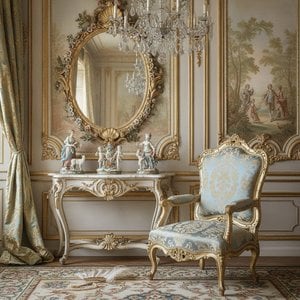
Discover the exquisite allure of Rococo art. Explore a curated guide to 18th-century French masterpieces, from Watteau to Fragonard, and learn how hand-painted oil reproductions can bring timeless elegance and luxury to your sophisticated interior design collection.

Immerse yourself in the splendor of Rococo art. Discover the era of elegance through masterworks by Watteau and Fragonard. Explore themes of romance, aristocratic leisure, and gilded ornamentation in this definitive guide to 18th-century French opulence.
 Pregledaj u realnoj veličini
 Pošalji
 Podijeli
 Detalji o umjetničkom djelu
 Vodič
Vodič

 Preuzmi umjetničko djelo
 Slični predmeti
 Rentgenska snimka
 Slide show
 Pitanja i odgovori
 Statistika


 Prikaži više









 Opcija stakla dostupna je samo za dimenzije manje od 110 cm


