Remek-djelo bizantinskog utjecaja
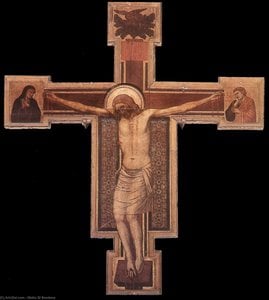
Cimabuejev "Križ" stoji kao monumentalno djelo kasnog 13. stoljeća, utjeljujući tranziciju iz bizantinske ikonografije u rani renesansni realizam. Stvoren oko 1287. godine, ovaj impozantni krst je svjedočanstvo Cimabuejevog inovativnog pristupa, koji spaja tradicionalnu religijsku simboliku s novonastalim umjetničkim tehnikama koje će utirati put budućim majstorima poput Giotta.
Subjekt i kompozicija
Umjetničko djelo prikazuje razapnuća Isusa Krista, centralnu temu u kršćanskoj umjetnosti. Kompozicija slijedi tradicionalni križni raspored, s figurom Isusa istaknutom u samom središtu. Uz križ stoje dvije žalosnice, vjerojatno predstavljajući Djevica Mariju i svetog Ivana Evangelista, što sceni dodaje snažnu emocionalnu dubinu.
Stil i tehnika
Cimabuejev stil odlikuje spoj bizantinskih utjecaja i ranorenesansnih inovacija. Upotreba bogatih boja, posebno duboke plave, crvene i zlatne, stvara osjećaj pobožnosti i božanstva. Figure su prikazane s realističnijim proporcijom i sofisticiranim sjeničenjem u usporedbi s ranijom srednjovjekovnom umjetnošću, što sugerira volumen i dubinu.
Djelo je izvedeno temperom na drvenoj ploči, što je bila uobičajena tehnika tog razdoblja. Detalji od zlata dodaju svjetlosnu kvalitetu, naglašavajući svetost scene. Pedantna pažnja posvećena detaljima u prikazivanju kože i odjeće figura pokazuje Cimabuejevu vrhunsku vještinu u svom zanatu.
Povijodni kontekst
Cimabue, rođen oko 1240. u Firenci, bio je ključna figura u evoluciji talijanske umjetnosti. Njegov rad označio je značajno odstupanje od ravnih, shematskih metoda bizantinskog slikarstva, uvodeći elemente realizma i emocionalnog izražavanja koji će postati zaštitni znak renesanse.
"Križ" je jedno od Cimabuejevih najranijih pripisanim djela, naručeno od strane dominikanskog reda za bazliku San Domenico u Arezzu. Ova narudžba ističe važnost religijske umjetnosti u srednjovjekovnom društvu i ulog umjetnika poput Cimabueja u oblikovanju duhovnih iskustava kroz vizualno pripovijedanje.
Simbolika i emocionalni dojam
Scena razapnuća prepuna je simboličkih elemenata, uključujući sam križ koji predstavlja žrtvu i iskupljenje, te aure oko glava figura koje označavaju njihovu svetost. Žalosnice s obje strane prenose tugu i bol, dodajući emocionalnu dimenziju umjetničkom djelu.
Cimabuejev prikaz Kristova tijela, izveden s sjeničenjem i osjećajem plastičnosti, prenosi duboki osjećaj patnje i čovječnosti. Ovo odstupanje od krutih bizantinskih figura Krista na križu predskazuje ekspresivnije i prirodnije prikaze koji će definirati renesansnu umjetnost.
Zašto prikupiti ili izložiti ovo djelo
Ljubiteljima umjetnosti, kolekcionarima i dizajnerima interijera, Cimabuejev "Križ" nudi jedinstvenu mješavinu povijesnog značaja i umjetničke briljantnosti. Njegova bogata paleta boja, zamršeni detalji i emocionalna dubina čine ga očaravajućim dodatkom svakoj kolekciji.
Kao visokokvalitetna reprodukcija, ovo djelo može služiti kao upečatljiva središnja točka u tradicionalnim i suvremenim interijerima. Njegove bezvremenske teme i majstorska izvedba osiguravaju da ostane cijenjeno djelo generacijama koje dolaze.
Doživite duboku ljepotu i duhovni odjek Cimabuejevog "Križa", remek-djela koje povezuje srednjovjekovnu i renesansnu eru, te unosite dodir sakralne umjetnosti u svoj prostor.
Pitanja i odgovori
Kolikih je dimenzija izvorni "Crucifix"?
"Crucifix" u svom izvornom obliku ima dimenzije 448 x 390 cm. Izvorni dimenzije su korisna referenca pri odabiru veličine reprodukcije.
Koliko je godina imao/la Cimabue u vrijeme stvaranja djela "Crucifix"?
Cimabue je djelu "Crucifix" pristupio u dobi od 47 godina. Umjetnik je rođen 1240, a datum stvaranja djela je 1287.
Kakvu bojnu harmoniju prikazuje "Crucifix" autora Cimabue?
Koloristička harmonija djela "Crucifix" zabilježena je kao Snažna koloristička ujednačenost.
O čemu je "Crucifix"?
"Crucifix" autora Cimabue prikazuje: crucifixion, religious painting, medieval art, florence, byzantine influence, italian renaissance, saint john.
Je li "Crucifix" u cjelini svjetlija ili tamnija?
Zabilježene vrijednosti za "Crucifix" autora Cimabue su: svjetlina blistav, luminancija Zračni.
Koja tehnika i stil karakteriziraju "Crucifix" autora Cimabue?
"Crucifix" je djelo izvedeno u tehnici Tempera na drvenoj podlozi, u stilu Proto-Renaissance.
U kojoj se fazi karijere Cimabue nalazi s djelom "Crucifix", s obzirom na njegov datum nastanka?
"Crucifix", nastalo 1287. godine, pripada Proto-Renaissance u karijeri umjetnika Cimabue.
Koja veličina ispisa za "Crucifix" najbolje odgovara mojoj prostoriji?
Preporučeni par za "Crucifix" autora Cimabue: print u veličini Veliki format za prostoriju kao što je Dnevni boravak.



 Pregledaj u stvarnoj veličini
 Naručite ručno oslikano reprodukciju
 Podijeli
 Podijeli
 Detalji
 Vodič
Vodič

 Preuzmi datoteku
 Slični predmeti
 Rentgenska snimka
 Slide show
 Statistika


 Pročitajte više






































 Opcija stakla dostupna je samo za dimenzije manje od 110 cm