Giclée tisak muzejske kvalitete ili otisak na platnu uz brzu proizvodnju i fleksibilne opcije završne obrade. ( Kupi ručno naslikanu sliku Kupi digitalnu sliku)





























Odaberite jednu od naših unaprijed definiranih veličina koje odgovaraju izvornim proporcijama umjetničkog djela.

Možete unijeti vlastite dimenzije kako biste umjetničko djelo prilagodili specifičnom okviru ili prostoru. Ako odabrana veličina ne odgovara proporcijama izvornog rada, izrezat ćemo dio slike ili je proširiti pomoću ogledalnog efekta ili jednobojne rubne površine. Digitalni prikaz (mockup) bit će vam poslan na odobrenje prije početka proizvodnje.
Imajte na umu da pregled na zaslonu ne odražava stvarno izrezivanje ili proširivanje. Samo će mockup točno prikazati konačnu kompoziciju.
Iako su dostupne prilagođene veličine, preporučujemo odabir dimenzije iz unaprijed definirane liste kako biste očuvali izvorne proporcije.
Dostava širom svijeta () u roku od 2 tjedna umjesto standardnih 4/5 tjedana. (7 Rujan)


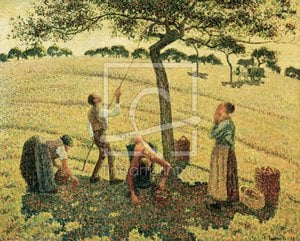
Beremo Žitarice
Veličina reprodukcije
“Picking Peas,” painted by Camille Pissarro in 1880, isn’t merely a depiction of agricultural labor; it's a distillation of the Impressionist ethos—a celebration of fleeting moments and luminous color. Located at the Museum Langmatt in Switzerland, this unassuming canvas holds within its textured surface a profound resonance with the artistic currents shaping late nineteenth-century France.
Historical Context: The painting emerged during a pivotal period for Impressionism. Artists like Pissarro were actively rejecting academic conventions and embracing plein air painting—working outdoors directly from nature—a revolutionary approach that prioritized capturing atmospheric conditions over meticulous detail. This movement sought to portray the everyday experiences of ordinary people, elevating the commonplace to artistic significance.
Style & Technique: Camille Pissarro’s masterful use of Pointillism – a technique pioneered by Georges Seurat and Paul Signac – is immediately apparent. Instead of blending colors on canvas, he applied tiny dots of pigment—often mixed with linseed oil—creating an optical illusion that blends together to produce vibrant hues. This method allowed for unparalleled control over light and color, mirroring the Impressionists’ fascination with how sunlight transforms landscapes.
Composition & Symbolism: The scene unfolds in a sunlit meadow dotted with sheep, creating a tranquil pastoral backdrop. Five figures – including a woman tending to peas and a child – engage in simple tasks, embodying the dignity of rural life. The inclusion of two handbags subtly hints at the presence of modern sensibilities amidst the timeless beauty of the countryside. Pissarro’s deliberate brushstrokes convey an energy that captures not just what is seen but also how it feels—a palpable sense of warmth and serenity.
Emotional Impact: “Picking Peas” transcends its subject matter, inviting viewers to contemplate the passage of time and the enduring power of nature. The painting’s luminous palette evokes feelings of peace and contentment, transporting us back to a simpler era where observation and appreciation for beauty reigned supreme. It stands as a testament to Pissarro's ability to transform ordinary scenes into extraordinary expressions of artistic vision.
Further Information: For more insights into Camille Pissarro’s life and oeuvre, visit https://WahooArt.com to explore his extensive collection of artworks.


1830 - 1903 , SAD (Sjedinjene Američke Države)

Discover the luminous world of Camille Pissarro. Explore how this Impressionist master captured light and rural life through evocative landscapes, from Pontoise to Eragny, and learn about his enduring legacy in art history.

Discover the ethereal beauty of Jean-Baptiste-Camille Corot. Explore how this master of light bridged Neoclassicism and Impressionism through his atmospheric landscapes, capturing the timeless essence of the French countryside with unparalleled poetic brilliance.

 Pregledaj u stvarnoj veličini
 Pošalji
 Podijeli
 Detalji o umjetničkom djelu

 Preuzmi
 Slični predmeti
 Rentgenska snimka
 Automatska prezentacija

 Prikaži više







 Opcija stakla dostupna je samo za dimenzije manje od 110 cm