


Djelo prikazano na ovoj stranici zaštićeno je autorskim pravima, što znači da zakonski ne možemo izraditi niti prodati identičnu reprodukciju. Ova se zaštita provodi u skladu s međunarodnim sporazumima kao što su Bernska konvencija i nacionalnim zakonima, uključujući i one koji su utvrđeni u Američki zakon o autorskom pravu – Title 17.
Ova metoda u potpunosti je usklađena s autorskim pravima jer ne uključuje kopiranje ili dupliciranje zaštićenih umjetničkih djela. Umjesto toga, riječ je o kreativnoj reinterpretaciji – novoj slici koja je dobila utjecaj na izvornik, ali nije identična njemu.
Giclée tisak muzejske kvalitete ili otisak na platnu uz brzu izradu i raznolike opcije završne obrade. ( Kupi ručno oslikano djelo Prebacite na digitalnu sliku)





























Odaberite jednu od naših unaprijed definiranih veličina koje odgovaraju izvornim proporcijama umjetničkog djela.

Unesite potrebnu širinu i visinu kako bi odgovarali vašem okviru ili zidu. Print se može samo izrezati, nikada ne može biti veći od slike, stoga format s drugačijim omjerom stranica uzrokuje gubitak dijela slike. Prije bilo kakve štampe šaljemo vam digitalni prikaz (mockup) na odobrenje. Slika prikazana na ovoj stranici ne prikazuje stvarni rez — to prikazuje isključivo digitalni prikaz.
Dostava širom svijeta () u roku od 2 tjedna umjesto standardnih 4/5 tjedana. (8 Studeni)
Armchair
Veličina reprodukcije
Bernardo Bernardi's "Armchair," meticulously reproduced here in a generous 68 x 68 cm format, represents more than just a piece of furniture; it embodies a pivotal moment in Croatian design history and the burgeoning ideals of functional modernism. Crafted in 1961 for the “Moša Pijade” Workers’ University – now the Open University – this chair was conceived by Bernardi himself, reflecting his deep commitment to accessible design and the transformative potential of tertiary education. The work speaks volumes about a period defined by social reform, architectural innovation, and a conscious effort to reshape public spaces with thoughtful, utilitarian forms.
The chair's aesthetic is strikingly austere, dominated by clean lines and a deliberately unadorned form. The primary material—black leather—conveys an immediate sense of sophistication and durability, while the wooden frame provides a grounding element, anchoring the piece to its functional purpose. Bernardi’s design eschews superfluous ornamentation in favor of pure geometric shapes, aligning with the principles of modernism that prioritized clarity and simplicity. The bowl-like silhouette, reminiscent of a shell or perhaps even a stylized echo of classical forms, introduces an unexpected layer of visual interest – a subtle nod to enduring artistic traditions within a decidedly contemporary context.
Beyond its purely functional role, “Armchair” carries a subtle symbolic weight. As the piece was designed for an institution dedicated to learning and social progress, it can be interpreted as representing comfort, contemplation, and the potential for intellectual growth. The chair’s starkness invites introspection, encouraging viewers to consider their own place within the broader context of knowledge and society. The presence of two additional chairs in the photograph further emphasizes this theme – a collective space designed for dialogue and shared experience.
This meticulously hand-painted reproduction captures the essence of Bernardi's original design with exceptional detail and fidelity. Utilizing archival quality materials and employing skilled artisans, WahooArt.com ensures that this artwork faithfully replicates the chair’s form, texture, and color palette. It is a perfect addition to any collection of modern design or a statement piece for contemporary interiors.
"Armchair" je dostupan kao umjetnički otisak na pamučnom platnu ili arhivskom kanvas papiru. Narudžbe možete izvršiti na stranici Umjetnička litografija, u dimenziji po vašem izboru.
"Armchair" autora Bernardo Bernardi ima luminancu od Bright Balance. Luminancija opisuje koliko se čini da boje reflektiraju svjetlosti.
Zabilježena razina popularnosti za "Armchair" autora Bernardo Bernardi iznosi Recognized.

Born in 1974 in the historic Italian town of Todi, Roberto Bernardi has emerged as a profound voice within the photorealist movement. His journey into the heart of visual precision began much earlier than his formal career, with his first artistic explorations dating back to the early 80s. After moving to Rome in 1993 following his high school graduation, Bernardi immersed himself in the delicate art of restoration, working at the church of San Francesco a Ripa. This intimate encounter with the preservation of beauty and the meticulous care required for historical artifacts undoubtedly laid the foundation for his later mastery of detail. By 1994, he transitioned into a full-time painter, moving away from initial forays into landscapes and portraits to embrace a contemporary still life that would define his legacy.
Bernardi’s work is a breathtaking meditation on the extraordinary hidden within the ordinary. As a master of photorealism, he possesses a singular ability to capture the exquisite beauty of everyday life through a sophisticated play of reflections and transparencies. His canvases often feature mundane objects—plates, glasses, kitchen appliances, dishwashers, and even colorful candies or lollipops—reimagined as subjects of intense light and complex optical phenomena. Through his brush, a simple glass becomes a vessel for light, and a kitchen surface transforms into a mirror of the surrounding world, inviting the viewer to rediscover the magic in the mundane.
The development of Bernardi's style is marked by an increasing fascination with how light interacts with various surfaces. His technique allows for a startlingly realistic depiction of textures, from the cold sheen of metal to the translucent glow of sugar. This pursuit of precision was further enriched by his meeting in 1999 with Raphaella Spence, also a photorealist artist and his frequent collaborative partner. Together, they have occasionally ventured beyond the intimate scale of still life to create large-scale series representing expansive social scenes, such as the vibrant energy of crowds at football stadiums, adding a communal dimension to his otherwise quiet, contemplative subject matter.
His professional trajectory has been characterized by significant international recognition and prestigious commissions. From working on pieces for the Cutler Collection in Beijing to being commissioned by the Italian multinational Eni, Bernardi's reach extends far beyond the borders of Italy. His work has been showcased in renowned institutions across the globe, including:
Through this vast exhibition history, Bernardi has solidified his place in the contemporary art landscape. His ability to bridge the gap between the hyper-real and the poetic ensures that his paintings are not merely technical exercises in mimicry, but emotional invitations to pause and observe the shimmering, often overlooked wonders of our daily existence.

1974 - , Italy

Uronite u svijet Katsushike Hokusaija! Otkrijte 25 remek-djela japanskog umjetnika, uključujući legendarni 'Veliki val'. Ukiyo-e, pejzaži i povijest umjetnosti – pronađite inspiraciju za dekoraciju doma s WahooArt.com.

Uronite u svijet 25 remek-djela Muzeja lijepih umjetnosti u Bostonu! Otkrijte priče Claude Moneta, Degasa i drugih majstora. Inspirirajte se za dekoraciju doma s WahooArt.com - luksuzne reprodukcije slika i umjetnine po narudžbi.
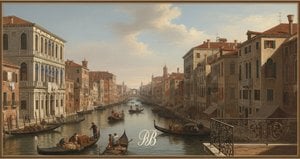
Explore the life & art of Bernardo Bellotto, Canaletto’s nephew and a master of veduta painting. Discover his stunning cityscapes of Dresden & Warsaw, artistic techniques, and lasting legacy. Expert insights for collectors.

Istražite 10 remek-djela geometrijske apstrakcije! Otkrijte priče Kandinskog, Mondriana i drugih majstora. Inspirirajte se za svoj interijer s vrhunskim reprodukcijama slika na WahooArt.com

Explore the revolutionary art of Piet Mondrian and the principles of Neo-Plasticism. Discover De Stijl's influence, iconic compositions like 'Composition with Red, Yellow and Blue,' and Mondrian’s lasting legacy on modern design.
 Pregledaj u realnoj veličini
 Pošalji
 Podijeli
 Detalji o umjetničkom djelu
 Vodič
Vodič

 Preuzmi umjetničko djelo
 Slični predmeti
 Rentgenska snimka
 Slide show
 Pitanja i odgovori
 Statistika


 Prikaži više









 Opcija stakla dostupna je samo za dimenzije manje od 110 cm


