Pregledaj u stvarnoj veličini Isprobaj u AR-u Prebacite na prodaju printova Prebacite na digitalnu prodaju slika Podijeli
Detalji Vodič Dodaj u omiljene Preuzmi datoteku Slični predmeti Rentgenska snimka Slide show Statistika

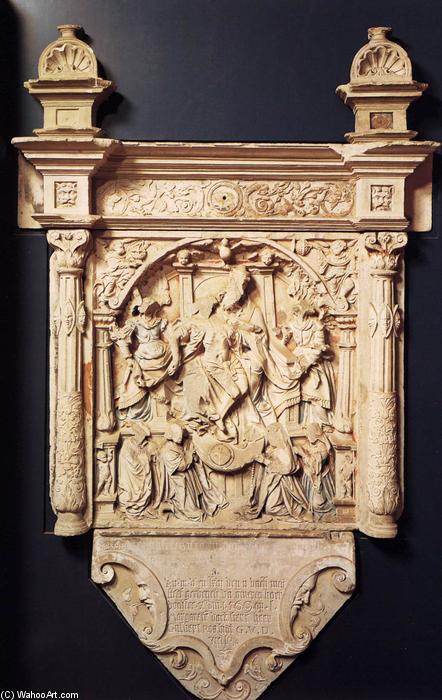
Rogovska epitafija

Pogledajte prekrasnu reprodukciju Rogovske epitafije od Arnta van Trichta, velikanskog holandskog umjetnika iz doba renaissanceskog Antwerpena i Kolna. Istražite njegov stil i bogatu povijest!

Explore the evocative works of arnt van Tricht, a Dutch master (1530-1570) known for Ros Family Epitaphs & historical art. Discover his Cologne origins & Antwerp legacy.

Ručno rađena uljana reprodukcija

Ručno oslikano uljanim bojama na platnu u dimenzijama i okviru po vašem izboru, izrađeno po narudžbi od strane naših umjetnika. ( Prebacite na prodaju printova Prebacite na digitalnu prodaju slika)

P118B $10
P118H $10
P118W $10
P438Z $10
P508JH $12
P508YH $12
P805H $10
P805Z $10
P919BZ $10
P919G $10
P919XJ $10
P959ZH $10
P968JZ $12
W106C $8
W218G $10
W218JH $8
W218Y $10
W307PJ $10
W316G $10
W316PJ $8
W316Y $10
W398PJ $8
W4111J $10
W500HY $15
W500JH $15
W692G $12
W849H $8
W940BG $15
W953PJ $8

Standardne dimenzije
prilagođeno po mjeri
CM
INCH

Odaberite jednu od naših unaprijed definiranih veličina koje odgovaraju izvornim proporcijama umjetničkog djela.

širina
visina

Možete unijeti vlastite dimenzije kako bi odgovarale određenom okviru ili prostoru. Ako odabrana veličina ne odgovara proporcijama izvorne slike, izrezat ćemo umjetničko djelo ili proširiti sliku dodatnim ručno oslikanim elementima. Digitalni nacrt bit će vam poslan na odobrenje prije početka proizvodnje.
Imajte na umu da pregled na ekranu ne prikazuje stvarno izrezivanje ili proširivanje. Samo će nacrt točno prikazati konačni sastav.
Iako su dostupne prilagođene veličine, preporučujemo odabir dimenzije s preddefiniranog popisa kako bismo očuvali izvorne proporcije.

Primjeri onoga što se može promijeniti: Zamijenite lice fotografijom klijenta; Dodajte ljubimca (npr. zamijenite mačku psom); Uključite skrivenu poruku u pozadinu; Promijenite pejzaž ili elemente pozadine.
Nakon narudžbe, tim WahooArt.com kontaktirat će klijenta putem e-pošte radi dobivanja uputa te dostaviti probni prikaz (mockup)

Isporuka širom svijeta () u roku od 3-4 tjedna umjesto standardnih 5 tjedana. (24 Rujan). Bez kompromisa u kvaliteti.

why_choose_icon
Besplatna ekspresna dostava širom svijeta
why_choose_icon
Visokokvalitetno laneno platno
why_choose_icon
Potpuno osiguranje transporta
why_choose_icon
Jamstvo povrata carine i uvoznih poreza
why_choose_icon
Jamstvo vjernosti boja
why_choose_icon
Politika povrata u roku od 100 dana (samo u slučaju nedostataka)
why_choose_icon
Jamstvo povrata 100% novca
why_choose_icon
Popust na više proizvoda

Ukupna cijena

$ 272

reproduction

Rogovska epitafija

Tehnika izrade

Veličina reprodukcije

-

Ukupna cijena

$ 272

Brzi pregled

  • Notable elements or techniques: Detailed drapery, expressive faces
  • Influences: Flemish Renaissance
  • Artistic style: Monumental sculpture
  • Artist: Arnt van Tricht
  • Subject or theme: Religious iconography
  • Title: Ros Family Epitaph
  • Year: 1550

Kviz o umjetnosti

Svako pitanje ima samo jedan točan odgovor.

Pitanje 1:
What is the primary subject matter depicted in ‘Ros Family Epitaph’?
Pitanje 2:
In what city was Arnt van Tricht primarily trained as an artist?
Pitanje 3:
What significant event occurred in Wageningen in 1578 that impacted the Ros Family Epitaph?
Pitanje 4:
What artistic style is characteristic of ‘Ros Family Epitaph’?
Pitanje 5:
The image description mentions the deliberate damage inflicted upon the epitaph. What was the reason for this vandalism?

Ros Family Epitaph – A Testament to Faith Amidst Turbulent Times

Arnt van Tricht’s Ros Family Epitaph stands as a poignant emblem of the High Renaissance in Antwerp and Cologne, circa 1550. More than just a funerary monument, it embodies profound theological symbolism interwoven with masterful artistic execution—a testament to the enduring spirit of faith during a period marked by religious upheaval. The panel itself is crafted from stone, likely alabaster or marble, reflecting the prevailing preference for durable materials in ecclesiastical commissions. Its dimensions – 144 x 104 cm – speak volumes about its grandeur and intended impact on viewers.
  • Provenance & Context: Commissioned for Wageningen’s Grote Kerk (Great Church), this epitaph emerged from the fervent Catholic atmosphere of the Netherlands during John of Nassau's reign, a time rife with Protestant dissent. The deliberate mutilation inflicted upon it in 1578 by radical Protestants underscores the intense religious conflict shaping the era—a brutal reminder of how artistic expression could become embroiled in political battles.
  • Artist’s Training & Influences: Van Tricht honed his skills within Cologne’s Ständehaus workshop, collaborating with luminaries like Johann Georg Fytz and Michael Sweerts. This formative environment instilled him with a stylistic sensibility rooted in Flemish Renaissance traditions—characterized by meticulous detail, balanced compositions, and an emphasis on conveying spiritual emotion.
  • Composition & Technique: The central figure – depicted seated upon what resembles a throne or bench – dominates the panel’s visual hierarchy. Surrounding him are supplicating figures representing members of the Ros family, gazing upwards towards God the Father who presents his son Jesus Christ—a cornerstone of Christian theology. The artist skillfully employs chiaroscuro (light and shadow) to sculpt form and imbue the scene with palpable drama. Fine drapery folds and expressive facial expressions convey reverence and sorrow.
  • Symbolism & Iconography: Beyond its narrative depiction, the epitaph is replete with symbolic elements. The dove of the Holy Ghost hovering above Christ’s head signifies divine grace and redemption—a central motif in Christian iconography. Architectural features like columns and arches reinforce the solemnity of the occasion and evoke references to biblical palaces and heavenly realms. Floral patterns adorning the upper arch contribute to an overall sense of serenity and beauty.
  • Emotional Impact & Legacy: Despite suffering significant damage during the iconoclast movement, Van Tricht’s Ros Family Epitaph retains its power to inspire contemplation. Its meticulous craftsmanship and evocative imagery capture the essence of Renaissance piety—a timeless portrayal of faith confronting mortality. Reproductions offer a captivating glimpse into artistic excellence and spiritual devotion from one of Europe's most formative periods.
Further Exploration: You can delve deeper into this artwork’s history and artistic significance by visiting the Rijksmuseum’s online collection: Epitaph for the Ros Family with the Seat of Mercy

Biografija umjetnika

A Quiet Voice Amidst the Flemish Renaissance

Arnt van Tricht remains a figure shrouded in relative obscurity compared to his more famous contemporaries, such as Pieter Bruegel the Elder or Hans Holbein the Younger. Yet, for those who look closely at the artistic landscape of the mid-16th century, his contribution to the cultural fabric of Antwerp and Cologne is undeniable. Born around 1530, Van Tricht’s formative years coincided with a period of intense intellectual ferment, fueled by humanist scholarship and a profound rediscovery of classical ideals. While precise biographical details regarding his early upbringing are scarce, evidence suggests he was a master of both wood and stone, honing his skills in the prestigious workshops of the Lower Rhine region.

His artistic journey likely began under the guidance of Hendrick Douverman, a prominent sculptor of the era. This early training instilled in him a meticulous craftsmanship that would define his career. Though he may have had roots in Utrecht—as suggested by the stylistic similarities between his work and the influential sculptors of that city—he established much of his reputation in Kalkar. In these early years, Van Tricht was a prolific wood-carver, often creating innovative adaptations of late Gothic models. However, as the winds of the Reformation began to sweep through Northern Europe, his medium shifted. The religious upheavals necessitated a change in artistic focus, leading him to specialize in stone relief carving, memorial tablets, and exquisite chimney-pieces that blended durability with profound spiritual narrative.

The Mastery of Form and Devotion

By the mid-1560s, Van Tricht had relocated to Antwerp, a vibrant, bustling hub of international trade and artistic innovation. This move proved pivotal, as the Antwerp patronage system encouraged artists to push the boundaries of their medium. It was during this period that his work began to reflect the sophisticated influences of the High Renaissance and Mannerism. He absorbed the grace of Italian masters like Andrea del Piero della Francesca and the subtle emotional depth of Leonardo da Century, incorporating elements of idealized beauty into his sculptural reliefs.

His most celebrated achievement remains the Ros Family Epitaphs, a series of monumental funerary sculptures commissioned for St. Elisabeth’s Church in Antwerp. Executed in fine Carrara marble, these works transcend mere decoration to become profound theological contemplations. In these pieces, one can witness a masterful command of chiaroscuro—the dramatic interplay of light and shadow—carved directly into the stone. The central figures, often depicting divine grace through the presentation of Christ, are rendered with such precision that the folds of drapery and the nuances of facial expression seem almost palpable. These works served as a microcosm of the era's anxieties, capturing the tension between religious devotion and the looming threat of iconoclasm.

Legacy and Historical Significance

The tragedy of Van Tricht’s legacy is inextricably linked to the turbulent history of Antwerp itself. The Iconoclasm of 1578, a period of violent Protestant reform, saw many of his most precious works targeted by zealous soldiers. The Ros Family Epitaph, for instance, suffered the heartbreak of defaced figures, with heads shattered in an act of religious defiance. Despite such destruction, the surviving fragments of his oeuvre continue to speak volumes about the transition from late Gothic traditions to the sophisticated humanist ideals of the Renaissance.

Today, Arnt van Tricht is remembered not just as a sculptor, but as a bridge between eras. His ability to pivot from the intricate wood-carving of the North to the monumental stone reliefs of the South demonstrates a remarkable versatility and resilience. His work stands as a testament to:

  • Technical Versatility: The seamless transition from late Gothic woodcraft to Renaissance marble carving.
  • Cultural Synthesis: The blending of Netherlandish precision with Italianate Mannerist elegance.
  • Historical Endurance: The survival of profound religious artistry through the most transformative and violent periods of European history.

Through his hands, the stone and wood were given a voice—a quiet, enduring voice that continues to resonate within the halls of art history.

arnt van tricht

arnt van tricht

1530 - 1570 , Netherlands

Brzi pregled

  • Artistic Movement Or Style: Renaissance Art
  • Date Of Birth: 1530
  • Full Name: arnt van Tricht
  • Nationality: Dutch
  • Notable Artworks: ['Ros Family Epitaphs']
  • Place Of Birth: Cologne, Netherlands
Istražite umjetnička djela organizirana prema temama, stilovima i karakteristikama.