Giclée tisak muzejske kvalitete ili otisak na platnu uz brzu izradu i raznolike opcije završne obrade. ( Kupi ručno oslikano djelo Prebacite na digitalnu sliku)





























Odaberite jednu od naših unaprijed definiranih veličina koje odgovaraju izvornim proporcijama umjetničkog djela.

Unesite potrebnu širinu i visinu kako bi odgovarali vašem okviru ili zidu. Print se može samo izrezati, nikada ne može biti veći od slike, stoga format s drugačijim omjerom stranica uzrokuje gubitak dijela slike. Prije bilo kakve štampe šaljemo vam digitalni prikaz (mockup) na odobrenje. Slika prikazana na ovoj stranici ne prikazuje stvarni rez — to prikazuje isključivo digitalni prikaz.
Dostava širom svijeta () u roku od 2 tjedna umjesto standardnih 4/5 tjedana. (8 Studeni)
Flower litho
Veličina reprodukcije
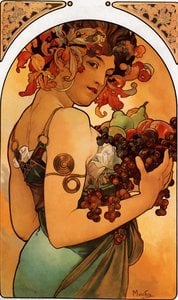
This exquisite 1897 lithograph, titled simply “Flower Litho,” offers a captivating glimpse into the world of Alphonse Maria Mucha, one of the most celebrated figures of the Art Nouveau movement. Measuring 44 x 66 cm, this piece isn’t merely a depiction of a woman holding flowers; it's an embodiment of a particular aesthetic – a harmonious blend of natural beauty and stylized elegance that defined Mucha’s distinctive vision. The vibrant palette, dominated by rich reds, yellows, greens, blues, and purples, immediately draws the eye, creating a sense of opulent warmth and inviting contemplation.
Born in Brno, Czech Republic, in 1860, Alphonse Maria Mucha’s artistic journey began with formal training at the Academy of Fine Arts in Prague. However, he quickly recognized the limitations of traditional academic approaches, seeking instead a more fluid and expressive style. His relocation to Paris in 1887 proved pivotal, allowing him to fully immerse himself in the burgeoning Art Nouveau movement. Mucha’s work is instantly recognizable for its flowing lines, organic forms, and an almost palpable sense of movement – qualities he consciously adopted from influences like Pierre-Auguste Renoir and Gustave Moreau. This “Flower Litho” exemplifies this style perfectly, showcasing a woman draped in a delicate lace dress, crowned with symbolic ornamentation, and presented amidst a profusion of blossoms.
The central figure, a beautifully idealized woman, is a recurring motif in Mucha’s oeuvre. Her pose, holding bouquets of flowers, speaks to themes of beauty, fertility, and perhaps even remembrance – common subjects within Art Nouveau's romantic sensibility. The two bouquets themselves are not simply decorative; they likely represent carefully chosen floral symbols with specific meanings, though the precise interpretation would have been understood within the context of late 19th-century symbolism. The potted plant in the background adds depth and a subtle connection to nature, reinforcing the artwork’s core themes. The overall composition evokes a sense of serenity and quiet contemplation, inviting the viewer to lose themselves in its delicate beauty.
This “Flower Litho” is a lithograph, a printmaking technique that allowed Mucha to reproduce his designs with remarkable precision and detail. The process involved transferring ink from a stone onto paper, resulting in rich, velvety tones – particularly evident in the vibrant hues of the flowers. Created in 1897, this piece reflects the peak of Mucha’s fame, following his success at the Salon des Cent in 1898. It's a testament to his ability to capture and translate the spirit of Art Nouveau into a commercially viable format, influencing countless artists and designers during that era. This reproduction offers an authentic connection to a pivotal moment in art history, allowing you to experience Mucha’s genius firsthand.
Percipirana svjetlina djela "Flower litho" autora Alfonz Muha iznosi bright, što mu omogućuje da se savršeno uklopi s osvjetljenjem namještenog prostora.
Tehnika djela "Flower litho" autora Alfonz Muha je Lithograph, a njegove dimenzije su 44 x 66 cm.
U djelu "Flower litho", Bold kontrast uparuje se s Unified Palette harmonijom.

1860 - 1939 , Češka Republika

Embark on a scholarly journey through the alchemy of lithography. This definitive guide offers collectors profound insights into the chemical mastery of stone and ink, the medium's historical legacy, and essential expertise for acquiring rare, museum-quality prints with absolute confidence.

Discover the enchanting world of Art Nouveau. Explore the flowing lines of Alphonse Mucha and learn how to integrate these timeless, organic masterpieces into your collection with expert guidance on fine art appreciation and preservation.

Discover the exquisite world of Art Nouveau. Explore the elegant fusion of nature and design through architectural masterpieces, organic forms, and the legendary masters of the Belle Époque. Immerse yourself in a journey of timeless sophistication and ornamental beauty.
 Pregledaj u realnoj veličini
 Pošalji
 Podijeli
 Detalji o umjetničkom djelu
 Vodič
Vodič

 Preuzmi umjetničko djelo
 Slični predmeti
 Rentgenska snimka
 Slide show
 Pitanja i odgovori
 Statistika

 Prikaži više









 Opcija stakla dostupna je samo za dimenzije manje od 110 cm