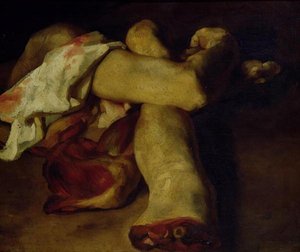
थियोडोर जेरिकॉल्ट, 1791 – 1824

The 100 Most Famous Paintings by थियोडोर जेरिकॉल्ट

The painting that made थियोडोर जेरिकॉल्ट famous is राफ्ट ऑफ़ द मेडुसा (1818); it hangs in the लुव्र संग्रहालय, पेरिस. Nymph and Satyr (Jupiter and Antiope) (1820) and The Oath of Brutus after the Death of Lucretia (1815) follow it in the hearts of collectors and museum visitors. Of the 183 works by थियोडोर जेरिकॉल्ट in our catalogue, these 100 are the most admired, each presented with its date, its museum and what sets it apart.

हमारे लोकप्रियता स्कोर के आधार पर रैंक किया गया, जो प्रत्येक कृति के लिए खोज, विज़िट और ऑर्डर को जोड़ता है। अक्टूबर 2026 में अपडेट किया गया। Every masterpiece on this page can be ordered as a museum-quality, hand-painted oil reproduction or a fine art print, at the size you choose.

थियोडोर जेरिकॉल्ट का चित्र
थियोडोर जेरिकॉल्ट · 1791 – 1824
जन्म · मृत्यु
1791 – 1824, रुआं
कला आंदोलन
Romantic painting
हमारी सूची में उपलब्ध कृतियाँ
183
सबसे प्रसिद्ध
राफ्ट ऑफ़ द मेडुसा (1818)
सबसे अधिक कृतियाँ
लुव्र संग्रहालय

थियोडोर जेरिकॉल्ट: the ten masterpieces

राफ्ट ऑफ़ द मेडुसा (1818) द्वारा थियोडोर जेरिकॉल्ट
1

राफ्ट ऑफ़ द मेडुसा

1818 · कैनवस पर ऑयल पेंटिंग · लुव्र संग्रहालय, पेरिस

जीन-लुई आंद्रे थियोडोर गेरिकॉल्ट की यह विशालकाय उत्कृष्ट कृति केवल एक समुद्री आपदा का चित्रण मात्र नहीं है; बल्कि यह मानवीय हताशा, राजनीतिक घोटाले और प्रकृति की भव्य शक्ति का एक गहन अन्वेषण है। 1819 में पूर्ण हुआ यह विशाल कैनवास (491 x 716 सेमी) फ्रांसीसी युद्धपोत *मेडुसा* के 1816 के विनाश के भयावह परिणामों को अमर कर देता है, जो अक्षमता और भ्रष्टाचार से उपजी एक ऐसी त्रासदी थी…

Nymph and Satyr (Jupiter and Antiope) (1820) द्वारा थियोडोर जेरिकॉल्ट
2

Nymph and Satyr (Jupiter and Antiope)

1820 · Acrylic On Canvas · Musée des Beaux-Arts et de la Céramique, रूएन

The Allure of the Divine Encounter: Géricault’s *Nymph and Satyr* Jean-Louis André Théodore Géricault's *Nymph and Satyr*, painted in 1819, isn’t merely a depiction of a mythological scene; it’s a profound exploration of desire, transgression, and the inherent tension between innocence and primal instinct. Born amidst the tumultuous backdrop of post-revolutionary France, Géricault, already recognized for his dramatic intensity, sought to capture not just a narrative but an emotional truth—a…

The Oath of Brutus after the Death of Lucretia (1815) द्वारा थियोडोर जेरिकॉल्ट
3

The Oath of Brutus after the Death of Lucretia

1815 · Oil On Canvas · नेल्सन-अटकिन्स संग्रहालय, कैनसस सिटी

The Oath of Brutus after the Death of Lucretia is an oil on canvas by Théodore Géricault. This history painting captures a moment of heavy, political consequence. The artist, Théodore Géricault, rendered the scene with a focus on the weight of human resolve. It emerged from his studio about 1815.

Lions in a Mountainous Landscape (1818) द्वारा थियोडोर जेरिकॉल्ट
4

Lions in a Mountainous Landscape

1818 · Acrylic On Canvas · मेट्रोपॉलिटन म्यूज़ियम ऑफ़ आर्ट, न्यूयॉर्क

This vigorous painting of six lions in a remote, spectrally illuminated lair—possibly intended to evoke the Atlas Mountains of Morocco—is an extraordinary example of Gericault’s spontaneous handling of paint. Rather than applying finishing touches to make a polished cabinet picture, the artist left the painting in a state known as an esquisse, or sketch, a work prized by fellow artists for its strength of directly capturing a subject or effect.…

The Kiss (1822) द्वारा थियोडोर जेरिकॉल्ट
5

The Kiss

1822 · Acrylic On Canvas · थिसन-बर्निसमा संग्रहालय, मैड्रिड

Théodore Géricault's "The Kiss," painted in 1816, isn’t merely a depiction of lovers entwined; it’s a visceral embodiment of the burgeoning Romantic movement’s fascination with raw emotion, dramatic intensity, and the sublime. This arresting work, housed within the Thyssen-Bornemisza Museum in Madrid, transcends simple representation to become a profound meditation on passion, vulnerability, and the very essence of human connection. Géricault, already a figure known for his unflinching portrayals of…

Wounded Soldiers Retrating from Russia (1814) द्वारा थियोडोर जेरिकॉल्ट
6

Wounded Soldiers Retrating from Russia

1814 · Acrylic On Canvas · Musée des Beaux-Arts, रून

A Symphony of Suffering: Géricault’s “Wounded Soldiers Retrating from Russia” Jean-Louis André Théodore Géricault's "Wounded Soldiers Retrating from Russia" is not merely a painting; it’s a visceral embodiment of the horrors and human cost of war, rendered with an unprecedented level of realism and emotional intensity for its time. Completed in 1814, this monumental canvas—measuring a commanding 250 x 206 cm—captures a pivotal moment during Napoleon's disastrous invasion of Russia,…

Study of Feet and Hands (1818) द्वारा थियोडोर जेरिकॉल्ट
7

Study of Feet and Hands

1818 · Oil On Canvas · Musée Fabre, मोंटपेलियर

Jean-Louis André Théodore Géricault's "Study of Feet and Hands," painted in 1818, isn’t a grand statement of Romantic drama like his monumental “The Raft of the Medusa.” Instead, it offers a profoundly intimate glimpse into the artist’s meticulous process and a poignant meditation on the human form. This unassuming oil painting—measuring a modest 52 x 64 cm—is far more than just a preparatory sketch; it's a concentrated distillation of Géricault’s…

The Raft of the Medusa (detail) (1818) द्वारा थियोडोर जेरिकॉल्ट
8

The Raft of the Medusa (detail)

1818 · Oil On Canvas · लुव्र संग्रहालय, पेरिस

Jean-Louis André Théodore Géricault's "The Raft of the Medusa," a monumental detail from his 1818 painting, isn’t merely a depiction of shipwreck; it’s a visceral plunge into the depths of human suffering and political indictment. The scene, rendered with a dramatic intensity characteristic of Romanticism, captures the harrowing aftermath of the French frigate *Medusa*'s wreck off the coast of Mauritania in 1816. This disaster, largely attributed to the incompetence and…

The Wreck (1821) द्वारा थियोडोर जेरिकॉल्ट
10

The Wreck

1821 · Oil On Canvas · लुव्र संग्रहालय, पेरिस

Théodore Géricault's "The Wreck," painted in 1821, isn’t merely a seascape; it’s a visceral confrontation with the sublime—a raw depiction of humanity’s vulnerability against the overwhelming force of nature. Born amidst the turbulent currents of post-revolutionary France, Géricault, a figure both lauded and controversial within the burgeoning Romantic movement, channeled his own anxieties and the era's fascination with dramatic events into this monumental canvas. The painting immediately commands attention not…

More थियोडोर जेरिकॉल्ट masterpieces, 11 to 100

The Horse Race (1816) द्वारा थियोडोर जेरिकॉल्ट
#11

The Horse Race

1816 · थिसन-बर्निसमा संग्रहालय

Jean-Louis André Théodore Géricault's "The Horse Race," painted in 1816, isn’t merely a depiction of a sporting event; it’s a visceral embodiment of Romanticism’s core tenets – passion,…

Bring it home →
Swiss Guard and Wounded Veteran (1819) द्वारा थियोडोर जेरिकॉल्ट
#12

Swiss Guard and Wounded Veteran

1819 · लुव्र संग्रहालय

Jean-Louis André Théodore Géricault's "Swiss Guard and Wounded Veteran," painted in 1819, is not merely a historical depiction; it’s a profound meditation on duty, sacrifice, and the lingering…

Order a reproduction →
Mazeppa (1823) द्वारा थियोडोर जेरिकॉल्ट
#13

Mazeppa

1823 · Château de Chantilly

Théodore Géricault's "Mazeppa," painted in 1823, isn’t merely a depiction of a dramatic legend; it’s a visceral embodiment of Romantic turmoil—a raw exploration of suffering, resilience, and the…

Bring it home →
Two Horses (1809) द्वारा थियोडोर जेरिकॉल्ट
#14

Two Horses

1809 · The Phillips Collection

Jean-Louis André Théodore Géricault's "Two Horses," painted in 1808-1809, isn’t merely a depiction of two magnificent animals; it’s a visceral exploration of movement, power, and the fleeting nature…

Bring it home →
A Turk (Mustapha) (1820) द्वारा थियोडोर जेरिकॉल्ट
#15

A Turk (Mustapha)

1820 · लुव्र संग्रहालय

Jean-Louis André Théodore Géricault's "A Turk (Mustapha)," painted in 1820, is not merely a portrait; it’s a carefully constructed tableau of exoticism, melancholy, and the burgeoning Romantic sensibility…

Order a reproduction →
A Carabinier with his Horse (1814) द्वारा थियोडोर जेरिकॉल्ट
#16

A Carabinier with his Horse

1814 · Musée des Beaux-Arts

In the quiet intensity of Jean-Louis André Théodore Géricault’s 1814 masterpiece, "A Carabinier with His Horse," we encounter more than a mere military portrait; we witness a profound…

Order a reproduction →
बिना सवार घोड़े की दौड़ (विवरण) (1817) द्वारा थियोडोर जेरिकॉल्ट
#17

बिना सवार घोड़े की दौड़ (विवरण)

1817 · लुव्र संग्रहालय

समय में थमा हुआ एक क्षण: जेरिकॉल्ट की “राइडरलेस हॉर्स रेस” जीन-लुई आंद्रे थियोडोर जेरिकॉल्ट की "राइडरलेस हॉर्स रेस (डिटेल)" केवल एक खेल आयोजन का चित्रण नहीं है;…

Bring it home →
Boxers (1818) द्वारा थियोडोर जेरिकॉल्ट
#18

Boxers

1818 · Château de Chantilly

A Tempestuous Vision: Géricault’s “Boxers” Jean-Louis André Théodore Géricault's "Boxers," completed in 1818, isn’t merely a depiction of a boxing match; it’s a visceral embodiment of Romanticism’s fascination…

Order a reproduction →
Horse Market: Five Horses at the Stake (1816) द्वारा थियोडोर जेरिकॉल्ट
#19

Horse Market: Five Horses at the Stake

1816 · लुव्र संग्रहालय

Jean-Louis André Théodore Géricault's "Horse Market: Five Horses at the Stake," painted in 1817, is not merely a depiction of livestock; it’s a visceral embodiment of Parisian life…

Order a reproduction →
The Epsom Derby (1821) द्वारा थियोडोर जेरिकॉल्ट
#20

The Epsom Derby

1821 · लुव्र संग्रहालय

Jean-Louis André Théodore Géricault's "The Epsom Derby," painted in 1821, isn’t merely a depiction of horse racing; it’s a visceral embodiment of Romanticism’s fascination with drama, movement, and…

Bring it home →
Three Lovers (1817) द्वारा थियोडोर जेरिकॉल्ट
#22

Three Lovers

1817 · जे. पॉल गेट्टी संग्रहालय

Théodore Géricault captured a private, feverish moment in Three Lovers. This small oil sketch, created about 1817–1820, offers a rare glimpse into the artist's more intimate preoccupations. It…

Order a reproduction →
Lion devouring a horse द्वारा थियोडोर जेरिकॉल्ट
#26

Lion devouring a horse

Château de Chantilly

Théodore Géricault's "Lion Devouring a Horse," painted in 1819, isn’t merely a depiction of predatory action; it’s a visceral exploration of power, mortality, and the primal instincts that…

Bring it home →
Untitled (ARJCHM) द्वारा थियोडोर जेरिकॉल्ट
#28

Untitled (ARJCHM)

लुव्र संग्रहालय

In the annals of art history, few works command the room with such visceral intensity as Théodore Géricault’s The Raft of the Medusa. This monumental oil on canvas…

Bring it home →
Portrait of a Young Man (1818) द्वारा थियोडोर जेरिकॉल्ट
#32

Portrait of a Young Man

1818 · Minneapolis Institute of Art

A young man emerges from a deep, indistinct darkness, his presence felt through the sudden, sharp clarity of light hitting his features. He sits in a quiet, intimate…

Order a reproduction →
A study for a nude. (1801) द्वारा थियोडोर जेरिकॉल्ट
#33

A study for a nude.

1801 · National Museum in Warsaw

A study for a nude. emerges from the shadows as a powerful presence by Théodore Géricault. Created about 1801, this oil on canvas captures a singular moment of…

Bring it home →
Study of a Model (1818) द्वारा थियोडोर जेरिकॉल्ट
#34

Study of a Model

1818 · जे. पॉल गेट्टी संग्रहालय

This oil on canvas portrait study presents a close-up, three-quarter view of a Black man's head and shoulders. The subject is positioned slightly off-center, looking toward the viewer…

Commission a hand-painted copy →
The Martyrdom of Saint Peter (1814) द्वारा थियोडोर जेरिकॉल्ट
#35

The Martyrdom of Saint Peter

1814 · Kunstmuseum Basel

The Martyrdom of Saint Peter is an oil on canvas by Théodore Géricault. Created about 1814, the work captures a moment of profound tension. The physical presence of…

Bring it home →
The Wreck (1824) द्वारा थियोडोर जेरिकॉल्ट
#36

The Wreck

1824 · लुव्र संग्रहालय

In the annals of French Romanticism, few works command the visceral attention of Théodore Géricault’s The Wreck as profoundly as this haunting seascape. Painted in 1824, a year…

Commission a hand-painted copy →
Mater dolorosa, Copy after Ribera (1811) द्वारा थियोडोर जेरिकॉल्ट
#38

Mater dolorosa, Copy after Ribera

1811 · Kunstmuseum Basel

Mater dolorosa, Copy after Ribera is a religious oil painting by the French artist Théodore Géricault. Created about 1811–1815, the work reflects the artist's engagement with the traditions…

Bring it home →
Lion in Repose द्वारा थियोडोर जेरिकॉल्ट
#39

Lion in Repose

Walters Art Museum

Jean-Louis André Théodore Géricault’s “Lion in Repose,” painted circa 1820-1823, isn’t merely a depiction of an animal; it’s a profound meditation on power, vulnerability, and the very nature…

Order a reproduction →
Portrait of a Negro (1800) द्वारा थियोडोर जेरिकॉल्ट
#71

Portrait of a Negro

1800 · Palácio Nacional da Ajuda

Dating from 1800, Jean-Louis André Théodore Géricault’s “Portrait of a Negro” is more than just a depiction of an individual; it’s a poignant statement born from the turbulent…

Bring it home →
Portrait d'homme (1825) द्वारा थियोडोर जेरिकॉल्ट
#73

Portrait d'homme

1825 · Musée Fabre

Portrait d'homme is an oil on canvas work attributed to the French Romantic painter Théodore Géricault. While historically categorized under various titles, including a mistaken identification as a…

Commission a hand-painted copy →
Chestnut horse in a stable (1814) द्वारा थियोडोर जेरिकॉल्ट
#75

Chestnut horse in a stable

1814 · कैंटर आर्ट्स सेंटर एट स्टैनफोर्ड यूनिवर्सिटी

In this 1814 oil painting, we find ourselves in the quiet, dim interior of a stable. The focus is entirely on a single chestnut horse, captured in profile…

Commission a hand-painted copy →
Horses of the Auvergne (1822) द्वारा थियोडोर जेरिकॉल्ट
#76

Horses of the Auvergne

1822 · यूनिवर्सिटी ऑफ मिशिगन म्यूजियम ऑफ आर्ट

In the quiet, monochromatic depths of Théodore Géricault’s 1822 lithograph, Horses of the Auvergne, we are transported to a rugged, mist-shrouded corner of France. This evocative work serves…

Commission a hand-painted copy →
A Prancing Grey Horse (1812) द्वारा थियोडोर जेरिकॉल्ट
#77

A Prancing Grey Horse

1812 · Burrell Collection

A single light grey horse occupies the center of this oil painting, captured in a rearing pose. The animal's body is angled vertically, its muscular flanks and neck…

Bring it home →
Sheet of Figure Studies (1818) द्वारा थियोडोर जेरिकॉल्ट
#78

Sheet of Figure Studies

1818 · Courtauld Gallery

To gaze upon Jean-Louis André Théodore Géricault’s "Sheet of Figure Studies" is not merely to look at painted forms; it is to witness the very act of human…

Bring it home →
Portrait of an Artist in His Studio (1820) द्वारा थियोडोर जेरिकॉल्ट
#79

Portrait of an Artist in His Studio

1820 · लुव्र संग्रहालय

Jean-Louis André Théodore Géricault's “Portrait of an Artist in His Studio,” completed in 1820, is more than a simple depiction of a young man seated before his easel;…

Bring it home →
The Plaster Kiln (1823) द्वारा थियोडोर जेरिकॉल्ट
#82

The Plaster Kiln

1823 · लुव्र संग्रहालय

In the quiet, brooding landscapes of nineteenth-century France, few works capture the raw, unvarnished essence of pastoral life as poignantly as Théodore Géricault’s “The Plaster Kiln.” Completed in…

Order a reproduction →

थियोडोर जेरिकॉल्ट's paintings by period

The subjects थियोडोर जेरिकॉल्ट painted most

The four subjects that return most often among these masterpieces, with the finest example of each.

Where to see थियोडोर जेरिकॉल्ट's paintings

वे 8 संग्रहालय जिनमें इस पृष्ठ की सर्वाधिक पेंटिंग्स मौजूद हैं।

संग्रहालय शहर थियोडोर जेरिकॉल्ट की कृतियाँ इस सूची की पेंटिंग्स
लुव्र संग्रहालय, पेरिसलुव्र संग्रहालय पेरिस 20 राफ्ट ऑफ़ द मेडुसा, The Raft of the Medusa (detail), Leda and the Swan
Château de Chantilly, शांतिलीChâteau de Chantilly शांतिली 6 Mazeppa, Boxers, Lion devouring a horse
जे. पॉल गेट्टी संग्रहालय, लॉस एंजिल्सजे. पॉल गेट्टी संग्रहालय लॉस एंजिल्स 3 Three Lovers, Study of a Model, The Race of the Riderless Horses
National Museum in Warsaw, वारसॉNational Museum in Warsaw वारसॉ 3 Equestrian portrait of Wincenty Krasiński., A study for a nude., Study of a nude man
Burrell Collection, ग्लासगोBurrell Collection ग्लासगो 8 The Trumpeter of the Lancers of the Guard, A Prancing Grey Horse
Musée Fabre, मोंटपेलियरMusée Fabre मोंटपेलियर 4 Study of Feet and Hands, Portrait d'homme
Petit Palais, पेरिसPetit Palais पेरिस 3 The Scotsman, Italian Landscape with Tomb
थिसन-बर्निसमा संग्रहालय, मैड्रिडथिसन-बर्निसमा संग्रहालय मैड्रिड 2 The Kiss, The Horse Race

थियोडोर जेरिकॉल्ट, decade by decade: the defining painting of each

  1. 1800s
    Two Horses (1809) द्वारा थियोडोर जेरिकॉल्ट
    Rank 14 / 100

    Two Horses

    आयु 9 – 18 · The Phillips Collection

    Jean-Louis André Théodore Géricault's "Two Horses," painted in 1808-1809, isn’t merely a depiction of two magnificent animals; it’s a visceral exploration of movement, power, and the fleeting nature…

  2. 1810s
    राफ्ट ऑफ़ द मेडुसा (1818) द्वारा थियोडोर जेरिकॉल्ट
    No. 1 of 100

    राफ्ट ऑफ़ द मेडुसा

    आयु 19 – 28 · लुव्र संग्रहालय

    जीन-लुई आंद्रे थियोडोर गेरिकॉल्ट की यह विशालकाय उत्कृष्ट कृति केवल एक समुद्री आपदा का चित्रण मात्र नहीं है; बल्कि यह मानवीय हताशा, राजनीतिक घोटाले और प्रकृति की भव्य…

  3. 1820s
    Nymph and Satyr (Jupiter and Antiope) (1820) द्वारा थियोडोर जेरिकॉल्ट
    #2 of 100

    Nymph and Satyr (Jupiter and Antiope)

    आयु 29 – 33 · Musée des Beaux-Arts et de la Céramique

    The Allure of the Divine Encounter: Géricault’s *Nymph and Satyr* Jean-Louis André Théodore Géricault's *Nymph and Satyr*, painted in 1819, isn’t merely a depiction of a mythological scene;…

थियोडोर जेरिकॉल्ट's masterpieces: questions and answers

Which painting is थियोडोर जेरिकॉल्ट best known for?Show the answer

राफ्ट ऑफ़ द मेडुसा (1818), लुव्र संग्रहालय, पेरिस. Next come Nymph and Satyr (Jupiter and Antiope) (1820) and The Oath of Brutus after the Death of Lucretia (1815).

How old was थियोडोर जेरिकॉल्ट when painting राफ्ट ऑफ़ द मेडुसा?Show the answer

27 years old: राफ्ट ऑफ़ द मेडुसा dates from 1818 and थियोडोर जेरिकॉल्ट was born in 1791.

What are थियोडोर जेरिकॉल्ट's ten greatest paintings?Show the answer

राफ्ट ऑफ़ द मेडुसा, Nymph and Satyr (Jupiter and Antiope), The Oath of Brutus after the Death of Lucretia, Lions in a Mountainous Landscape, The Kiss, Wounded Soldiers Retrating from Russia, Study of Feet and Hands, The Raft of the Medusa (detail), Leda and the Swan और The Wreck. The ranking above gives the year and the museum of each.

How many works did थियोडोर जेरिकॉल्ट paint?Show the answer

Our catalogue lists 183 works by थियोडोर जेरिकॉल्ट, dated from 1800 to 1824.

In which museums can I see थियोडोर जेरिकॉल्ट's masterpieces?Show the answer

Most of them are in लुव्र संग्रहालय (पेरिस), Château de Chantilly (शांतिली) और जे. पॉल गेट्टी संग्रहालय (लॉस एंजिल्स). The table above lists the museums one by one.

When did थियोडोर जेरिकॉल्ट paint the masterpieces?Show the answer

In 1810s: 67 of the 100 works on this page date from then, among them राफ्ट ऑफ़ द मेडुसा.

What are the first and last famous paintings of थियोडोर जेरिकॉल्ट?Show the answer

The earliest on this page is Portrait of a Negro (1800), the latest The Wreck (1824).

What were थियोडोर जेरिकॉल्ट's favourite subjects?Show the answer

Man (12), Portrait (9) और Horse (8), among the 100 works on this page.

Which technique did थियोडोर जेरिकॉल्ट favour?Show the answer

Oil On Canvas: 25 of the 100 works on this page.

What art movement is थियोडोर जेरिकॉल्ट part of?Show the answer

Romantic painting, as the paintings on this page show.

Which masterpieces by थियोडोर जेरिकॉल्ट hang at the लुव्र संग्रहालय?Show the answer

राफ्ट ऑफ़ द मेडुसा, The Raft of the Medusa (detail) और Leda and the Swan are among the 14 works on this page held by the लुव्र संग्रहालय, पेरिस.

Can I own a reproduction of a थियोडोर जेरिकॉल्ट masterpiece?Show the answer

Yes. Every painting on this page can be ordered as a museum-quality, hand-painted oil reproduction or a fine art print, in the size you choose, from the painting's own page.

The life of थियोडोर जेरिकॉल्ट

रोमांटिक अग्नि में निर्मित एक जीवन

जीन-लुई आंद्रे थियोडोर जेरिकॉल्ट, एक ऐसा नाम जो फ्रांसीसी स्वच्छंदतावाद (Romanticism) की उभरती हुई भावना के साथ गूंजता है, एक ऐसी दुनिया में पैदा हुए थे जो नाटकीय परिवर्तन की कगार पर खड़ी थी। 1791 में फ्रांस के रूएन में जन्म लेने के साथ ही, उनका प्रारंभिक जीवन क्रांति की प्रतिध्वनियों और नेपोलियन की महत्वाकांक्षाओं के बढ़ते ज्वार के बीच बीता। हालांकि अपने परिवार के कानूनी और व्यावसायिक उद्यमों—जिसमें एक तंबाकू व्यवसाय भी शामिल था—के माध्यम से उन्हें एक आरामदायक जीवन विरासत में मिला था, लेकिन जेरिकॉल्ट का भाग्य कानून या वाणिज्य में नहीं, बल्कि कलात्मक अभिव्यक्ति के क्षेत्र में निहित था। अंग्रेजी खेल कला के उस्ताद कार्ल वर्नेट के तहत उनके प्रारंभिक प्रशिक्षण ने उनमें शरीर रचना और गति के प्रति एक सूक्ष्म दृष्टि विकसित की, जो विशेष रूप से घोड़ों के उनके चित्रण में स्पष्ट दिखाई देती है। हालांकि, पियरे-नार्सिस गुएरिन के साथ उनके बाद के अध्ययन ने उन्हें शास्त्रीय संरचना की नींव प्रदान की, फिर भी जेरिकॉल्ट की बेचैन आत्मा जल्द ही उन्हें लूवर के पवित्र गलियारों में स्वतंत्र रूप से ज्ञान प्राप्त करने के लिए प्रेरित करने लगी।

अकादमी के रूप में लूवर: उस्तादों के साथ एक संवाद

1810 से 1815 तक, लूवर जेरिकॉल्ट की वास्तविक अकादमी बन गया। उन्होंने खुद को पुराने उस्तादों—रुबेन्स, टिटियन, वेलास्केज़ और रेम्ब्रां—की कृतियों में डुबो दिया, न केवल उनकी तकनीकों की नकल करने के लिए, बल्कि उनके कलात्मक दर्शन के साथ एक गहन संवाद करने के लिए। यह अवधि उनकी विशिष्ट शैली को आकार देने में महत्वपूर्ण थी, जो नाटकीय 'कियारोस्क्यूरो' (प्रकाश और छाया का खेल), गतिशील संरचनाओं और एक तीव्र भावनात्मकता द्वारा पहचानी जाती है जो उन्हें उनके समकालीनों से अलग करती थी। वह केवल नकल नहीं कर रहे थे; वह इन उस्तादों के सार को आत्मसात कर रहे थे, प्रकाश, छाया और मानवीय रूप के प्रति उनके दृष्टिकोण को अपने भीतर उतार रहे थे। इस स्व-निर्देशित शिक्षा ने एक अनूठी कलात्मक आवाज को जन्म दिया, जो जल्द ही प्रचलित नवशास्त्रीय (Neoclassical) परंपराओं को चुनौती देने वाली थी। उनकी प्रारंभिक कृतियाँ, जैसे द चार्जिंग chasseur (1812), पहले से ही इस उभरती हुई संवेदनशीलता का संकेत दे रही थीं, जो रुबेन्स के ऊर्जावान कैनवस की याद दिलाने वाली कार्यक्षमता की निर्भीकता और गति के प्रति आकर्षण को प्रदर्शित करती थीं। उन्होंने घुड़सवारी विषयों की खोज जारी रखी, घोड़ों की शक्ति और शालीनता को चित्रित करने में अपने कौशल को निखारा—एक ऐसा विषय जो उनके पूरे करियर में एक आवर्ती विषय बना रहा।

द राफ्ट ऑफ द मेडुसा: मानवीय पीड़ा का एक स्मारक

जेरिकॉल्ट का नाम द राफ्ट ऑफ द मेडुसा (1818-18ला9) के साथ अटूट रूप से जुड़ा हुआ है, एक ऐसा विशाल कैनवास जो केवल ऐतिहासिक चित्रण से परे जाकर मानवीय भूल और सामाजिक अन्याय के एक तीखे आरोप में बदल जाता है। 1816 में फ्रांसीसी फ्रिगेट मेडुसा की जहाज दुर्घटना की हृदयविदारक सच्ची कहानी से प्रेरित, जहाँ लापरवाही और अक्षमता के कारण यात्रियों को अकल्पनीय पीड़ा झेलनी पड़ी थी, यह पेंटिंग हताशा, आशा और निराशा का एक जीवंत चित्रण है। जेरिकॉल्ट ने सटीकता सुनिश्चित करने के लिए गहन शोध किया, जीवित बचे लोगों का साक्षात्कार किया, अस्पतालों में शवों का अध्ययन किया, और यहाँ तक कि राफ्ट का एक छोटा मॉडल भी बनाया। परिणामी कार्य केवल त्रासदी का चित्रण नहीं है; यह एक ऐसा डूबने वाला अनुभव है जो दर्शकों को मानवीय पीड़ा की कच्ची वास्तविकता से रूबरू कराता है। दो पिरामिडल संरचनाओं के इर्द-गिर्द निर्मित रचना—एक निराशा और मृत्यु का प्रतिनिधित्व करती है, दूसरी आशा और संभावित बचाव का प्रतीक है—एक गतिशील तनाव पैदा करती है जो आँखों को पूरे कैनवास पर घुमाती है। 1819 के सैलून में इसके प्रदर्शन के समय द राफ्ट ऑफ द मेडुसा विवादास्पद था, जिसने राजनीतिक बहस को जन्म दिया और एक साहसी और अपरंपरागत कलाकार के रूप में जेरिकॉल्ट की प्रतिष्ठा को पुख्ता किया। इस पेंटिंग का प्रभाव कला जगत से परे तक फैला, जो अकल्पनीय कठिनाइयों के सामने सरकारी अक्षमता और मानवीय लचीलेपन का प्रतीक बन गया।

त्रासदी से परे: सैन्य विषय और कलात्मक विरासत

हालाँकि द राफ्ट ऑफ द मेडुसा उनकी सबसे प्रसिद्ध उपलब्धि बनी हुई है, जेरिकॉल्ट का कलात्मक योगदान इस एकल उत्कृष्ट कृति से कहीं आगे तक फैला हुआ था। वे निरंतर सैन्य विषयों की ओर लौटते रहे, जो वौन्डेड कुइरासियर (1814) और द डर्बी ऑफ एप्सम (1821) जैसी कृतियों में स्पष्ट है, जो नाटक और अभिव्यंजक शक्ति के प्रति उनके आकर्षण को प्रदर्शित करता है। ये पेंटिंग संकट के समय मानवीय भावनाओं की उनकी निरंतर खोज को प्रकट करती हैं, जो अक्सर संघर्ष के शारीरिक और मनोवैज्ञानिक प्रभाव पर ध्यान केंद्रित करती हैं। उन्होंने चित्रकला और लिथोग्राफी में भी हाथ आजमाया, जिससे उनके कलात्मक दायरे का और विस्तार हुआ। दुर्भाग्य से, घुड़सवारी दुर्घटनाओं और पुराने तपेदिक संक्रमण से वर्षों तक जूझने के बाद, 1824 में मात्र 32 वर्ष की आयु में बीमारी के कारण जेरिकॉल्ट का जीवन असमय समाप्त हो गया। उनकी असामयिक मृत्यु ने कला जगत को एक विलक्षण प्रतिभा से वंचित कर दिया, लेकिन कलाकारों की अगली पीढ़ियों—विशेष रूप से यूजीन देलाक्रोआ—पर उनका प्रभाव गहरा था। उन्हें स्वच्छंदतावाद के अग्रदूत के रूप में याद किया जाता है, एक ऐसे कलाकार के रूप में जिसने कठिन सत्यों का सामना करने और अपने काम को एक शक्तिशाली भावनात्मक प्रतिध्वनि से भरने का साहस किया जो आज भी दर्शकों को मंत्रमुति करता है। पेरिस के पेरे लेशैज़ कब्रिस्तान में उनकी कब्र पर उनकी कांस्य प्रतिमा हाथ में ब्रश लिए लेटी हुई है, जो द राफ्ट ऑफ द मेडुसा के हृदयविदारक दृश्य को दर्शाने वाले एक पैनल के ऊपर स्थित है, जो उस कलाकार को एक उपयुक्त श्रद्धांजलि है जिसने अपना जीवन मानवीय स्थिति की जटिलताओं और विरोधाभासों को पकड़ने के लिए समर्पित कर दिया।

प्रमुख विशेषताएँ और प्रभाव

  • स्वच्छंदतावाद (Romanticism): जेरिकॉल्ट को पहले फ्रांसीसी रोमांटिक चित्रकारों में से एक माना जाता है, जो नवशास्त्रीय आदर्शों से हटकर भावनात्मक तीव्रता और नाटकीय अभिव्यक्ति की ओर बढ़े।
  • नाटकीय संरचना: उनकी पेंटिंग्स अपनी गतिशील संरचनाओं के लिए जानी जाती हैं, जो अक्सर गति और तनाव की भावना पैदा करने के लिए तिरछी रेखाओं और विपरीत प्रकाश एवं छाया का उपयोग करती हैं।
  • यथार्थवाद और शोध: जेरिकॉल्ट यथार्थवाद के प्रति प्रतिबद्ध थे, उन्होंने अपने कार्य की सटीकता और भावनात्मक प्रभाव सुनिश्चित करने के लिए व्यापक शोध किया—जिसमें शवों का अध्ययन करना और जीवित बचे लोगों का साक्षात्कार लेना शामिल था।
  • पुराने उस्तादों का प्रभाव: उन्होंने रुबेन्स, टिटियन और वेलास्केज़ जैसे बारोक उस्तादों से प्रेरणा ली, और नाटकीय प्रकाश व्यवस्था एवं अभिव्यंजक ब्रशवर्क के लिए उनकी तकनीकों को अपनाया।
  • मानवीय पीड़ा पर ध्यान: उनकी कला अक्सर त्रासदी, निराशा और मानवीय अनुभव के काले पहलुओं का चित्रण करती है, जो तीव्र भावनाओं के प्रति एक रोमांटिक आकर्षण को दर्शाती है।

थियोडोर जेरिकॉल्ट की सभी 183 कृतियाँ →