


Beyond the Logo: The Evolution from Static Symbols to Immersive Brand Narratives
 Beyond Aesthetics: Leveraging Custom Artwork for Corporate Identity and Brand Narrative in the Modern Workplace
The Evolving Landscape of Corporate Identity: Beyond Logos & Taglines Corporate branding In marketing, corporate branding refers to the practice of promoting the brand name of a corporate entity, as opposed to specific products or services. The activ...
For generations, the architecture of corporate identity was a rigid affair, confined to the safe, predictable boundaries of logos, color palettes, and carefully crafted taglines. These were static symbols, intended to represent an organization’s mission through mere recognition—a visual shorthand that functioned well in an era of mass production but lacks the depth required for today's discerning audience. In the contemporary landscape of luxury hospitality and high-end corporate environments, the traditional pillars of branding are undergoing a profound transformation. We are moving away from the sterile minimalism of recent decades toward a more nuanced understanding of identity.
The modern traveler or executive no longer seeks mere recognition; they seek resonance. A logo is merely a signature, a mark of origin that provides a sense of familiarity but fails to convey the soul of an establishment. To truly differentiate a brand in a hyper-saturated market, one must move beyond the superficiality of a monogram and embrace the power of visual storytelling. This evolution marks the transition from telling an audience who a company is to showing them through immersive, sensory experiences that breathe with life, culture, and movement.
The Psychology of Space: Utilizing Custom Art to Cultivate Emotional Resonance
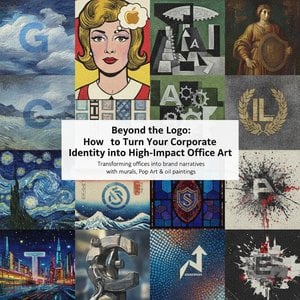 Beyond the Logo: How to Turn Your Corporate Identity into High-Impact Office Art
The Death of the Static Logo: Why Modern Brands Need Visual Narratives Power Moves: How Top Brands Use Bold Art to Level Up Corporate Identity The New Corporate Currency: Moving Beyond Logos to Visual Narrative Beyond Aesthetics: Leveraging Custom Ar...
Interior design psychology teaches us that the environments we inhabit profoundly influence our behavior, moods, and perceptions. For the hotel designer or corporate visionary, every texture, color, and brushstroke presents an opportunity to cultivate genuine emotional resonance. When a guest enters a lobby, they are not merely entering a physical structure; they are stepping into a curated atmosphere. The use of custom artwork serves as a psychological anchor, transforming hollow corridors into cultural destinations that foster connection and authenticity.
The impact of art lies in its ability to occupy space emotionally rather than just physically. While generic stock imagery or mass-produced prints offer a sense of decoration, they often lack the "soul" required to foster lasting relationships with stakeholders. In contrast, bespoke oil paintings—with their visible brushstrokes and deep tonal ranges—create a tactile depth that invites contemplation. By strategically placing works that evoke tranquility, grandeur, or innovation, designers can shape the very temperament of a brand, ensuring that the corporate identity is felt long after the physical encounter has ended.
Translating Values into Visual Language: From Corporate Mission to Brushstroke
 Beyond the Logo: How Custom Impressionist Art Translates Corporate Values into Visual Storytelling
The Evolution of Identity: Moving Beyond Static Logos to Immersive Brand Narratives Beyond Aesthetics: Leveraging Custom Artwork for Corporate Identity and Brand Narrative in the Modern Workplace The Evolving Landscape of Corporate Identity: Beyond L...
The true challenge for the modern professional lies in finding a medium that does not just occupy space, but creates it—a medium that reflects shared values and elevated status. This process of translation requires a sophisticated understanding of how abstract concepts like integrity, innovation, or heritage can be rendered through the language of fine art. It is an alchemy where a corporate mission statement is transmuted into light, color, and texture.
Consider the transformative power of style. A brand centered on tradition might find its voice in the rich, dramatic chiaroscuro of a 17th-century master, where deep shadows and luminous highlights suggest depth and history. Conversely, a forward-thinking tech firm might embrace the vibrant, fractured perspectives of Cubism or the energetic impasto of the Post-Impressionists to signal dynamism and disruption. Through "period shifts" and stylistic customization, designers can literally paint the company's values onto the canvas, ensuring that every element of the physical environment is in perfect consonance with the brand’s core promise.
Curating the Atmosphere: Bespoke Art Solutions for Luxury Hospitality and Corporate Interiors
 Beyond the Logo: Elevate Your Corporate Gifting with Bespoke Brand Art
The Death of the Branded Mug: Why Generic Gifting Fails the Luxury Standard Beyond Gifts: Personalized Art for Lasting Corporate Appreciation The Problem with Traditional Corporate Gifts: Why They're Often Forgotten In today’s competitive business la...
For the discerning designer, the scale of a project demands solutions that are as ambitious as the architecture itself. The modern era has seen the rise of large-format architectural art, such as custom murals and ceiling frescoes, which allow for the recreation of historical grandeur in any contemporary space. These works, often painted on massive canvas rolls, enable a hotel to inhabit a visual language that feels both timeless and bespoke, much like the legendary ceilings of the Renaissance.
< p>Furthermore, the trend toward multi-panel compositions offers a sophisticated way to address wide architectural features like grand staircases or expansive lobby walls. By splitting a single masterpiece across three, four, or five panels, a designer can create a cohesive, modern aesthetic that guides the eye through the space. This modular approach to fine art allows for a seamless integration of high culture into modern structural design, providing a sense of continuity and flow that is essential for maintaining brand consonance across all physical touchpoints.The New Era of Identity: Integrating Heritage, Culture, and Modernity through Fine Art
 Tormented Self-Portrait (Susie at Arles)
A Symphony of Commerce and Identity: Deconstructing the Self in "Tormented Self-Portrait" Ashley Bickerton’s “Tormented Self-Portrait (Susie at Arles),” created in 1988, isn't merely a painting; it’s an audacious interrogation of contemporary identit...
As we look toward the future of corporate and hospitality branding, the most successful entities will be those that treat art not as an adornment, but as an integral component of their ecosystem. We are witnessing a shift where identity becomes fluid and experiential. The integration of heritage—through the use of hand-painted reproductions of the Old Masters—with modern customization allows brands to bridge the gap between the historical and the contemporary.
This synergy creates a brand narrative that is both grounded in tradition and poised for the future. Whether it is through the restoration of a personal milestone into a museum-grade oil painting or the use of AI-driven design to reimagine modern photography as a classical masterpiece, the tools available to the contemporary designer are unprecedented. By embracing the craftsmanship of skilled artists and the depth of historical techniques, brands can move beyond the era of the static logo and enter an era of profound, lasting, and visual enchantment.
About WahooArt.com
WahooArt.com is the global flagship for premium, full-service art solutions. We specialize in bridging the gap between historical mastery and modern brand identity through hand-painted oil reproductions, bespoke commissions, and architectural art. From custom portraits to large-scale hotel murals, our mission is to provide designers and collectors with authentic, museum-quality works backed by a 100% satisfaction guarantee. Discover how we can transform your vision into a tangible masterpiece at WahooArt.com.


