The Genesis of an Illusion: Vasarely’s Early Influences & Artistic Formation
Constructivism may refer to: == Art and architecture == Constructivism (art), an early 20th-century artistic movement that extols art as a practice for social purposes Constructivist architecture, an architectural movement in the Soviet Union in th...
Győző Vásárhelyi, the name given to a child born in 1906 in Pécs, Hungary, seems worlds away from the globally recognized Victor Vasarely. His journey wasn't one of immediate artistic revelation but rather a gradual unfolding, shaped by a rigorous intellectual curiosity and an early exposure to both scientific precision and the burgeoning currents of modern art. Initially destined for medicine – two years spent pursuing medical studies quickly revealed a different calling – Vásárhelyi’s true path lay not in healing bodies, but in visually dissecting perception itself. The pivotal moment arrived with his enrollment at the Mühely Academy, Budapest's equivalent of the Bauhaus, and later at the Beaux-Arts. These institutions instilled within him a foundational belief in functionalism, a desire to integrate art seamlessly into everyday life, and a profound respect for the power of geometric form.
His early work, though not yet the signature Op Art that would define his career, reveals nascent tendencies towards abstraction and a fascination with trompe-l’œil effects. The influence of Constructivism is palpable – a movement emphasizing art as a practice for social purposes, prioritizing clarity, objectivity, and the inherent beauty of industrial materials. This period wasn't merely about aesthetic exploration; it was about building a visual language capable of communicating universal truths through pure form. The seeds of his later obsession with optical illusions were sown in these formative years, nurtured by a desire to move beyond representation and delve into the very mechanics of seeing.
From Graphic Design to ‘Plastic Art’: The Birth of Op Art Principles
Op art, short for optical art, is a style of visual art that uses distorted or manipulated geometrical patterns, often to create optical illusions. It began in the early 20th century, and was especially popular from the 1960s on, the term "Op art" d...
The relocation to Paris in 1930 marked a turning point. Necessity led Vásárhelyi to embrace graphic design, a field that initially seemed pragmatic but ultimately proved instrumental in refining his artistic vision. Working for advertising agencies like Havas allowed him to hone his skills with lines, spatial relationships, and the interplay of light and shadow. His 1937 “Zebras,” created during this period, foreshadowed the optical dynamism that would soon become his hallmark – curvilinear black and white stripes seemingly detached from any grounding contour, creating a subtle but unsettling sense of movement. This wasn’t simply decoration; it was an experiment in visual perception.
However, Vasarely felt constrained by the commercial demands of graphic design. He yearned for a more profound artistic expression, one that transcended mere functionality. This desire culminated in his self-proclaimed “Plastic Art” – a term he used to differentiate his work from traditional painting and sculpture. It was an art rooted in scientific principles, driven by a systematic exploration of visual phenomena. The Belle-Isle period (1947-1950s) witnessed the full flowering of this new approach. A revelation during this time – “I only had a true revelation of abstraction in 1947, when I suddenly recognized that pure form and pure color can signify the world” – propelled him towards complete abstraction, drawing inspiration from masters like Kandinsky, Mondrian, and Klee.
Decoding the Vasarely System: Geometry, Perception, and Optical Effects
Kinetic art is art from any medium that contains movement perceivable by the viewer or that depends on motion for its effects. Canvas paintings that extend the viewer's perspective of the artwork and incorporate multidimensional movement are the earl...
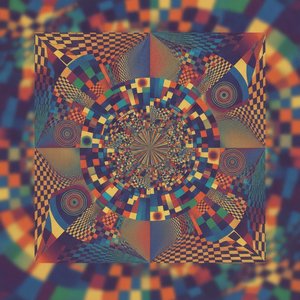
Vasarely didn’t simply *create* optical illusions; he engineered them. His method was profoundly systematic, akin to a scientific investigation. He identified specific visual principles – afterimages, simultaneous contrast, line interference, ambiguous figures – and then meticulously constructed compositions designed to exploit these phenomena. He wasn't interested in subjective expression but rather in the objective laws governing perception. This approach led to the development of his “Plastic Units,” basic geometric elements that could be combined and manipulated according to a set of rigorous rules.
The resulting artworks aren’t static images; they are dynamic fields of energy, constantly shifting and evolving before the viewer's eyes. Works like “Zebras” demonstrate this perfectly – the stripes appear to swell, warp, and even vibrate, challenging our sense of depth and stability. This wasn’t about creating a pleasing aesthetic experience but rather about forcing us to confront the limitations of our own visual systems. He sought to reveal the underlying structure of perception itself, stripping away representational layers to expose the raw mechanics of seeing.
Beyond the Canvas: Vasarely's Impact on Architecture, Design, and Public Space
Vasarely’s ambition extended far beyond the confines of the gallery. He envisioned a world transformed by his “Plastic Art,” integrated into architecture, design, and public spaces. He believed that art should be accessible to everyone, not confined to elite institutions but woven into the fabric of daily life. This utopian vision led to collaborations with architects and designers, resulting in projects like the Vasarely Foundation in Aix-en-Provence – a building entirely dedicated to his work, showcasing his designs on facades, floors, and ceilings.
His influence permeated popular culture, appearing in textiles, furniture, and even fashion. The Woolmark logo (1964), designed by Franco Grignani, stands as a testament to the power of Op Art principles in commercial design. Vasarely’s “Polychrome City” project – an ambitious plan for a futuristic urban landscape covered in vibrant geometric patterns – remains a powerful symbol of his desire to create a more visually stimulating and harmonious environment. He wasn't merely creating art; he was proposing a new way of living, one where visual experience was elevated to the forefront.
Vasarely’s Legacy & Contemporary Resonance: A Continuing Dialogue with Illusion
Victor Vasarely’s impact on modern art is undeniable. He didn't just invent Op Art; he fundamentally altered our understanding of perception and the role of the artist. His systematic approach, blending scientific rigor with aesthetic sensibility, continues to inspire artists today. While Kinetic Art explores physical movement, Vasarely focused on *perceived* motion, a subtle but profound distinction that sets his work apart.
His legacy extends beyond the art world, influencing graphic design, architecture, and even digital aesthetics. The principles he pioneered – afterimages, simultaneous contrast, geometric abstraction – are now fundamental concepts in visual communication. The ongoing fascination with optical illusions, virtual reality, and immersive experiences can all be traced back to Vasarely’s groundbreaking work. At WahooArt.com, we celebrate his enduring vision by offering high-quality reproductions of his masterpieces, allowing you to experience the captivating power of Op Art firsthand. Explore our collection and discover how Vasarely continues to challenge and delight audiences with his timeless exploration of perception.